
Back to Basics: Part One
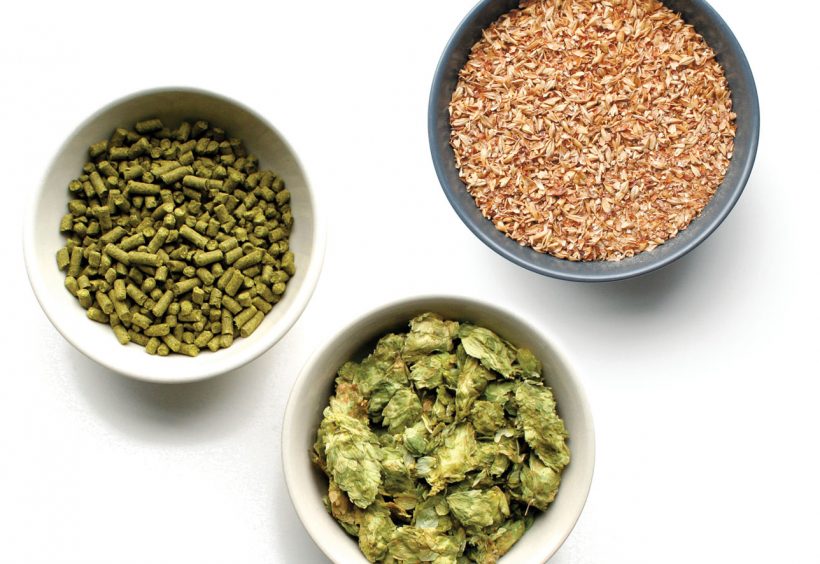
Beer has certainly worn many hats over the years—social lubricant, religious sacrament, refreshing libation, nutritive sustenance. But perhaps its most outstanding quality is the ability to showcase four basic ingredients and the artisans who transformed them. When you boil it all down, beer is little more than four simple ingredients—malt, hops, water and yeast. Join us as we explore these humble components in a two-part series taking it all back to basics.
Malt & Hops for Dummies
So, how is it that so many different beers can possibly come out of four basic ingredients? Well, for starters, brewers have, can and often do add other ingredients. It may be as simple as adding a different grain to the mash, such as wheat, rye, corn or rice; however, anyone reading BeerAdvocate most likely is not surprised by all the different ingredients being added to their beer—anything from açai berries to Zinfandel grapes.
But in its purest form, without the help of added ingredients and adjuncts, the real art of making great beer really comes about in the brewer’s ability to blend different styles of malt and varieties of hops, allowing the ingredients’ natural profiles to come out and complement each other, hoping to create a sensory experience unique to any other.
It’s My Own Damn Malt
Hordeum vulgare—“barley” to you and me. It is the fourth most-cultivated cereal grain in the world, used around the globe for making bread, soups, main courses and salads, not to mention a key ingredient in livestock feed. However, in its freshly harvested stage, it is of little use to our friend the brewer. It must undergo a simple process called malting, which involves soaking the grain, causing it to begin to germinate, or sprout, releasing a sea of enzymes that begin to convert the starches present in the barley into smaller-chain sugars—sugars that will later be converted by yeast into alcohol and carbon dioxide.
“As the brewing saying goes, malt is the ‘soul’ of beer,” professes Mitch Steele, head brewer at Stone Brewing Co. “It provides the color, the body, the sweetness and perhaps most importantly, the flavor balance for our hopping regimen. A good-quality malt is crucial to brewing good beer.”
You’re Not the Only One Getting Toasted
OK, so you’ve got a ton of malted barley soaking in water, teeming with enzymatic reactions, but you’ve got to put a stop to the fun quickly before the grains actually start to visibly sprout and turn into new barley plantings. The malt is quickly kiln-dried with hot air, which halts the starch-to-sugar conversions and produces dried kernels of malted barley.
Depending on the temperature used to dry the malt, and the length of time it is heated, lighter and darker styles of malt can result. Lighter malts with higher levels of fermentable sugars and enzymatic activity are referred to as base malts, and will make up the majority of the grain bill called for in any given brew. Other varieties, used more for flavor than yeast fuel, are called specialty malts.
Lighter roasts, such as Pale Crystal and Vienna malts, can often impart notes of caramel, biscuits, toffee and bread, among others. Further roasting at higher temperatures produces darker malts such as chocolate malt or black patent malt, which, added sparingly, can contribute robust flavors similar to coffee and chocolate, adding complexity and a touch of bitterness.
The brewer’s selection of malts is the keystone for any quality beer, as it affects not just the flavor of the beer, but also the aroma, the color and the all-so-important mouthfeel. “A good malt blend with the right balanced amount of flavor, sweetness and body provides the foundation for every one of our beers,” concurs Steele.
Hopping Mad
Hops provide balance for the malt, although as a growing number of imbibers are gravitating toward bigger and bolder beers, the argument can certainly be made that the roles have changed and malt is being used to balance the hops. Sam Calagione, owner of Dogfish Head Craft Brewery, jokes, “Our hop suppliers did the math and we are using five times as much hops per barrel as their average craft brewery customer and 20 times as much as the average industrial brewery. Our investment is huge, but mo’ bitter is mo’ better.”
Hops are the cone-shaped perennial flower of the Humulus lupulus plant, and are very rich in resins, alpha acids and oils that produce a veritable treasure chest of flavors and aromas familiar to anyone who has ever tasted an India Pale Ale or some sort of an “imperial” fill-in-the-blank. They can impart essences that are often redolent of citrus, spices, flowers or grass, or they can exhibit piney, earthy or woodsy notes.
Hops also add an element of bitterness to beer that balances the sweet profile of the malt. Most likely added originally for medicinal purposes, hops were also found to extend the shelf life of beer, a very important factor historically speaking, since transcontinental voyages by boat lasted months and beer was a vital source of nutrition and clean drinking water, not to mention a way to unwind during what I’d imagine to be a trying boat ride, to say the least.
Has it Been an Hour Yet?
Hops are traditionally added at three stages during the boil. The bittering hops get added first, and as their name implies, they add the crisp bitterness and graceful bite found in many styles of beer, especially Pilsners. These bittering hops rely on the longer boil (typically 60-90 minutes, although sometimes longer) because during this time, certain otherwise insoluble compounds called alpha acids go through a process known as isomerization, which allows them to become soluble and lend their unique character to the final brew.
The aroma and flavor components of hops are extremely volatile, and evaporate during such a long boil. For this reason, the remaining two additions of aroma hops and flavoring hops are typically added near the end (aroma in the last 10-20 minutes and flavoring within the final three minutes) so as to preserve their full sensory potential.
Another popular method for boosting hop flavor and aroma is through a simple procedure called dry hopping, which allows the brewer to add hops to the beer after it has cooled and fermentation has already begun, so the beer draws essential oils from the flowers without fear of evaporation since no heating is taking place.
Vinnie Cilurzo, owner of Russian River Brewing Co., relies heavily on dry hopping to bring out the flavor profile he wants to present in his suds. “We dry hop our IPAs to give a bigger hop aroma,” says Cilurzo. His bottles of Blind Pig and Pliny the Elder also come with warning labels of sorts, urging the buyer to keep their beer cold and to drink it fresh. “We emphasize to refrigerate and consume fresh because hops oxidize fast, period. Keeping a hoppy beer refrigerated will help sustain the overall hop character. We just happen to be the first brewery to admit that our hoppy beers will go ‘south’ if they are not consumed fresh and kept cold,” he adds.
Watering it All Down
A balance of sweet and bitter—just like you, right? While malt and hops are the yin and yang of beer, there are still two other ingredients that we need to make our beloved elixir. Seemingly simple and humble, not to mention present in just about every corner of the developed world, water and yeast are essential to our friend the brewer. While at first thought, one may not imagine they can actually make a difference in the finished product, they too have a story to tell in each glass we raise.
What’s In A Name?
You sometimes see them listed on the side of the craft beer you’re drinking, but what’s the difference? Here are some hop varieties you may come across, explained:
Brewer’s Gold: A British hop used primarily for bittering, but also can impart spicy notes and a hint of cassis.
Cascade: A popular American cultivar with a distinctive grapefruit aroma and flavor. Similar to Chinook and Centennial.
Columbus: Also marketed as Tomahawk, Columbus is an American dual-purpose hop that is often used for bittering due to its high alpha acid content, but can also be added later in the boil for a citrusy, slightly woody touch.
Fuggle: Mildly earthy, spicy and woody nuances give this English hop almost universal appeal. It has also been widely grown outside of England with great success.
Goldings: A widely grown English aroma varietal named for the area where cultivated—that is, East Kent Goldings were grown in East Kent, Petham Goldings in Petham, etc. (Styrian Goldings are thought to be a misnomer, instead being a variety of Fuggle.)
Hallertau: Hallertau is a premier German hop-growing region, but hops labeled as simply “Hallertau” are usually of the Hallertauer Mittelfrüh variety, classically associated with crisp German lagers.
Northern Brewer: An English hop used mainly for bittering, but can also be added for fruity and earthy aromas and flavors.
Saaz: Saaz are a classic Bohemian hop used widely in and around the Czech Republic (where it is called “Žatec”). Subtle spicy flavors and earthy notes make it ideal for pale lagers and true Pilsners.
Tettnang: Another popular German hop-growing region, but also commonly used as a shorter name for Tettnang Tettnanger. Used widely in lagers and wheat beers, it is prized for its floral, spicy characteristics.
Willamette: Named for the Willamette Valley in the Pacific Northwest, Willamette hops are an American version of the popular English Fuggle, with similar earthy notes, but slightly more floral and grassy flavors.
Be sure to look for Part Two: Water & Yeast in next month’s BeerAdvocate magazine. ■
 Previous: The Fine Art of Craftsman(ship)
 Next: Madison