
Witbier: Sunset Moon-Gaarden
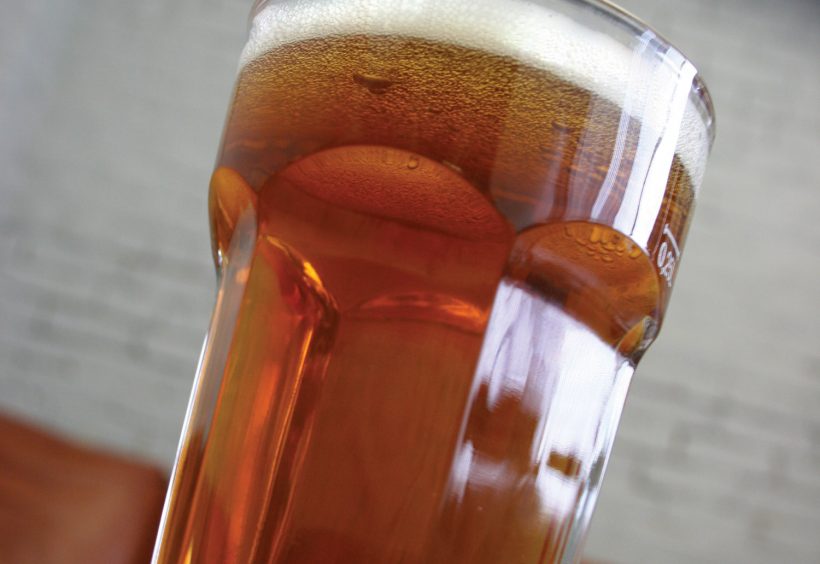
Lately, there’s been a bizarre struggle over tap handles in my hometown of Philadelphia, and I suspect you’ve seen evidence of it at your local pub as well. Instead of going at each other’s throats with more and more clear, yellow lager, the Big Three have been battling it out with a cache of surrogate brands that are the flavor/style/philosophical opposites of their flagships—namely, Witbier.
Budweiser? Forget about it. Anheuser-Busch has hooked up with InBev and now its sales reps are pushing Hoegaarden. The guy in the Miller uniform is rolling in a keg of orange-flavored Leinenkugel’s Sunset Wheat, and the Coors truck has a fancy new paint job with a logo for Blue Moon.
All white beer, folks. Opaque, hazy stuff with yeast thingies still floating around in the glass. Need I remind you that just a dozen years ago, Miller tried to sell us something called Miller Clear?
The irony is all the more remarkable because Witbier (or bière blanche, in French) had been virtually wiped out by those famously crisp, clean European-style lagers. Witbier goes back 500 years, to a period when beer was made with wheat and typically balanced not by hops but by a blend of herbs and spices known as Gruit. Brewers in the Flemish town of Leuven perfected the style, using spices and oranges that had been imported from the Dutch colony of Curacao. Modern brewing methods, the widespread use of hops and a fascination with golden lager conspired to force the white ale into near extinction.
Enter one of the heroes of the modern craft-beer renaissance, a Belgian milkman named Pierre Celis. His story should be required reading for any beer fan, but here’s the quick version: Longing for the forgotten style, he developed the recipe for Hoegaarden; he opened his own brewery, watched it burn down, then rebuilt it, and sold out to a bigger brewery. He moved to Texas, developed the recipe for Celis White, sold out to a bigger brewery again, and moved back to Belgium and started yet another brewery.
His Witbier was delicious, refreshing and unique—and it caught the eye of scores of other brewers. “I wasn’t trying to imitate any particular beer,” said Rob Tod, who made Allagash White his brewery’s flagship in the mid-1990s, “but I loved the flavor and refreshment of Hoegaarden and Celis White.”
Take one sip of Witbier and your mouth is swimming in currents of spice and fruit, wheat and oats. In Samuel Adams White Ale, you might detect hints of vanilla; in Flying Dog’s Woody Creek White, it’s pepper and cloves; in Southampton Double White … well, I can’t put a finger on the spices.
“It evolves,” Tod said of the style. “After a couple of sips, you should be asking yourself: What is that flavor? What is that spice? What is that yeast?” While the answers may be as murky as the white beer itself, appreciation of the style is unmistakable. Everyone, from newbies to pros, finds something to like in Witbier. Even BudMillerCoors could see that.
WITBIER
Original gravity: 1.044–1.052
IBU: 10–20
ABV: 4.5–5.5 percent
Flavor: lightly bittered with Saaz and Styrian Goldings, with dried orange peel, coriander, cumin, anise, pepper or other spices.
Other examples: Allagash White, Ommegang Witte, Blanche de Chambly, Blanche de Bruxelles, Hoegaarden, St. Bernardus Witbier,Samuel Adams White Ale, Victory Whirlwind Witbier, Avery White Rascal, Wittekerke, Hitachino Nest White Ale. ■

