Online Aid For A Hopless Situation
How the internet can save your brew
There’s no shortage of talk about the impending hops deficit these days, leaving many beer fans and brewers thinking bitter thoughts at best.
How to keep calm through these tough times? It all boils down (literally) to two options: keep hopping along or find alternatives. Fortunately, the internet holds many resources for brewers of all skills—from the fledgling homebrewer to the seasoned pro.
Substituting Hops
Skilled brewers are already tweaking their recipes in anticipation of popular hops being scarce or unavailable in the near future. The trick, of course, is to find hops that are more abundant but offer similar flavor, bittering and aroma profiles as the ones that are hard to find.
So, how the heck do you do that? There are a number of hops charts that can help brewers make those important decisions.
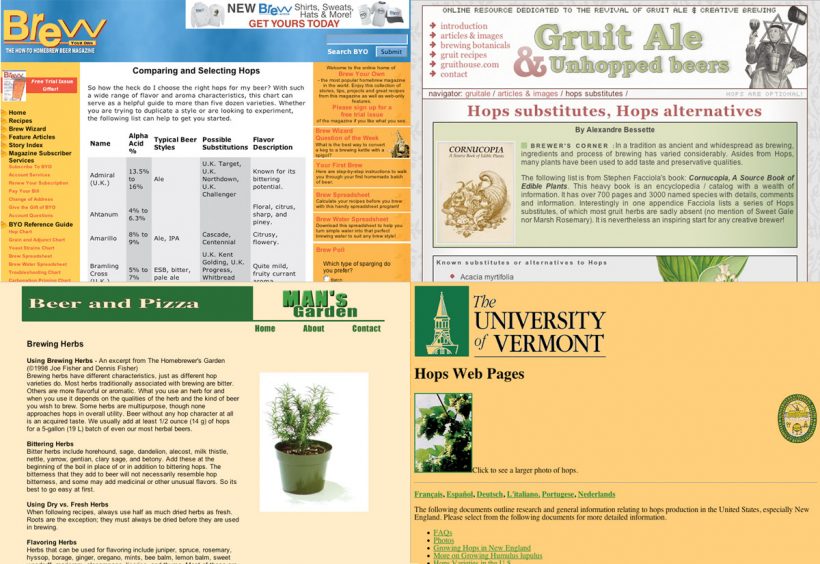
One of the more comprehensive is Brew Your Own’s hop chart.
Possibly the most comprehensive resource online—especially in the “everything you need to know and more” department comes from Hopunion’s online data book.
Homegrown Hops
Growing your own is another option, of course, but it takes a few years for hops to get established. Still, starting now will assure that if the hops shortage spans more than the two years most people are anticipating, you can at least have homegrown hops—on average about 1/2 to 2 pounds of dried hops per vine once the plant is established.
Although the Pacific Northwest is probably the best known area in North America for growing hops, the plant can actually be grown everywhere but in the harshest climates—a minimum of 120 frost-free days are necessary for hops to fully flower. They prefer sun, ample water and will need some sort of structure on which to grow. Hop vines can reach 25 feet in a year. Plan accordingly.
If you don’t have local access to hop rhizomes—either through friends or local homebrew shops—there are several resources online. Hops rhizomes, traditionally, have been relatively inexpensive to purchase, often $5 or less a piece, but that might be changing under the current circumstances.
Here are some online resources for growing, drying and storing hops:
The University of Vermont has a good guide for growing hops, with an emphasis on producing them in New England: uvm.edu/~pass/perry/hops.html.
Oregon-based Freshops focuses on hops gardening, from planting to harvesting and drying. Freshops is also featured in Brewing Techniques: brewingtechniques.com/library/backissues/issue2.3/montell.html.
A Hopless Case
Perhaps the most intriguing option in the face of the hops shortage involves not using hops at all.
Don’t freak out. It’s not forever; and I am not suggesting that brewers stop using hops. I’m just saying that when life give you a hops shortage: just Gruit.
Relatively speaking, hops are a newcomer to beer; historically a host of other herbs were used to flavor and bitter beer. Some of those herbs contribute health benefits to beer as well. Milk thistle, which is used in other countries to promote liver health, has been a common additive in beer. Imagine, drinking a beer that helps your liver at the same time. Lemon balm, a bittering herb that also lends some citrusy notes, has a mild sedative quality that inspired 17th century herbalist Nicholas Culpepper to say that it “Causeth the mind and heart to become merry and driveth away all troublesome cares.” Lavender has been a brewing companion since the 1600s. It can be used in the boil or in dry-hopping (dry-lavendering?) and gentian, which is a bittering agent used in Angostura Bitters, has been used in Swedish beers for centuries.
One highly respected Oregon brewer who has been experimenting with Gruits is Steve Carper of Terminal Gravity. While not yet available for public sale, Carper’s trial Gruit is similar to a Barleywine, yet the herbs he uses won’t send you snoring in your snifter after several sips.
“Hops are soporific. This (Gruit) doesn’t contribute that, so, because of the other herbs, you actually don’t feel ‘drunk,’” Carper says. “You are more alert.”
If you want to Gruit to it, there is a host of help on the web.
Gruitale.com is a website devoted to the revival of gruits and unhopped beers. It features a list of well-known hop alternatives here: gruitale.com/art_hops_substitutes.htm.
Homebrew shops and books also are great resources for brewing with herbs.
All you gotta do is think outside the hops. ■