
Becoming Elmer and Marjorie
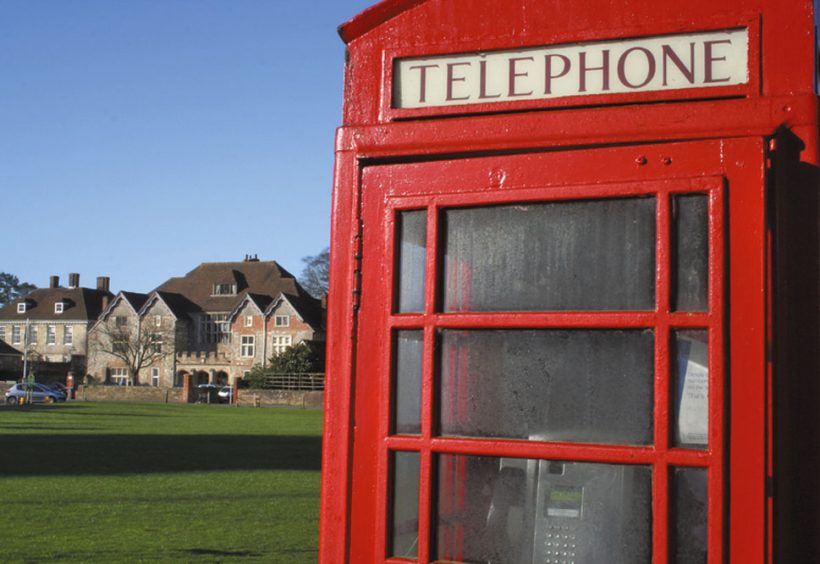
One March morning, many years ago, I met Elmer, a 70-year-old Nebraskan. He was swinging from the door of the bright red telephone booth that sat on our village green, wearing a Hawaiian shirt and Bermuda shorts and being photographed by his wife, Marjorie, whose sweater was more appropriate for the crisp English spring.
Recently retired from AT&T, they had decided to see the world. As neither was hugely interested in political history, shopping or grand architecture, no package tour accommodated their needs. Instead they decided to travel independently and be led by their passions—in his case, telecoms memorabilia, and in hers, photographing her husband.
That was the day I discovered our village phone box was one of the oldest surviving rural examples in the United Kingdom. And that for some people, learning cannot be random.
Last month, I gave up half of my day job to spend more time in the pub. More correctly, to spend time in other people’s pubs, as far as possible from anywhere familiar. I need to get out more and rediscover my world.
When I began to understand beer in 1974, my ambitions were limited to exploring places I already knew and finding other worlds within them. Among working-class boozers on the terraced streets of the dodgy side of town, I found bars laced with gaudy Victorian pomp. In a village near my grandparents’ home, I found a tiny but many-roomed inn owned by an obscure local brewery.
That same curiosity led me eventually to appreciate my country. Within five years, I had drunk in every county of Britain, chancing on conversations with people of all types and trades, honing the lifelong skills of talking sense with most folk and nonsense with all.
Michael Jackson’s first World Guide to Beer in 1977 expanded my horizons further. Belgium became the place to go, with Germany and Czechoslovakia also high on the to-do list. I learned that making noises, gestures and facial expressions can be as good as language in communicating with like-minded foreigners. Laughter is universal, too.
For Elmer and Marjorie, hunting down old phone boxes was a device to help them overcome natural fears of the unknown. I met them three weeks into the foreign leg of their voyage of discovery that had begun on New Year’s. They had just reclassified their trip as indefinite—not bad considering neither had ever left the US before.
I wish more beer drinkers would follow their example. Sitting at home with a few friends and rating a bottle of foreign beer from a nearby store shows a welcome willingness to experiment, but seeking out craft beers and the people who drink them, in places close to where they are made, shows an intent to live life to the fullest before you no longer can.
Here in Europe, the old beer cultures have been joined by new and revived ones in Northern France, Italy, Scandinavia, Finland, Poland, the Baltic States, Austria, Switzerland, Slovenia, Croatia and the Netherlands. That revolution has spread to Australia, South America, Southeast Asia and every part of the US.
As we sat in the pink-washed, timber-framed, 16th-century former courthouse converted a couple of centuries back into my village’s last remaining inn, I told Elmer about the Royal Naval telephone exchange in Plymouth that had been converted into a pub. Marjorie wanted to know if this was the same Plymouth that the Pilgrim fathers had sailed from. I told her it was and that one of the places those temperate souls had bunked down before their voyage was now ironically a gin distillery.
“Oh, so many things to see!” she enthused.
“Only if we have time, dear,” said Elmer. ■
 Previous: Fighting Taste Blindness
 Next: Fall of the Legend