Bulking Up
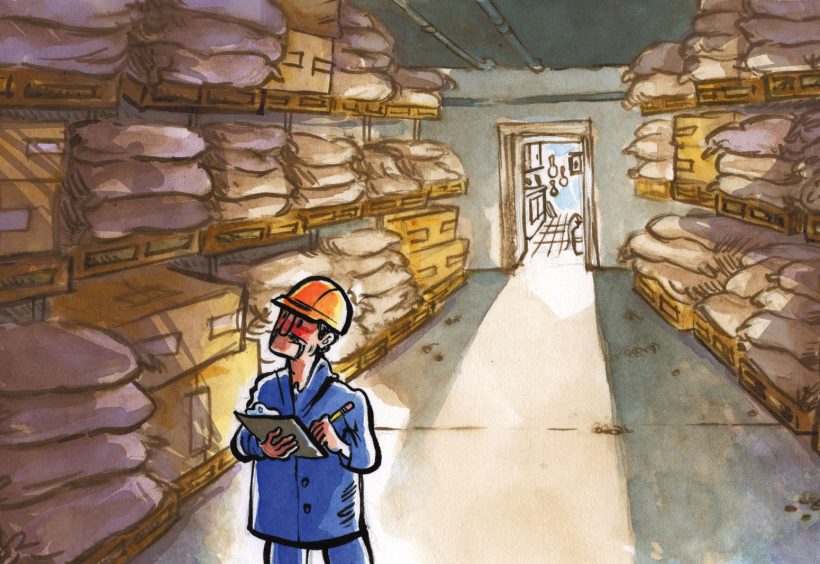 Illustration by Ellen Crenshaw
I’ll be the first to admit to my skinflint ways. I’ll repair, reuse and adapt anything instead of spending the money to buy new. The one place we can’t skimp is our ingredients. No matter how much we’d like to use that cheap bag of feed barley to make beer—there’s a reason it’s feed barley and not malt.
Moving to 10-gallon batches made me suddenly and painfully aware of how much malt and hops I need to keep brewing. With the past year’s price increases, base malts have jumped to $1.25, or even over $2 for more exotic base malts. Considering that I brew with Maris Otter and an average batch involves 20 or more pounds, the money adds up.
The solution is to buy in bulk. Recently, I ordered 50-pound (25-kilogram) sacks for less than $30. For under $200, I bought 310 pounds of base malt, a mix of Domestic Two-Row, Pilsner and Maris Otter—enough for a righteous amount of brewing. Ask your local brewery nicely and they may be willing to sell you bags. With enough friends, you can contact a grain distributor directly or order from North Country Malt and get 4,500 pounds of grain dropped at your door. While you’re there, order PBW—the expensive cleaner can be had for a drop in the bucket.
While the hop crisis may recede, prices haven’t returned to pre-crisis levels. From your local homebrew shop, you’ll still see hops for $2–$3 per ounce. If you’re brewing IPAs, that hurts. There’s a slew of websites devoted to selling pounds of hops for $10–$25 per pound—a far more reasonable rate for your favorite hops.
Storage Needs
The most useful tool for the bulk buyer is the vacuum sealer. A good, new vacuum sealer isn’t cheap ($100–$200), but for the thrifty, trolling Craigslist, eBay or BigLots can turn up sparkling deals on the machines and bags. Spend the money; the cheap handheld sealers don’t work nearly as well.
All of my hops are vacuum packed—some into convenient, batch-ready sizes of 1–2 ounces. Hops that get used in small odd quantities (i.e., high alpha hops) get bagged in bulk. To reduce waste, I bag them with extra room at the top. Whenever I open the bag, I remove the amount needed and then reseal the bag using the extra space instead of a whole new bag. Some folks seal their hops in mason jars (with an optional attachment) to do away with the bags altogether. Since I have limited freezer space for hops, I prefer the bags for their space-saving function.
I buy my favorite specialty malts in 5-pound allotments. These get sealed into bags as well, using either no vacuum or manual vacuuming to avoid stressing out the motor. Sealing the grain preserves freshness and protects the grain from pests. Should the grain suffer an outbreak of weevils, they’ll be isolate to the single bag and won’t effect the whole supply. The individual grains then get organized into bins for “Roasts and Adjuncts,” “Crystals” and “Toasted.” Neat and tidy!
Of course, if you’re reaching for the sack level, a vacuum sealer is impractical. Some folks keep the malt in its original bag or a trash bag, and then sealed in a big lidded container like a trashcan. I use 5-gallon buckets, like the ones you can get for $2 at the hardware store. You can use the regular lid, but “gamma seal” bucket lids (think Vittle Vaults) make a great upgrade. They cost about $6 and each bucket holds approximately 25 pounds.
Local Support
One thing I want to make clear—support your local shop! For me, I buy almost everything I need locally, even when I can find things cheaper. That includes equipment, the majority of my hops and all of my specialty grains. Remember, as nice as it is to save a few dollars, it’s nicer to have that local shop around! ■