
War and Beer
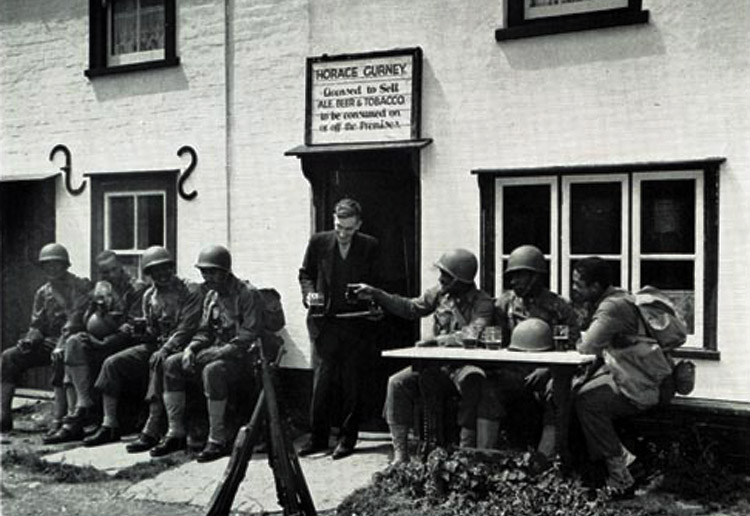
War and beer. They go together like love and Martians. Or a horse and cabbage. Let’s run quickly through British wars and their effect on what Tommy Atkins drank when he came home.
The English Civil War (1642-1651) was a tumultuous event that changed Britain forever. The first beer tax was introduced—by both sides. No surprise that the killjoy roundheads would tax beer. King Charles, well, he was just desperate for cash.
The Napoleonic Wars (1792-1815) broke out just as Porter was hitting its stride. The British approach of paying others to do their fighting for them meant they needed cash. Lots of it. Taxing beer was the easiest way to get it. Between 1799 and 1804, the tax on beer almost doubled. The increase focused the minds of the large Porter brewers. The newly introduced hydrometer told them pale malt offered the best value. The brown malt content of Porter dropped from 100 percent to 25 percent. That presented a new problem: how to get the signature dark color. After playing around with concentrated wort and burnt sugar, the perfect solution was found—roasted malt. It changed the character of Porter completely, much to the annoyance of older drinkers.
The Crimean War (1853-1856), being short and of limited scope, only required a 50-percent tax hike. Trouble was, despite brewers increasing their prices, drinkers weren’t prepared to pay more. Publicans were left selling beer at the same price they bought it for. Their solution? Watering and adulteration. Porter that left the brewery at 5.5 percent ABV was just 4 percent, 3 percent or even less by the time it hit the glass. Didn’t customers notice the puny strength? No, because in addition to water, landlords threw in a few drugs.
 The Second Boer War (1899-1902) confirmed British drinkers’ abhorrence of price increases. This time, brewers did the watering themselves, cutting beer strength to offset the tax rise. The Journal of the Institute of Brewing handily published a formula to calculate the reduction in gravity required to maintain the same wholesale price. British beer would never be as strong again.
No previous war could compare with the cataclysm of World War I (1914-1918). Amid fears of munitions workers spending all day in the pub, opening hours were slashed from 18.5 hours a day to just five. This time, it wasn’t just the government’s fault; German U-boats also wrought havoc amongst ships delivering food. Supplies of grain and sugar fell to such dangerously low levels that the amount of beer brewed and its strength was severely restricted.
 Nationalization or total prohibition were avoided by a whisker. By the end of the war, a sickly 5 year old would have struggled to get intoxicated.
It was much the same story in World War II (1939-1945), but Churchill, an enthusiastic drinker, did make sure beer supplies were maintained. Gravities, which had bounced back in the 1920s, didn’t fall as low as in WWI, but barely increased postwar. In 30 years, British beer had gone from being the strongest in the world to the weakest.
War—what is it good for? Certainly not for beer. ■
 Previous: Jason Meyer of Driftwood Brewing Company
