
From the Field to the Lab, and Back Again
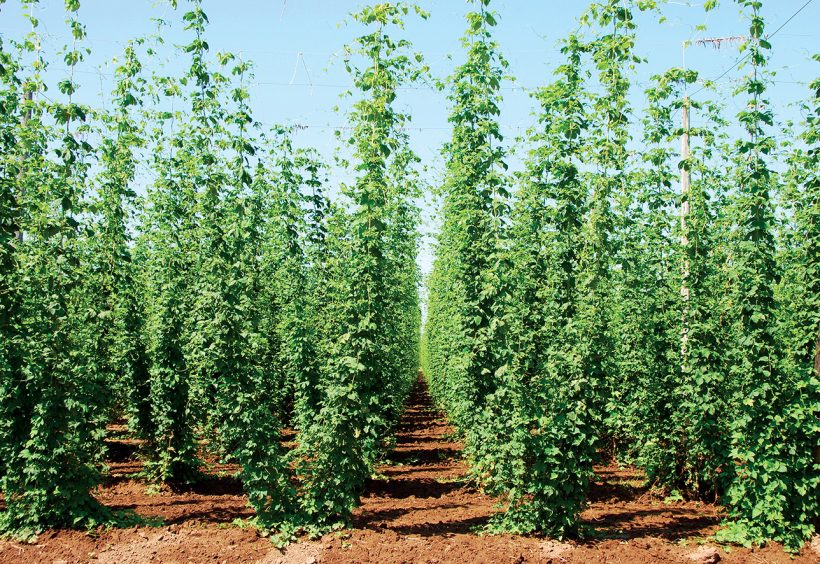
There are two distinct pathways by which hops are developed in the US. One is the public breeding program, co-funded by taxpayers through the USDA and brewers through the Hop Research Council. The other is private programs, funded by individual hop companies (from large, well-organized international firms to relatively small, individual hop growers). In recent history, there has been some slight blurring of this distinction, but by and large this is the way it is.
The public program successfully bred hops for US brewers from the 1950s through the early 2000s. We saw wonderful aroma varieties—Cascade, Centennial, Chinook and Willamette, to name a few—released during these years. We went from having fewer than five hop varieties in the ’50s and ’60s, to today, when we have over 50 cultivars available. We also saw the yield of alpha acid per acre increase dramatically. Then, a shift in who releases new hops and for what reasons occurred in the early 2000s.
In the early 2000s, the need for publicly bred hops was low. Big brewers were satisfied with their aroma hops, which were typically non-aggressive, pleasant, harmonious varieties, such as Willamette. Breeding goals increasingly took the direction of increasing the alpha-acid yield, improving stability and building up resistance to powdery and downy mildew. (In fact, the introduction of powdery mildew to the Pacific Northwest in 1997 probably had more to do with the rethinking of the USDA public breeding strategy than any other occurrence in the hop or beer industries.)
From 2002 to 2013, public breeders released zero new hop varieties. The void in new public releases was readily filled by a few private breeding groups, often in collaboration with brewers, and done so with quite a bit of success. Many people felt that the public breeders were giving up on breeding hops, but in reality, the new effort to prevent hops from repeating themselves for another decade was a much-needed change.
Why has the public breeding program seemingly been so unproductive during the last 10 – 15 years? Because the USDA refocused their goals on producing molecular-marker breeding tools, mapping the hop genome and identifying genes responsible for improved resistance and higher bittering acids, effectively bringing 21st-century technology into the realm of hop breeding. So as we tuned our public hop-breeding interests to molecular breeding tools, we temporarily turned off the public breeder’s longstanding focus on producing new hop varietals. The public breeders went from working in the fields to working in a lab.
One important factor learned from the new molecular marker-assisted breeding tools is that, for the last few decades, hops have been bred within a very small gene pool. With this realization and new efforts to incorporate more diverse genetics within hops, we should see a new wave of interesting characteristics in hops.
In a 25-year period, average alpha-acid levels in hops went from 7 percent – 15 percent. It would be exciting to see the average essential oil levels increase from between 1 – 2 percent (levels found in today’s hops) to 6 or 7 percent. In this amount, the oil content would create aroma compounds never before found in commercial hops, contributing new flavors to beer. We’re already seeing hops in excess of 4-percent essential oil content getting more attention from brewers and growers.
After 11 years of not releasing any new hop varieties, in 2013, the public breeding program in Washington released four new cultivars. These new offerings are not wildly different than the current stock of hops available to brewers, but they are a refreshing reminder that our public breeding efforts could still yield relevant hops for everyone to use.
Here are my personal sensory notes upon rubbing these hops for the first time:
Tahoma: Piney, citrus (slightly grapefruit), perfume, spicy, woody; somewhat Cascade-like
Triple Pearl: Mellow, pleasant, citrus (orange rind / zest)
Cashmere: Intensely artificial pineapple, lemon, coconut, spicy, floral
Yakima Gold: Berries, sweet, slightly sweaty ■
 Previous: Brewing in the Heart of Instanbul
