
Dann Paquette of Pretty Things Beer & Ale Project
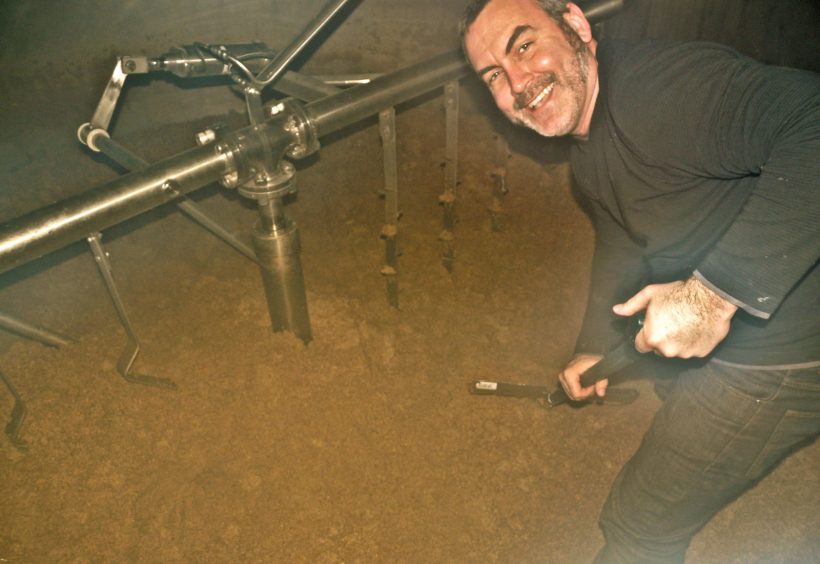
When Dann Paquette moved back to New England from Yorkshire a year ago, he had no job and little money. Thanks to the weak dollar, though, the longtime Boston brewing veteran had just enough cash to rent a brewhouse and churn out a batch of Saison for a brewing project he and his wife dubbed “Pretty Things.” They didn’t have any buyers for the beer, but figured that would take care of itself. It has. A year later, Paquette’s beer is spreading along the Atlantic coast, and he’s enjoying the one perk he’d never attained: unfettered creative freedom.
1. Break free
Dann Paquette has been in charge of recipe formulation plenty of times. But it’s just now, 18 years into his brewing career, that he feels he has control over his beers. He’s completely free—from management, from investors, from unwanted suggestions. “I like to make my own mistakes and move on from them,” he says. “I’ve been waiting my whole life to be away from all that clutter, all that noise.” In freeing himself from that clutter, he argues, it was important to brew a beer “that you wouldn’t want to have anything to do with it if you weren’t a beer person.”
2. Tell your story
Paquette describes the current stable of Pretty Things beers as being autobiographical. “One thing I don’t do is ever look at a style sheet. We try to re-create flavors we know and love. All the beers so far are very European. There are a lot of young brewers who are very influenced by what’s going on in the US. When I grew up in this business, there wasn’t anything interesting coming out of the US. And I’m still there, looking toward Europe. In a way, I’m starting to feel like a throwback.”
3. Say “no” to fake mustaches
Jack D’Or, Pretty Things’ flagship brew, is a Saison brewed with Pils, Vienna and Yorkshire oat malt, hopped with Nugget and Palisade hops. Paquette has dubbed it a “Saison Americain.” He used citrusy American hops, he said, “because if you have any respect for tradition, you don’t try to phony your way into it. I didn’t want to come out with the first beer looking like a fake mustache—look at me, I’m the Belgian guy!”
4. Be a freak
“I’m a freak for authenticity,” Paquette says. For him, authenticity means respecting the origins of great styles. “I don’t think of beer styles as ice cream flavors. I don’t just regurgitate some stuff I read in style guidelines and try to pass myself off as a brewer. That’s my hangup, and I know it’s a hangup, but it’s really important to me. Every beer we look at doing, I ask, how are we going to make this an authentic beer? I don’t want to be just a phony baloney doing this.”
5. Brew in scenes, not styles
Babayaga, Paquette’s winter seasonal, is a dark brew with rye, wheat and oats, and fermented with five different English and Belgian yeast strains. It’s also brewed with malt smoked with rosemary. The idea came, he says, from a vendor in a London market who would smoke sausages with whole trees of the stuff. Instead of pegging the beer to a style, Paquette describes it in an impressionistic way: “The goal was to make something that tasted like it came from an old lady who lives in a shack in the woods in Eastern Europe.” It helps to brew with scenes in mind, he argues. “That’s the way we like to think about things.”
6. Mix it up
Pretty Things beers are brewed with a blend of several yeasts to keep drinkers from fishing around and trying to identify individual ingredients. “I hate the idea of people going like, oh, he took this yeast strain, these hops, and this malt to make that beer. I can’t stand it when people sit down and say, what is this, the 3787? I don’t want that idea to enter anyone’s head. I’m trying to make something that tastes completely different than what you’re used to.” The upside, he adds, is that his yeast behave hardier and are more flocculent.
7. Go wild with Mild
Paquette’s newest beer is a re-creation of a recipe for a London Mild from 1832. It’s the first shot in a historical series that he envisions, one that will challenge beer drinkers with ancient recipes that won’t jibe with modern tastes. This Mild, for instance, is an 11 percent monster brewed with 4.5 pounds of whole-leaf hops per barrel. It took three days to clean up after brewing. “The amount of hops in this beer was appalling,” he says. And he doesn’t expect the taste to be much more forgiving. Because it’s a Mild, it’s meant to be drunk while it’s young, so he anticipates problems with fusel alcohols. “Every single person will have a problem with it. It’s a historical re-enactment. It’s like going to Sturbridge Village. Would you like to live there? No! But this is like what it was like, and I’m trying to do the best job of re-creating what it was like.”
8. Own the beer, not the kettle
Pretty Things is not a contract brew. Paquette makes everything himself. So stop asking. “People think if you don’t own your own brewery, you’re not making the beer,” he says. “I’ve worked for complete and utter assholes, and it was my beer. I’ve worked for breweries that were going out of business and weren’t paying their suppliers, and it was my beer. The moment I’m not working for a company that owns their own brewery, it’s not my beer? That kind of bothers me. I couldn’t be more connected to this beer.” He pauses, then adds, “That’s why I’m slightly more uptight about it than I should be.”
9. There’s no “I” in “beer”
Paquette’s wife, Martha, doesn’t get nearly enough credit for Pretty Things’ success, Dann says. “It’s a 50-50 thing. I listen to her a lot. I’m a jaded old man in this business. I’ve got a better palate for industrial purposes, but she’s got a better palate for being a positive influence on the business. I always ask her what she thinks before I open my gutter mouth. Palate-wise, creativity-wise, she always puts the right twist on what I’m doing, or I put the right twist on what she does.” ■
 Previous: Gearing up for the Beer Superbowl
