
Farmhouse Sisters, Part One: Let’s Meet the Blonde
This is the tale of two sisters, and no doubt one of them has led you down the path to better beer. These farmhouse gals know how to entice, tease and seduce the taste buds all in one sip with the crispness and drinkability of Pilsners, the bitterness of Pale Ales and some of the tartness of sour ales. Of these two sisters, the spicy blonde is Saison and her sibling ale, the saucy redhead, is Bière de Garde.
Historically, these sister ales were brewed on the farms of Flanders and Wallonia during the winter months. Beer, since boiled, was free from nasty, life-threatening bugs, and both these styles were originally intended as safe, low-alcohol hydration for thirsty saisoners (seasonal workers). “Saison,” as you probably guessed, means season. The Bière de Garde name means “beer for keeping” or “beer for storage,” referring to the long period of time these bières were stored before consumption.
With more modern brewing techniques, the infiltration of wild yeast has mostly been eliminated, but some subdued tartness is still welcomed in both these styles. Both sisters have grown, and many examples are now well above 4 percent as they are no longer a substitute for safe drinking water. Some of the Noel versions of both styles reach 10 percent ABV, and it is suggested you no longer consume a liter a day.
Similar to the origins of IPA, Saisons were and are highly hopped. Hops acted as a preservative and kept the beers in good condition for their long storage periods. Add the existence of wild yeast in the process and the result is a finished beer that is quite bitter and tart. The sourness levels, historically, would have most likely approached that of Lambics; now, a subdued funkiness is in all best examples, and American brewery Boulevard brews a Saison Brett with an added dose of Brettanomyces to mimic what history has lost.
The first half of the 20th century was not kind to the farmhouse breweries of Belgium and France. The regions were devastated by two World Wars and many of the area’s original breweries were melted down to make guns and bombs. Literally thousands of breweries disappeared as many farms performed their own brewing, each with their own recipes and ingredients from their own fields.
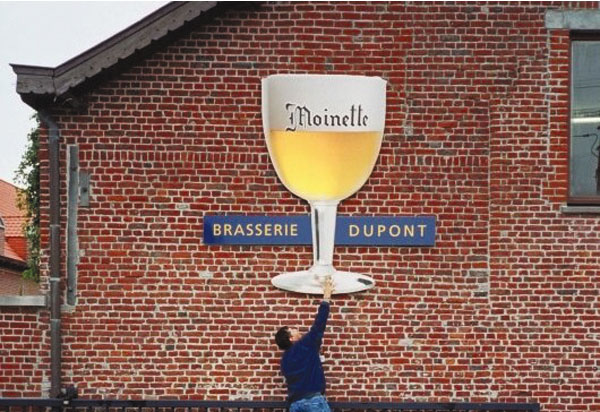
There is no better place to start a history lesson about Saisons than the Brasserie Dupont in Tourpes, Belgium. Dupont is the site of the oldest brew kettles in Belgium, dating from 1844, and one the most beautiful breweries this beer scribe has toured. This family-run brewery put the “hip” in hippie long before free love, tie-dyed shirts and organic farming.
Dupont was the first brewery in Europe to have some of their beers certified organic and holds to the truest of farmhouse brewery ideals. On site, they operate their own cheesery and bakery, use their own spring water and, of course, the brewery’s animals are raised on spent grain. Dupont even sells their own farm’s eggs from the brewery office, but they can’t claim total self-contained commune status, as they do purchase grain and hops from the outside world.
The brewery and a farm have existed in this Walloon part of Belgium since 1844. In 1920, Alfred Dupont bought this farmhouse brewery as a clever distraction to keep his son Louis from moving to the wilderness outpost of Canada, where Louis wanted to homestead. Since this bold move, this family brewery has been passed down through several generations of Duponts.
Little has changed at Dupont; they brew the same way they brewed in 1920. They meticulously follow a number of historic steps: Where most breweries will have the raw wort on yeast in as little as four hours, Dupont takes 12! A beautiful wooden mash tun, stunning copper kettles and a heating system of a single-flame burner, which seems better fitted for a single-seat jet than a brew house, are the heart, with its yeast being the soul, of Dupont’s bières.
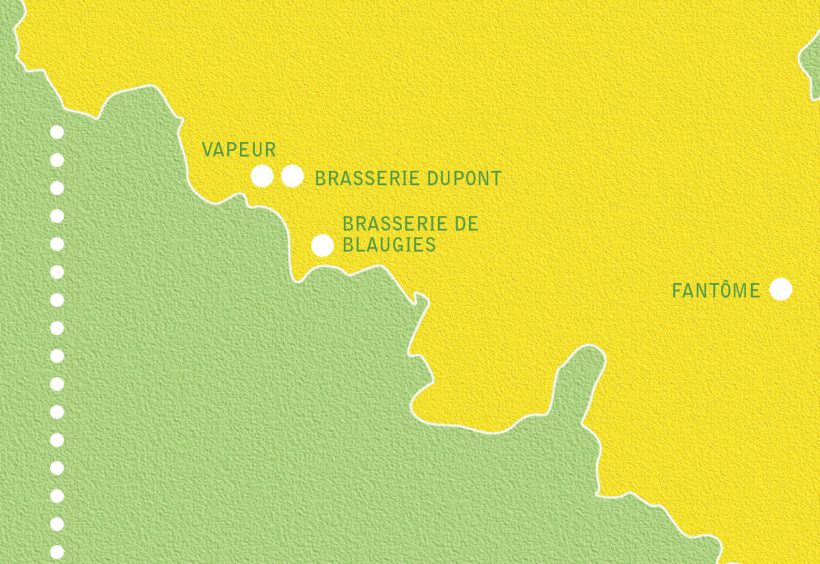
Just a short drive from Dupont, in the town of Pipaix, is one of the last steam-run breweries in the world, Vapeur (“steam,” in French). Many argue that this brewery is right on the dividing line between “genius and madness.” I am not going to pick a side, but both the Lonely Planet Belgium & Luxembourg Guide and Tim Webb’s Good Beer Guide to Belgium say that if you’re only going to tour one brewery in Belgium, make it Vapeur.
The last Saturday of each month, local history teacher Jean-Louis Dits, also Vapeur’s head brewer, opens the brewery for a public day of brewing. The day starts at 9 a.m. and includes as much of an education as it does a gastronomic feast. The brewery lunch includes several courses, each made and paired with their beers. The climax of the beery festival is a pork roast cooked in the brewery’s Cochonne beer—fitting, as the beer’s name means “female pig” in French.
A tour of Dupont left a mark on Jean-Louis Dits, and he was bitten by the brewing bug. In 1984, he purchased this 1920s steam-driven Saison brewery. Vapeur adds a unique ingredient, lichen, to all its beers in order to replicate the history of the original brewery (Jean-Louis found a historic reference to this in an old brewery log). One of the brewery’s most famous and historic beers, the Saison Pipaix, also came from this log.
Keeping with the Dupont theme, and adding yet more school teachers to the mix, Brasserie de Blaugies uses Dupont’s yeast, but its beers are generally fruitier and less hard-edged than Dupont’s. A husband and wife team, Marie-Noelle Pourtois and Pierre-Alex Carlier are teachers living in the very small village of Dour-Blaugies. Blaugies also pays homage to the area’s beer history as some of their beers use a variant of wheat called spelt, and one beer even has figs added. Blaugies beers are a treat, as they are quite dry, but writing from experience, please follow the first rule of Belgian beer and open them by the sink with a glass at the ready. These girls are a little over-carbonated.
Opened in 1987, this one-of-a-kind brewery is shoehorned into a garage, and the site’s old farmhouse is now the brewery tap and a restaurant called Le Fourquet, or “mashing fork” in French. Simple country food is served here, but Fourquet has a unique barbecue that is a tribute to both grilled meat and brewing.
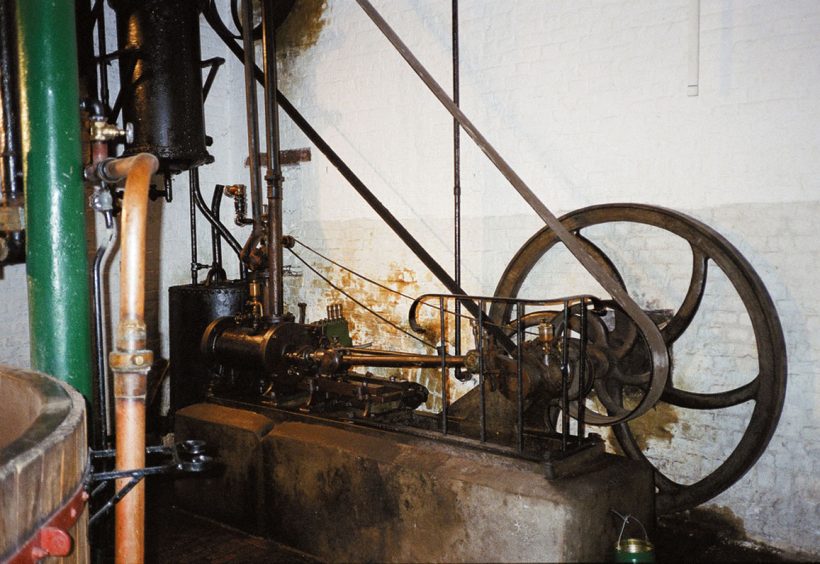
The steam boiler at Vapeur.
A Saison tour would not be complete without a visit to the Fantôme brewery. Dany Prignon is a true character of the beer world. He does not keep a recipe book and, besides his house Saison, all the seasonals vary from year to year on his whim, and how much he gets carried away with the spices. I am among those who think his best beers are ones without spices. If you love eccentric and unusual brews, seek Fantôme’s Saisons. This is a fun brewery tour, but if visiting, some basic French is suggested. Prignon tries to impress with his own dialect of Fran-glish, and whatever you don’t understand, a very animated brewery visit will make up for.
In Part Two, next issue, we’ll meet the saucy redhead on a trip through the farmlands of Northern France.
Beer Reviews
Dupont’s Avec Les Bon Vœux | 9.5% ABV
I can’t help but think of George Clinton every time I have this beer. Everybody sing, “We want the funk, give up the funk.” A super-funky Saison that started its life as a special New Year’s beer. Originally crafted as a beery gift for Dupont’s best customers, its name means “with best wishes.” Aged bottles have an amazing wet blanket, spring meadow smell; in younger bottles, this quality is subdued.
Blaugies’ Bière Darbyste | 5.8% ABV
A Saison with figs added to it, based on a local tradition. Dry to the point of tartness, the fresher this beer is consumed, the better. When young, the smell and taste of plump figs add to a cornucopia of spring meadow tastes and smells.
Fantôme Saison | 8% ABV
Big notes of apples and pears top off a round, dry, slight sourness. You never know what you’re gonna get with a bottle of Fantôme, but it’s well worth the “tubular” adventure. ■
 Previous: Barleycorn's
 Next: Cleveland