
Books
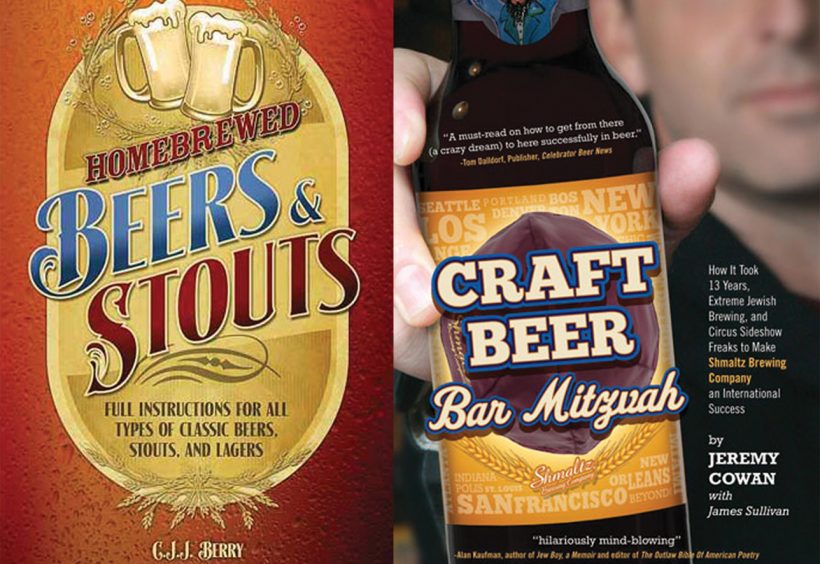
Homebrewed Beers & Stouts: Full Instructions for all Types of Classic Beers
By C.J.J. Berry
Fox Chapel Publishing, September 2011, $14.95
First published in Britain in 1963, editions of this book have sold over a half-million copies. For this version, intended for American novice homebrewers, editors have converted British (metric) measurements to US standards and changed British spellings to American. But, Mr. Berry, you’re not fooling anybody—this book oozes Britishness. (“Popular preference has always been for the weaker beers, because your beer drinker usually prefers quantity to strength”? Dead giveaway.) There are some gems, however, like the explanation of Lamb-ale, which historically was brewed “for lambing time,” or Cuckoo-ale, “for the day the first cuckoo was heard.” Some nice color illustrations take us through the steps of homebrewing, then we come upon the recipes—mostly low gravity, and heavy on the Bitters. The book concludes with “Novelty Beers,” recipes for Nettle Ale, Parnsip Ale and, finally, Rooster Ale, a century-old recipe that calls for pieces of chicken and chicken bones to be added to the fermenting wort to increase the beer’s strength—a recipe that, on its own, is enough to merit the adding of this edition to your recipe-book collection.
Craft Beer Bar Mitzvah
By Jeremy Cowan with James Sullivan
Malt Shop Publishing, December 2010, $16.99
In the intro to Jeremy Cowan’s memoir, the author asks himself: Why write a book? A good question, but how about one that readers are more concerned with: With all the memoirs out there, why read this book? The answer is simple—Cowan’s a neat guy. Sure, he founded Shmaltz Brewing Co. in 1996 and became one of the beer world’s most popular brewers to kick back with, but the guy also started a ’zine in the ’90s, did a meditation retreat in Thailand and went into massive credit card debt to finance a brand extension that would eventually support an arts nonprofit. Cowan divulges intimate details about the challenges of opening and running a large-scale, successful brewery. But even more challenging is making a reader laugh. And Cowan succeeds at both. ■
 Previous: Beer Needs to Learn to Behave
 Next: Kiwi Lager