
Beer Needs to Learn to Behave
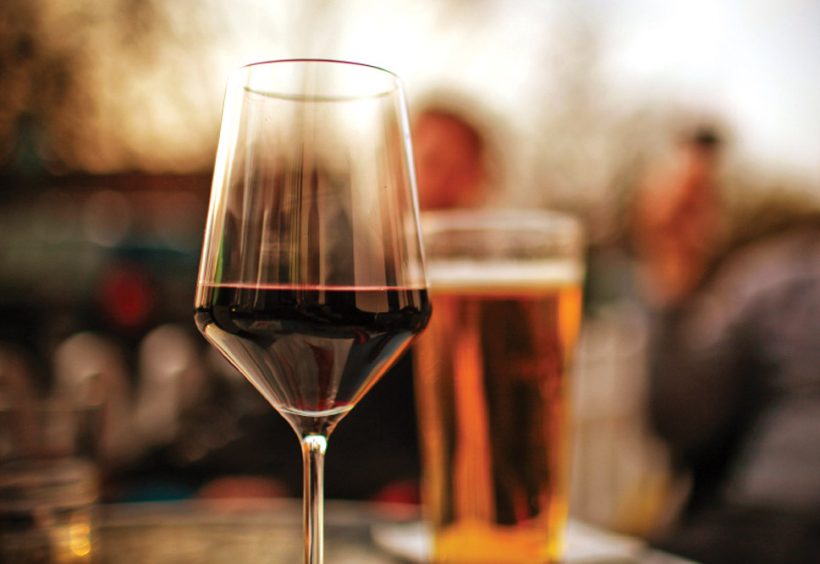
If I could wave a magic wand and bring everyone involved in the world of beer around to seeing one thing my way, I would impose the understanding that we all need to treat beer with the respect that people in our rival industry treat wine.
But before beer can take its rightful place in the world, the industry needs to learn some finesse.
Beer didn’t always take a back seat to wine. In the 19th century, British brewers were powerful people. The ales that made us famous, such as Porter, Strong Stout and India Pale Ale, ruled export markets every bit as much as Britannia ruled the waves. This led the country’s most successful family brewers to feel obliged to help shape the nation, and so they got involved in the government.
By about 1870, so many brewers were serving in Parliament, either as MPs (Members of Parliament) elected to the House of Commons, or as peers appointed to the House of Lords, that their collective might was nicknamed “the Beerage.” In UK politics, brewers punched well above their weight until World War I (1914-1918), which, for many reasons, subtly led beer to disappear as the favored drink of the decision-making class.
Then, during Prohibition, the wine lobby in mainland Europe scored some impressive wins against the Temperance Movement. For example, Norway’s brief flirtation with criminalizing the trade of alcohol in 1921 ended when French, Spanish and Portugese winemakers persuaded their governments to ban the import of all Norwegian fish. That same year, the Spanish also broke the Icelandic Prohibition, which the people of Iceland had voted for six years earlier, by using the same tactic.
As the century rolled on, wine lobbyists became even bolder, their finest achievement being to persuade the European Union to support subsidies for wine producers that will continue to run at over a billion euros annually until 2014 at the earliest, a law they justify by the simple conceit that wine is classified as an agricultural product. Beer, being a manufactured item, enjoys no such assistance.
Better informed European beer lobbyists, of whom there are remarkably few, are outraged by what they see as the pompous assumptions behind the EU stance—but should they be? Consider a few awkward questions.
• Do the wine industry’s leading producers promote almost exclusively utilitarian, dull products at the expense of more accomplished ones?
• Are most wines designed to be necked straight from a bottle or can, followed by a satisfyingly pressure-releasing belch?
• Is it OK to add syrup, coloring and flavoring to wine after it has completed fermentation?
• Do wine companies post mission statements designed to assure investors that they are ultra-efficient bean counters without stating any intention of creating excellent products?
• Are simple, unchallenging, industrially produced brands glamorously promoted by the wine industry at any sporting event where the rules allow it?
• Are wine retailers so sensitive to pricing that they would rather risk going out of business than pay an extra 50 cents on the gallon?
My point is not the obvious one—that the wine trade could never dream of answering “yes” to any of these questions—but rather that few in the established beer world would consider any of these issues would cause detriment to their image … which is why wine is still the drink of the winning classes in Europe. ■
 Previous: Redefining Local
 Next: Books