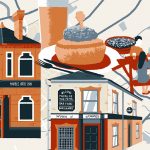
Manchester’s famed youthful energy and Northern attitude have advanced a wave of beer culture, spawning a new generation of breweries and reinvigorating the bar and restaurant scene.
Known as “the Dog” in its home of England, Newcastle’s ubiquitous Brown Ale was atypical in its strength and production methods when it debuted in 1927.
Scottish and English brewing records from over a century ago reveal a surprising number of low-ABV hoppy beers that look a lot like today’s trendy Session IPAs.
In the 18th century, there were three tax classes in England (in descending order of strength): Strong, Table and Small. The definition of these classes was very simple, as it was based on the wholesale price.
Beer didn’t always take a back seat to wine. In the 19th century, British brewers were powerful people. The ales that made us famous, such as Porter, Strong Stout and India Pale Ale, ruled export markets every bit as much as Britannia ruled the waves.
The story behind this style not only recalls the creation of one of the world’s great brewing capitals in Burton-on-Trent, but it harkens the triumph of the British empire, a living, breathing emblem of might and power.
Tim Webb reminisces about his first taste of better beer in 1974 (a Batham’s Bitter at The Plough Inn) and wonders what the prize-winning GABF beers will be like 35 years from now.