
On Roman Time
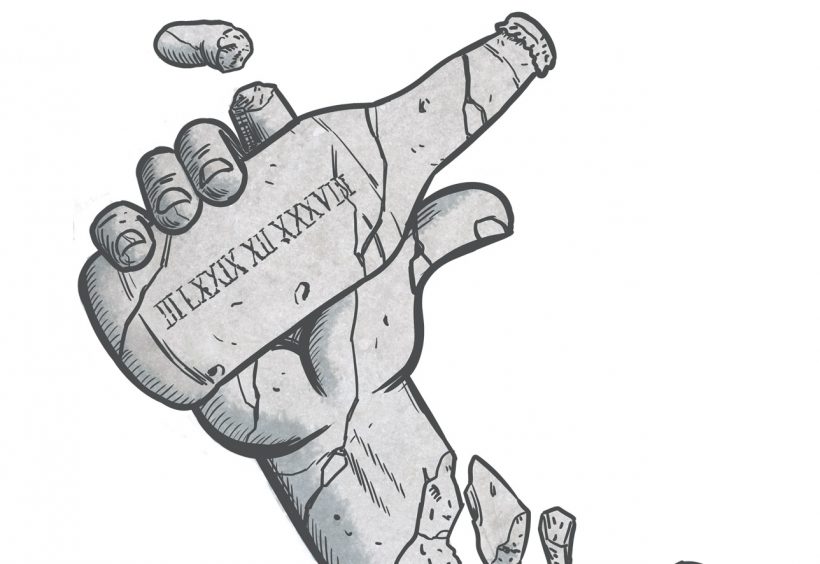 Illustration by Chi-Yun Lau
30791338.
To some beer lovers, these digits make perfect sense. These savvy shoppers looking to purchase a bomber, six pack, or case of beer, know they mean one thing: avoid. To the overwhelming bulk of consumers, however, the integer, even if noticed, is seemingly meaningless numeric nonsense.
For a calendaring method dating back 2,000 years, the Julian system is remarkably resilient. Named after Julius Caesar, the numbers in the modern version of this time stamping process reference the year (3), day of the year (79th), and time of day in military time (1338) the beer was packaged. Of course, there is no standard application of this system among American breweries. Some employ a production date, such as when the beer was brewed, while others use a bottling date. The breweries also tend to mix and match the dates and year codes, with no set order to their appearance on a bottle. Others include a time stamp or proprietary production information, such as the fermenter involved or the batch code.
The Julian system is but one of many tricks—and I intend the full meaning of that word—that craft brewers employ to confuse unsuspecting consumers into buying old and often lifeless beer. Lacking in simple clarity to be sure, the Julian system requires customers, many of whom are not hardcore beer nerds, to come equipped with additional computational skills just to find a relatively fresh bottle. At a time when beer can take more than a month to get from bottling line to retailer’s floor or cold box—and when craft beers now rely so heavily on gentle and fragile aromatics—ready and transparent access to the details of a beer’s production have never been more important.
For breweries the size of Lagunitas, Anderson Valley, Avery, Ballast Point, Boulevard, Flying Dog and 21st Amendment (American breweries still clinging to some form of the Julian system), the absence of a corporate sense of shame in perpetuating the unfortunate practice is remarkable. Relying on a website such as Freshbeeronly.com—and it’s ridiculous that such a resource must exist in this craft beer era—is one of few hopes for understanding each nuance.
Run by smart, savvy business minds, breweries know all of this. For them, the issue of beer dying quick deaths on store shelves remains one of their most vexing challenges. The best breweries focus on markets close to home and have sales reps or distributors religiously check for out-of-code beers. They buy back old beer or better yet, closely regulate orders to make sure that distributors and retailers do not over-purchase beer beyond their likely sales needs, resulting in caches of old, dead beer.
Some breweries think the road to transparency is fraught with peril. They believe that technology costs associated with clear dating would be prohibitive. Hugh Sisson of Heavy Seas put the lie to that myth. A decade ago, his brewery simply added “best by” boxes to its labels and used a band saw to cut a notch in the appropriate month before putting them in the labeler. A bit crude, perhaps, but effective.
But cost cannot be the issue for breweries the size of those already mentioned. Despite their purported justifications, the only one that makes sense is naked self-interest. In a time where consumers often demand to know the farms producing the meat, cheeses and vegetables they consume, it can’t be that customers are satisfied with stale beer and don’t want clear freshness information. Craft brewers still clinging to the false protection of the Julian system are doing a disservice to their customers and their colleagues. They know better and should act accordingly. ■
 Previous: Out of Thin Air
 Next: Berliner Braunbier