
Late Breaking
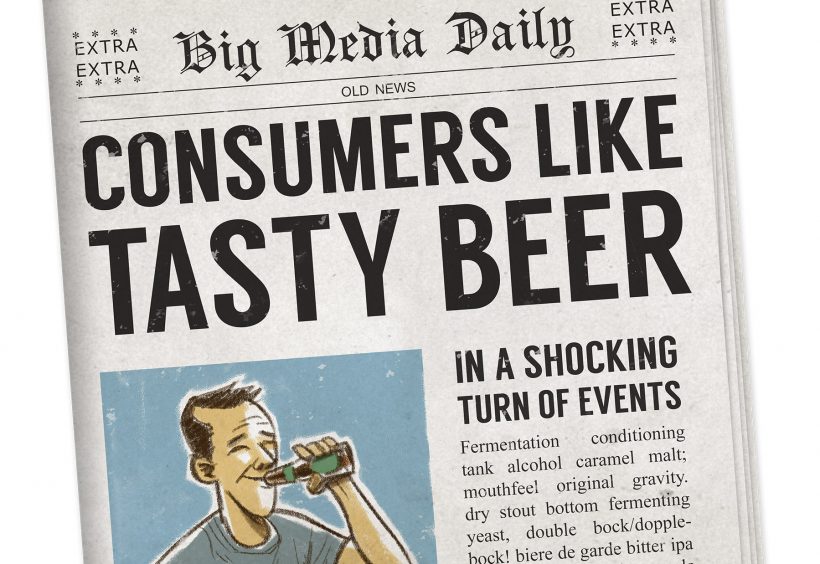 Illustration by Chi-Yun Lau
Craft breweries have long had a contentious relationship with the media. Fighting an uphill battle against a well-entrenched public view that all beer looked and tasted the same—smell wasn’t even part of the discussion—new small brewers knew the importance of changing the conversation about beer. And engaging the media was a direct way of accomplishing this key objective.
Long dominated by a small handful of macro brewers, the beer industry offered little draw for the media beyond reporting quarterly performance returns and covering the newest tasteless advertisement. In the early days of craft brewing, Big Media looked on the micros as mere curiosities but nothing to be taken seriously. It dutifully if sporadically covered the openings of new breweries and their rise in popularity, but usually with a tone of derision or mockery. The macros spent a generation telling us that beer was essentially a uniform, interchangeable widget, differentiated only by the cheekiness of the supporting ad campaign. So it’s no surprise that newspapers and magazines often had a dedicated wine writer and offered glowing coverage in flowery language about vineyards and varietals but would never have thought to extend the same courtesy to beer.
With the abundance of beers available today, it’s almost impossible to comprehend that for both the media and the public, the transition to smaller, local businesses was far from easy. Produced in garages and makeshift spaces by an assortment of hard-to-take-serious characters, the beers had unusual colors, weird aromas and crazy flavors. The beers and breweries rarely received serious coverage during the boom years, with writers often peppering their articles with terms such as fad, trend and craze. While praise was faint, the same media outlets gleefully reported the stumbles of the little guys, especially when craft brewing hit a slowdown in the mid-’90s.
I once wrote that beer was the Rodney Dangerfield of the food world, never getting any respect. It’s a dated reference to be sure, as beer has come a long way in terms of its treatment at the hands of the media. As craft breweries continued their impressive growth at double-digit rates during the worst economic conditions America has seen since the Great Depression, it demonstrated beer was serious business and had real staying power and consumer support. After more than two decades in business—having survived the hiccups of the slowdown—craft breweries continued to grow and eventually earned their place back at the table and their role in the national conversation.
There were many indications signaling this transition, including a long New Yorker article profiling Sam Calagione of Dogfish Head. Big newspapers started to focus more on beer, including craft breweries as suggested places to visit in their travel articles, highlighting them in the food sections, and reporting on politicians visiting their local breweries and brewpubs. The cheap jokes about beer bellies and getting drunk became less common, though still appeared as thoughtless filler on occasion.
Today, many newspapers and magazines have dedicated beer writers, even if they also cover a variety of other beats, ranging from travel to criminal court. Television stations haven’t yet figured out how to make the brewing process more interesting for viewers but it’s trying, too. While Big Media still tends to confuse parts of the brewing process and write inelegantly about ingredients, aromas, and flavors, it’s trying to improve and that will come with time. The mainstream media’s acceptance and then full embrace of craft brewing signals a real change in the American business and culinary landscape, one that will continue to improve as beer made by small, independent producers expands its reach. ■
 Previous: Drink. Share. Brew.
 Next: Berliner Weisse Part Two