
Maintenance Engineering
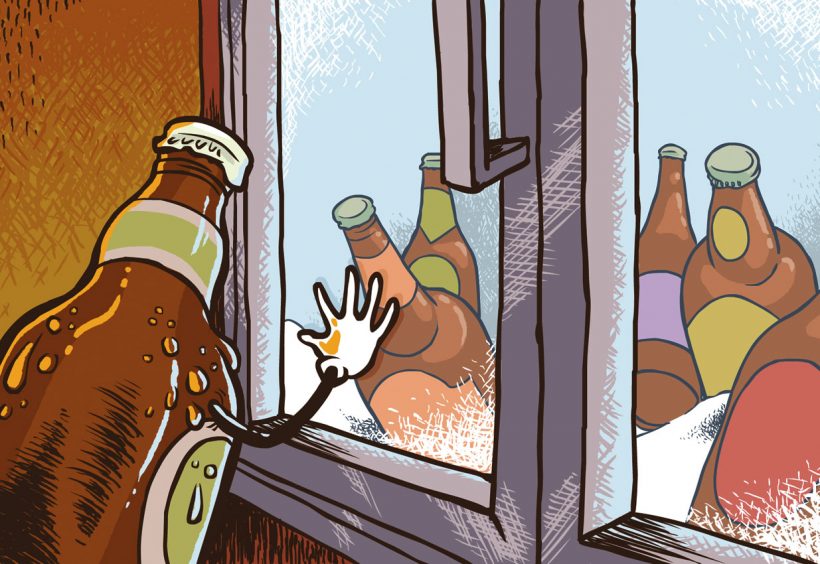 Illustration by Ellen Crenshaw
With the blazing sun turning parts of the country into miniature reproductions of Dune, you’re no doubt struggling with the burden of controlling the runaway temperatures of your ferments. Here in LA, we’re staring down the barrel of the 100-plus degree Fahrenheit days, and without any sort of control, where would my beer be?
There are a couple of classic solutions to the temp problem. The least-sophisticated method: Hide the beer in a cool closet and send a prayer of intercession to Saint Arnold. An approach that’s a little better: Sit the carboy/bucket in a pan of cold water, cover with a T-shirt that sits in the water as well and point a house fan at it. This basic swamp cooler works pretty well for those located some place reasonably temperate but not jungle humid.
Even more effective, grab a big trash can, set the fermenter inside and fill the can with cold water. Every morning and night, add some ice or frozen 2-liter soda bottles to keep the temp down. (This is how I control my less-temperature-finicky Belgian brews.)
For the do-it-yourselfer, there’s the homemade cold box that uses foam insulation, muffin fans and ice bottles to tackle the heat (search online for the Son of Fermentation Chiller). Bucket brewers could easily re-create the old method of circulating cold water through a submersed coil, although I’d recommend stainless and not copper for that application.
All of those methods work well, but require constant care and attention to ensure the sweet spot of fermentation temperature love. If you’re a lazy man (or one with the do-it-all knack of, well, me) and care more about precision than price, the answer is obvious: refrigeration. The 1850s discovery that controlling the compression cycle of ammonia sucks heat from a space exploded the age-old assumptions of food preservation and transportation. Regional brewers of the day discovered improved fermentation consistency and the ability to ship their beer farther.
On the homebrewing scale, unless you’re nutty enough to build a cold box, refrigerators and chest freezers find themselves repurposed into fermentation chambers. When paired with an external thermostat controller (popular brands include Johnson, Ranco and Love), all the scrambling with fans, water and ice bottles become a thing of the black-and-white past. Just tape the controller probe to the side of the fermenter (to capture the beer temp, not the air temp), set the dial and let it ride. Install a thermometer inside the space to independently monitor the chill.
Which solution to use depends on personal preference: Refrigerators are typically cheaper, come in mini sizes perfect for a single carboy and are easier to maneuver a full carboy/keg in/out of. They’re also less suitable for near freezing lagering, and when opened, the front door dumps all that cold air.
Chest freezers work beautifully at freezing temps and don’t lose the chill when opened, but they require you to lift a full vessel (about 50 pounds) all the way up before carefully lowering down. Also, since fermentation temperatures are well above the freezing point, you need to control the humidity in the freezer with desiccants like DampRid to prevent mold growth.
Homebrewers’ legendary frugality makes bargain hunting no surprise, and forums show endless brags about the old refrigerator/chest freezer found on Craigslist for $50. Turns out that spending $500 for a new unit may in the long run be cheaper thanks to efficiency improvements made over the years. Choose wisely.
Unless you’re rich enough to afford a fleet of badass temperature controlled conicals, a glycol system, a cold box or a ton of fridges, you’ll probably employ a mix of the techniques above to keep the brewing running no matter where the mercury rests. ■
 Previous: Is A-B Inbev Going West?
