A Tale of Two Festivals
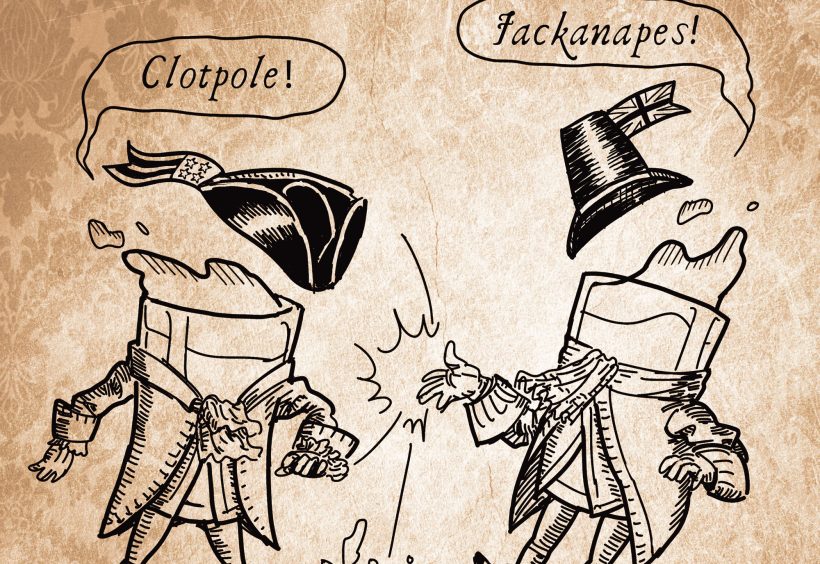 Illustration by Chi-Yun Lau
As legend has it, homebrewing advocate Charlie Papazian and beer writer Michael Jackson were gazing over the bounty of excellent beers on the floor of the Great British Beer Festival in the early 1980s when an idea struck Papazian. He turned to Jackson and remarked that he wanted to hold a similar festival back in the United States. Jackson nodded in understanding and wryly retorted, “Yes, but where will you get the beer?”
The first Great American Beer Festival, held in a small Boulder hotel ballroom in 1982, saw beers from around 20 breweries, whose numbers mainly included the few regional breweries still in existence, along with upstarts such as Sierra Nevada and Boulder Brewing. In the truest sense of “If you build it, they will come,” a fast forward nearly three decades finds the GABF to have developed into the world’s largest beer festival, boasting more than 2,200 beers from 462 breweries.
The granddaddy of beer fests, the GBBF too remains strong and still sets an enviable example for similar events. The GBBF at Earls Court is a curious place where servers pour beers by the pint, in actual, proper glasses, and where many attendees stand around engaged in conversation while slowly enjoying their ales. To be sure, the GBBF suffers from some of the same issues that plague other fests, but seemingly to a lesser extent. While people still cheer when a pint shatters on the cement floor, no one tries to smack the glass from your hands as with recent GABFs. There is also something remarkably adult about the GBBF’s format, where the larger vessels counsel visitors to slow down and really get to know their beers. And, with bottles available for takeaway—often at prices better than what we get in the states—GABF veterans should be forgiven their astonishment.
But there are signs of change at the traditionalist GBBF as well. While the real ale booths are still well attended, it’s the foreign bars, filled with American, Belgian and German treats, that truly pack in the crowds. Perhaps out of sheer novelty, the often unbelievable prices or maybe as a palate-bashing break from mellower British offerings, these beers remain in constant demand and disappear quickly. Starting with close to 100 casks and hundreds of bottles on the first day of the festival, which was mainly open to brewers and other members of the trade, nearly everything was ravaged by the end of day two. Plenty of thirsty, disappointed beer enthusiasts could be expected for the final three days of the event. Beyond the foreign bars, by far the most popular British beers at the fest had some sort of American connection. I watched the Colorado American IPA from Red Squirrel enveloped in a constant stream of pours until it kicked, all while dozens of nearby, traditional beers sat untouched. Similar scenes could be experienced across the hall with BrewDog’s Punk IPA. Where the IPA moniker once suggested stodgy, old beers your dad would drink, by the end of day two, attendees had killed every IPA at the fest, an incredible change of circumstances in only a few years.
To be sure, hundreds of brilliant, traditional Milds, Bitters and Porters dominated the beer engines and the awards presentations. All the excitement of the fest, however, centered on the less-established offerings and suggested that the future of British beer might not rest in campaigns to return to the perceived glory days of old but in the splendor and whimsy of brewing innovation. As brewers at the GABF continue to experiment and push the definitions of beer and the boundaries of the drinking public, it’ll be interesting to see what results in the tug of war between the American and British brewing models in another 25 years. ■
 Previous: Beer News