
One Recipe
How many times have I said: “They did things differently in the old days”? I’ve lost count. The past isn’t a foreign country. It’s a whole foreign continent, where each country is weirder than the last.
Recipe formulation is an area where this is particularly true. Before 1870, most British recipes were SMaSH—“Single Malt and Single Hop”—except for Porter and Stout. The list of ingredients got longer in the 20th century, but another form of simplicity came into vogue: using one recipe for multiple beers.
The Scots were particularly frugal in their formulation of recipes. Maclay’s happily brewed the same single recipe for 20 or 30 years, just blending the worts to get whatever combination of 60/-, 70/-, 80/- and Strong Ale they needed that day. The only exception was Oat Malt Stout; that had its own recipe.
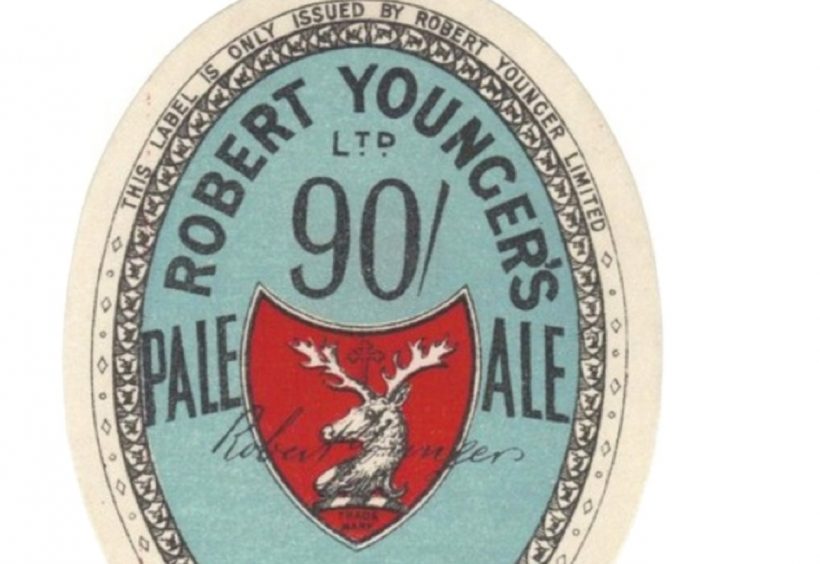
Robert Younger took it one step further. Sure, they parti-gyled their 60/-, 70/- and 80/- like everyone else, as well as their Strong Ale. In the 1950s, they used their one trusty recipe for all of their beers. So they couldn’t have made a Stout, could they? Yes, they could. You have to respect them for taking the one recipe technique quite that far. I’ve seen Mild and Bitter parti-gyled before, but never Stout and Bitter. How did they do it? I think I’ve worked it out.
Some of it is easy. A load of caramel coloring and a bit of liquorice was added to one of the three coppers. There was a bit of black malt in the Stout, too, about 0.5 percent of the grist. If they parti-gyled the Stout with 60/-, surely there would have been black malt in both?
I should explain parti-gyling at this point. Think you know what it is? You don’t. It wasn’t about using the separate runnings for different beers. That wasn’t the way any commercial brewery parti-gyled after about 1743. Proper parti-gyling is much cleverer. Brewers would get two, three or even four runnings, or “gyles,” as they were called, from one charge of grain. These were hopped and boiled separately, then blended. Blending post-boil had two huge advantages: first, allowing the target OG to be hit exactly; second, making it possible to brew beers in small quantities while still using the equipment at its optimum capacity.
This is how Fuller’s still operate. Chiswick Bitter, London Pride, ESB, bottled London Pride, Export ESB and Golden Pride are parti-gyled together in every possible combination. They were able to brew Old Burton Extra in ridiculously small amounts in the 1930s—just 3 or 4 barrels at a time—by parti-gyling it with their Mild.
How did Robert Younger get the black malt just in the Stout? They didn’t. It wasn’t mashed with the other grains, but thrown into the copper with one of the gyles, along with caramel and liquorice. That gyle was mostly, but not totally, used for the Stout. Some went in the beer parti-gyled with it. About a dozen barrels out of the 220 barrels of 60/- came from the Stout gyle. Not enough to make it very Stout-like.
 There you have it: how to brew Bitter and Stout from a single mash. You just need to throw a load of flavoring and coloring into the copper. Isn’t that clever? ■
 Previous: The Future of Craft Beer is Here
 Next: Getting In Shape