
To Patagonia & Back Again: Part 1 of Tim Webb’s Odyssey to an Unknown Beer Land
Dirk Gerhards does not have a plan. But that’s OK. He may not need one. He and his wife have already traveled to more countries than most people manage in a lifetime, so settling down to raise their children in one of the most attractive places on earth, over an hour north of a massive hop-growing area deep in beer-drinking country with dozens of styles to choose from, will suit them just fine for now.
Gerhards comes from the Ruhr, the industrial area of northern Germany that includes the brewing nirvanas of Köln and Düsseldorf. Nowadays, he lives in America, though a very long way from the part where the people who call themselves Americans live.
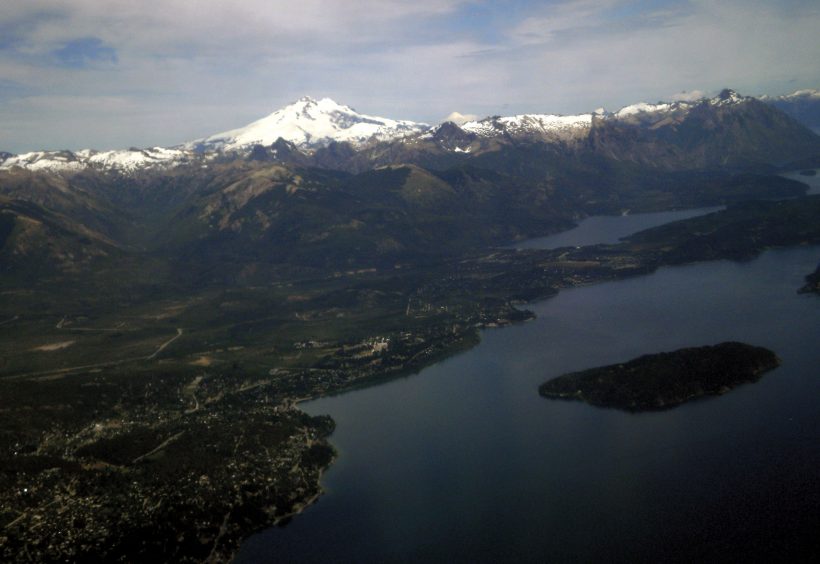
The adopted home of the Gerhards family is Patagonia, the massive inverted triangle of land made up of the five provinces of southern Argentina, stretching eastward from the Andes mountain range to the Atlantic coast, rarely becoming more than vaguely populated. Here, they run a travel company (gringospatagonia.com), arranging tours for small parties of German-, Spanish- and English-speaking tourists. Their patch is the lake-strewn national parks of Nahuel Huapi and Lanín, spreading outwards from the bustling lakeside town of San Carlos de Bariloche.
Bariloche (pronounced “barry low-chay”) began as a trading post, established by a guy called Carlos. To boost his store’s image, he called it “Don Carlos’”—roughly “Sir Charles’”—but the tax man misread it and billed him as San Carlos. If the authorities thought he was a saint, that was OK by him, and the name stuck. Today, Bariloche is the economic center of Patagonia’s Lake District, and, for Argentineans at least, a year-round travel destination; in winter, it is the “snow tourism” that draws them.
“This is not like Europe or North America, where people do winter sports,” explains Gerhards. “Most Argentineans never see snow, so they bring their big-city four-by-fours down from Buenos Aires just to drive through the stuff. They get out and make snowballs and snowmen. They love it.”
For the rest of the year, what brings the visitors is the spectacular backdrop of Andean peaks, ice-capped even in summer, the breathtaking scenery around the seven sprawling lakes and, increasingly, the beer.
Bariloche provides some economic muscle for a Patagonian microbrewery business made possible by the town of El Bolsón, a little over 60 miles to the south. Its odd microclimate has made it the continent’s hop garden. Twenty years ago, through the synchronicity of an economic meltdown and the dreams of a few aging hippies, it took on a new life.
I had expected to see a couple of micros and brewpubs in the Lake District, which is why we allowed a three-night stopover. Nobody warned me there might be nearly 30 of the damn things producing 100 beers in innumerable styles, or that the landscape has no intention of just sitting there playing support act to a glorified pub crawl.
It took a merger between Belgian giant Interbrew and the Brazilian company Ambev a few years back for Europeans to realize that they even had beer in South America. Now that InBev has absorbed Anheuser-Busch and brands like Brahma are creeping onto the world’s supermarket shelves, we are all beginning to catch the drift. Even beers as insipid as Brahma need hops, and the area around El Bolsón is where they are grown.
In 1989, the Argentine peso took so spectacular a nosedive that it became briefly a non-currency, and trade had to occur in US dollars. The effect this had on Argentina’s economy makes our current problems look like a comic strip. The minds of politicians, financiers and trade folk focused impressively. Emerging from this were people who wanted to make local beers with character. These would be far more likely to make money than expensively imported, look-alike lagers.
For craft brewing to thrive, it helps to have a national beer scene dominated by large producers of dreary, branded, football-sponsoring, pointless light Blonds. In Argentina, this means mainly Quilmes, now part of A-B InBev’s empire.
 As in so many countries, the Argentine brewing industry took a major hit after World War II. For 20 years, it was a case of survival of the financially fittest in an era when the dazzle of new technology blinded all to the loss of quality accompanying it. When economic factors, the early shoots of anti-standardization and a dab of nostalgia demanded the production of more entertaining beers, one obvious place to make them was the area where the hops were grown.
Now, I would love at this point to launch into Good Beer Guide Patagonia, complete with comprehensive listings of all the breweries and regular beers, their histories, strengths and styles, plus a few tasting notes. I really would. Except it was not like that. Patagonia covers five provinces, starting a few hours’ drive south of Buenos Aires and then heading on 1,000 miles toward the pole to El Fin del Mundo (The End of the World), better known to some as Tierra del Fuego.
To explore the two national parks around Bariloche, take in El Bolsón and maybe Llao Llao, trying something from most of the breweries, I would allow a minimum of a week; ideally longer. The southwards trek to El Calafate and on to Ushuaia for the southernmost brewery in the world needs another week. By then, you have covered about a quarter of Patagonia and barely touched Argentina.
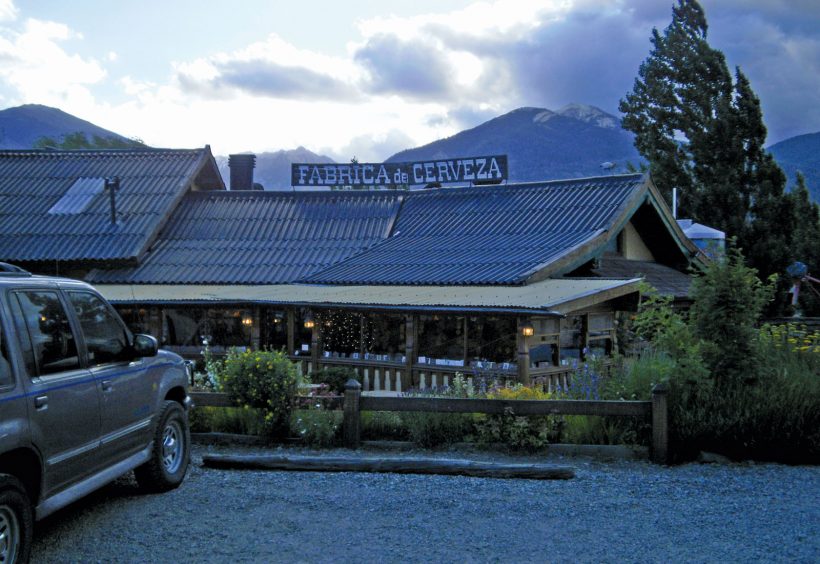
For now, let’s just say that the brewpubs of Blest and Berlina (cervezaberlina.com) are a two-minute walk from each other, 11.5 km west of Bariloche on Avenido Bustillo, and that about halfway back to town, you will find La Cruz (cervecerialacruz.com.ar) just off the main road. When I return to Bariloche, I will also be taking in the El Chucao, Familia Weiss (on Route 82), Gilbert’s, Estacion and Bachmann brewpubs and enjoying once more the beers from Prosit, Suisse Chamonix, El Trébol and from San Martin de los Andes, Lacar.
Finding good beers locally is easy. Finding specific beers is hard. There are no specialist beer cafés, but a high proportion of restaurants, bars and hotels catering to visitors carry a couple of decent micro brews. The most entertaining I found was El Bolsón Negra Extra, a tantalizing 6.2-percent Black Ale that lands somewhere between a London Porter and an Alsace Brune, and drinks well above its strength. But we barely scratched the surface.
North Americans will wonder what chance there will be that these beers will be imported and wind up at a nearby beer store. Infinitesimal is my guess. We will have to go to the mountain if we want these beers … though the mountains alone are worth the trip.
Coming from a town that forms a neat triangle with Köln and Düsseldorf, ignoring beer was never an option for Dirk Gerhards. At the end of a day-long drive spent mainly looking at fabulous lakes, countless, swooping valleys, wildwoods and huge skies, with the occasional beer thrown in, we chatted. Gerhards professes no expertise about beer beyond liking it (and favoring Kölsch a little more than others). If Patagonian beer tourism reaches its potential, he may need to get reading. If you meet him before I do, please send him my regards. ■
 Previous: Indigo Imp Brewery
 Next: London