
You Want Extreme?
Fourteen percent was just the beginning!
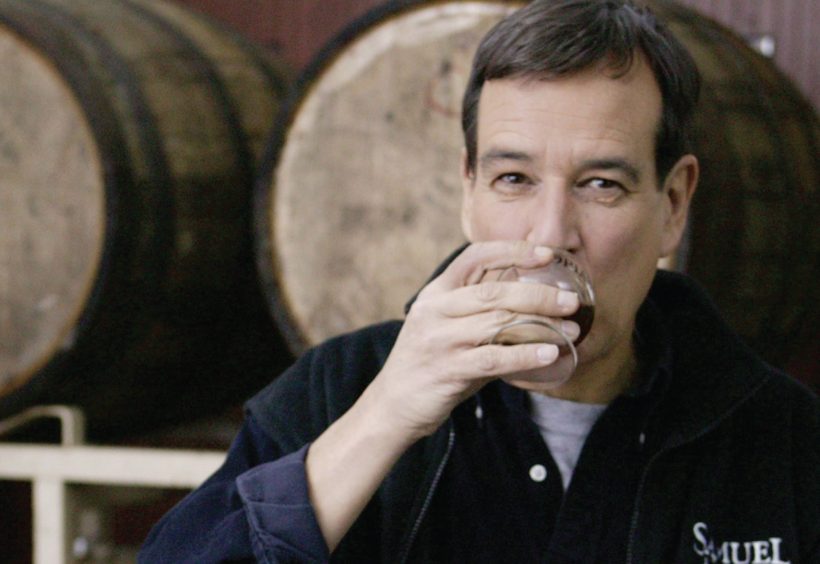
The early days of the Extreme Beer movement, which began with the release of Samuel Adams Triple Bock in 1994, really sprang from a desire to break the 14 percent ABV limit that had existed for decades. As an American brewer, I wanted to create American styles of beer that were not variations of Old World styles. By challenging that accepted limit of 14 percent, Samuel Adams helped create something new here in the New World.
I’ve always believed America deserves its own style of brewing; one that could only be born in a culture that pushes boundaries by doing everything to the nth degree. Americans didn’t invent the bicycle, but we made it do 360s off a ramp. We didn’t invent the guitar, but we plugged it in. And we didn’t invent beer, but we are taking it to unimagined places.
When I started thinking about upping beer’s alcohol content in the early ’90s, it wasn’t just about higher alcohol content, it was about expanding the boundaries of beer. And we wanted to find ways to add new and interesting flavor to the world of beer. We also wanted to bring to drinkers a beer that challenged their very definition of what beer is; one that could be savored slowly and stand alongside other greats like old sherry, vintage port or fine cognac. The goal was to brew what would eventually become Samuel Adams Triple Bock. We made it to 17 percent ABV—well beyond the accepted boundary.
The biggest challenge was the yeast. The high-alcohol yeasts that were commercially available would die off too quickly. We solved this by creating a Darwinian, survival-of-the-fittest system where the less alcohol-tolerant yeast died off, leaving behind a stronger strain. Cultivating it took awhile. We also had to develop a way of feeding the yeast the appropriate food at each stage of fermentation. Finally, we gave the system a boost by recruiting an additional yeast—one traditionally used to make Champagne. Eventually this became our own proprietary “ninja yeast,” and we still use it today to make beers like Samuel Adams Utopias.
We solved other challenges by bringing some new techniques to brewing. The alcoholic burn? Mitigated by using bourbon makers’ charred-wood barrels. The eruptions (where fermentation could continue in the bottle, turning the cellar into a shooting gallery)? Fixed, using expansion-friendly sherry corks.
We released batches of Triple Bock in 1994, 1995 and 1997. In 1999, we introduced Samuel Adams Millennium, at 20 percent ABV, and since then, three batches of Samuel Adams Utopias, with the latest in 2005 topping out at 25.6 percent. Utopias offer drinkers a rich and elegant taste. It features an intense, slightly fruity flavor with distinct notes of cinnamon, vanilla and maple. Those outside our world of beer advocacy are often shocked by the complexity of flavor, unable to believe it’s beer. But of course, beer it is—made with water, yeast, malt and hops. And check out the nickel deposit we have to charge in deposit states for this hundred-dollar bottle of beer!
I used to think the greatest thing to come from our extreme brewing was getting into the Guinness Book of World Records (and the irony, considering the name of the publication!). Now the thing I’m most proud of is that we’re rewriting the rules of brewing, and raising drinkers’ expectations of beer.
It’s an exciting journey, and now we’ve got company among the many great craft brewers here in America who are finding their own ways to push the boundaries of fermentation. So let’s all get busy—there’s a lot of great beer yet to be made! ■

