
Kyle Smith of Kern River Brewing Company
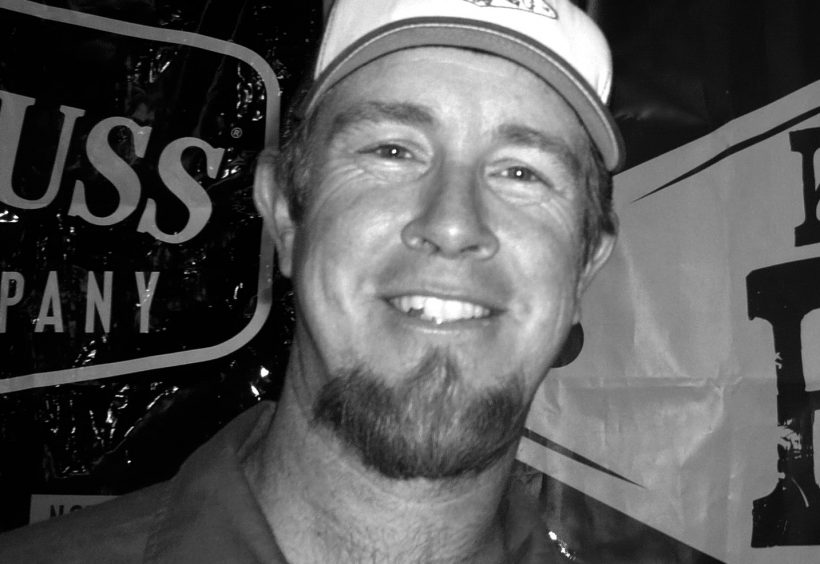
California boasts a number of premier brewing regions; the base of Sequoia National Forest hasn’t traditionally been one of them. Kyle Smith is working to change that. His small brewpub, the Kern River Brewing Company, is cranking out buzzed-about beers at the edge of the wilderness. The pub is riding the wave of beer culture that’s sweeping over Los Angeles and introducing the wonders of dry hopping and barrel aging to crowds of (now former) macro drinkers.
1. Get consumed
Lots of kids grow up wanting to be firefighters. Kyle Smith was living that dream—then he started homebrewing. He began brewing for fun, but eventually, he says, “It wasn’t a hobby—it consumed most of my time.” Smith began working on a business plan, scouting space and securing financing. It was a four-year process, but Smith kept pressing, and in 2006, Kern River Brewing opened. The pub’s beers weren’t even ready until a week after opening day, but Smith just couldn’t wait to open the doors.
2. Forge a sense of community
When Kern River Brewing opened in 2006, Kern River was a small tourist town with little beer culture to speak of. So what made Smith think he could make an adventurous brewpub fly? “This community is pretty tight knit,” he says. “I had a feeling that it would work if we made it more of a nice, homey, family atmosphere, and the locals have really fallen in love with it.” At the same time, Smith says, the brewery’s location meant it wouldn’t have survived as a niche outfit; it had to launch with a broad range of styles from his homebrewing portfolio. “Three IPAs, a Double IPA and a Belgian Tripel definitely wouldn’t have worked for us for us.”
3. You don’t need to be a geek to get geeked
Heavy tourist crowds mean Isabella Blonde Ale is Kern River’s biggest seller in the summer, but Smith says lots of his local customers have gravitated toward his barrel-aged seasonals and hop bombs. Kern River’s customers didn’t start as beer geeks, but quality has won them over. “They were used to drinking your light lagers—your Bud, Coors, Miller products. It’s been nice to see them evolve with the different styles. Now, you put a Double IPA on, and they’re all excited. It’s definitely been a lot of fun to watch.”
4. Find might in light
Isabella Blonde is Kern River’s accessible session beer, and it’s a beer that shows “accessible” does not mean “toothless.” Smith generally has a heavy hand with his hop additions, and he doesn’t let up just because the Blonde clocks in at only 4.5-percent ABV; Goldings and Cascade hops push Kern River’s Blonde up to 35 IBUs, and the hops shine through a lighter grain bill. “It’s got a little bit of a bite to it,” he says. “The beers I do are full flavored and pretty hoppy, even the lighter beers. I just can’t get away from using a lot of hops.”
5. Ignore style conventions
Class V Stout, a nitro monster that has its roots in Smith’s homebrew days, isn’t an Imperial Stout, or a Milk Stout, or an Oatmeal Stout. Instead, Smith took all three styles, hopped them up and rolled them into one recipe. A big malt bill—including two-row, Crystal 120, Crystal 40, black malt and roasted barley—is countered by loads of Chinook and Cascade hops. Oats smooth out the body, and a lactose addition lends the beer a creamy, sweet mouthfeel. Smith believes each element balances the others, and the result is a beer more complex than any single Stout style could be.
6. Save the palate, savor the beer
“I really like balanced IPAs,” Smith says. “I call them session IPAs, even though ours is 6.8 percent. That’s just the style I like to brew. It’s more of a balanced IPA. It’s hoppy, but it’s not a palate wrecker. I’m not saying I don’t enjoy some of those beers, I do, but to make something unique, I’m looking for more of a session IPA.” Smith’s Just Outstanding IPA is brewed with Warrior and Simcoe, and heavily dry hopped with Simcoe and Amarillo; the result is a beer with tons of aroma and flavor. “It’s hard to find much bitterness in it.”
7. Follow your nose’s heart
Kern River’s biggest buzz beer, Citra Double IPA, started as an experiment with dry-hopping firkins of Smith’s flagship IPA. Smith was playing around with hops he’d never used before when he came across Citra, a relatively new American variety that boasts an outrageous tropical fruit profile. “I hadn’t even heard of them. As soon as I opened the bag and smelled the hop, I was blown away by the aroma coming off that hop,” he recalls. He knew immediately he had to design a new beer to showcase the hop. Like his standard IPA, Citra DIPA leans heavily toward flavor and aroma additions. It’s dry hopped four times. “The aroma from that hop was just amazing. I fell in love.”
8. Extend with a blend
Smith is a big fan of beefing up the depth and complexity of his IPAs with dry-hop blends. He believes the varieties in his blends accomplish things volume alone can’t. He uses Citra-Amarillo in Citra DIPA, and Simcoe-Amarillo in his flagship IPA. “Amarillo really brings out the flavors of some of the other hops, where if you just use them by themselves, it just doesn’t bring out the characteristics,” he says.
9. Let your hops breathe
To Smith, the real key to making hops stand out is keeping them away from caramel-malt sweetness. He’ll use just enough caramel malts to impart proper color, but he’s wary of the malt swallowing up his hop flavors. Instead, he uses small additions of honey malt to give his IPAs their backbones. “It just adds a little bit of sweetness, not too much. It’s more of a dry sweetness. It’s not a real lingering sweetness. It’s dry, and it fades away.” ■
 Previous: 30 Years of Beer
