
Has Craft Brewing Got Mission Creep?
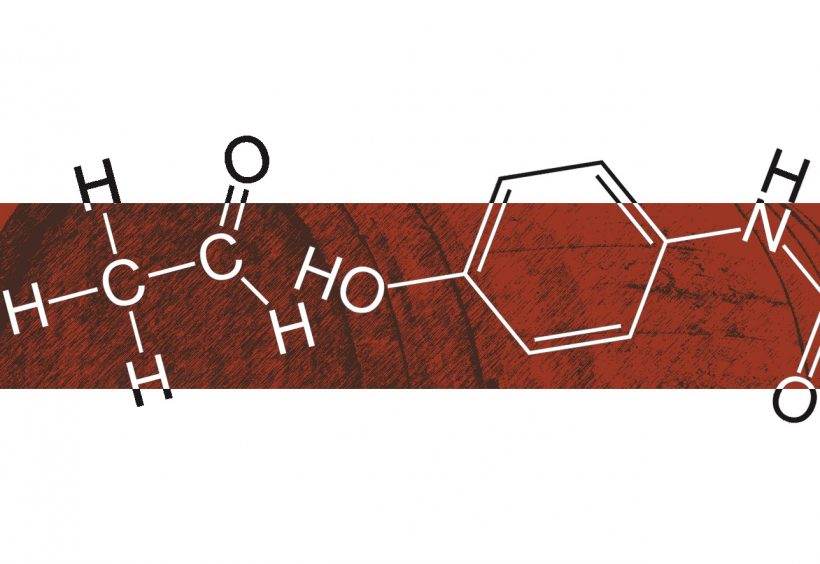
It is a perfect, still winter’s evening. A glass of beer sits, half-sampled, on my living room table, warming in the glow from the wood-burner. A flurry of snow outside is captured static in the lacing, atop the deep, copper-brown body. Here is 21.95 euros of hand-crafted perfection. What a shame that it smells like the inside of a drain pipe and tastes of paracetamol (acetaminophen).
I stare diagnostically at my expensive, 75 centiliter bottle of oak-aged Barleywine, with its best-before date of 2013. It had lain for a year in that part of my garage—sorry, beer cellar—where the temperature is always in the safety zone. Far from the light, undisturbed by vibration, it had been prepared meticulously for consumption day.
Years ago, I would have chalked this up to bad luck. I must have bought a duff bottle. Shucks. Nowadays, sadly, I know too much for that excuse to be true.
The label describes how it was made and hints at how this beer became so dire. It reads, “aged in wine casks,” but leaves out, “which we decided not to drain.” The oxidized dregs most likely account for the red wine vinegar and acetaldehyde. The rest of the fouling comes down to unfortunate microflora.
My other half, she of the largely uneducated, naturally talented and notoriously forgiving palate, asks simply whether I think it is supposed to taste like that, and I suggest that possibly it is. Mistaking this for approval, she donates me her glassful.
We rehearse our oft-repeated, brief philosophical discussion about beer-, wine- and whisky-making, which lands swiftly on my usual point that brewers have the upper hand over vintners and distillers as they have tighter control over what they produce. To which she asks, “So what the fuck would make anyone want to produce that?!”
We agree that the most eco-friendly solution is to pour the remains down the same sink that accidentally took a dose of hot bacon fat earlier, this beeroid liquid being the nearest thing we have to an organic detergent.
An hour later, partially reinvigorated by a too-young but nonetheless satisfying bottle of Adnams Tally Ho!—a 7.2 percent ABV winter brew that we British consider ultra strong—I log on to a well-known beer rating site to see what others have made of the agent of my disappointment.
As I feared, we are in geek-rave territory. I am waist-high in “awesome”s, “cool”s and other deeply respectful superlatives, plus a host of adjectives groping to describe the flavor and character of this extract of porridge in bile and battery acid. It is among the top 1 percent of beers in the world, apparently. I add my opinion… no, I rant… and log out.
I have no problem with experimentation, which is essential not only to a successful business, but also to a happy life. Yet by its nature, experimentation often goes wrong, and someone needs to be aware when it does.
The current relationship between craft brewers and their most interactive consumers seems designed to encourage bad ideas. There is too much shock and awe. (I, the craft brewer, produce a shocking beer and you, the consumer, say it is awesome.) Our greatest friends are those who can point out the mistakes we do not think we have made. They are essential to making us better at what we do.
The point of the craft beer revolution was to reestablish the reputation of beer as a quality drink, not to show how clever we can all be. The beers that will achieve that aim will be achieved by beers that are well made, not simply different. ■
 Previous: Boring Beer Must Die
 Next: A Rose by Any Other Name