
Changes Coming Faster
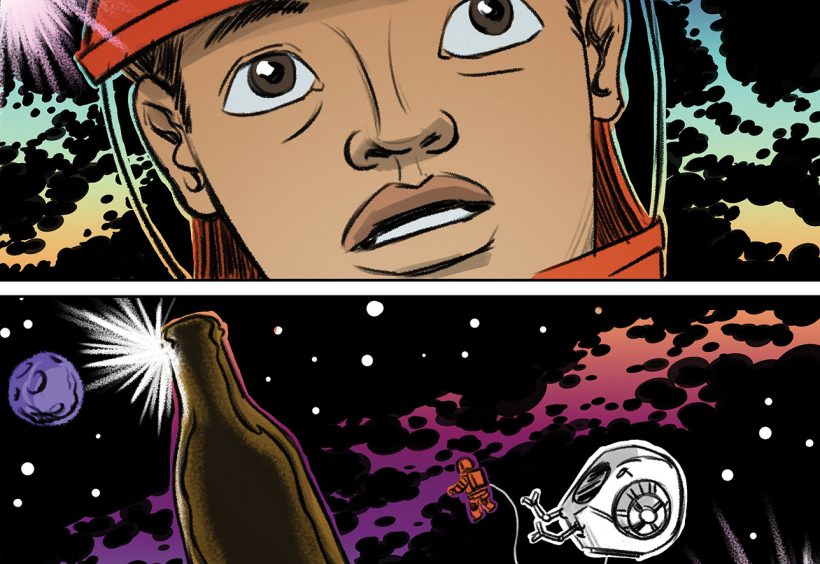 Illustration by Chi-Yun Lau
Waking up, as if from a dream, craft beer lovers look around and don’t know where they are. The outlines of the place are familiar, but too much feels foreign to be comfortable. They recognize a few faces, but the background scenery keeps changing at a frantic pace. New voices constantly chime in, disrupting any hint of a placid status quo. One cannot escape the distinct feelings of expectation mixed with underlying hints of anxiety.
The craft beer industry’s sense of community has grown increasingly strained in recent years, starting with geographic expansions into neighboring markets, continuing with the rebirth of the small-brewer trade through a seemingly countless number of nanobrewers, and recently culminating with internal strife over trademarks, beer names, and exchanged cease-and-desist letters. The craft beer world has suddenly turned upside down, and there is a growing disconnect between the industry veterans and the upstart new guard.
Amid all the change and turmoil, one thing is clear: The next five years in craft beer won’t look anything like the past 20. The beer industry’s biggest producers will spend the next five years securing their respective footholds in the better-beer segment. MillerCoors will continue to expand the Blue Moon line, as well as its lineup of above-premium beers. Anheuser-Busch InBev will continue to leverage its Shock Top lineup as well as its strategic ownership of craft brands, including Goose Island, Widmer, Kona and the recently rebranded Redhook. The bigger brewers will also be on the lookout for additional partnership and purchase opportunities, especially as a growing number of craft beer pioneers search for an exit strategy.
The past five years has seen a race to increase production capacity, which has largely worked to separate the economic interests of the top 30 brewers from the rest of the craft industry, and that race will continue at a hyper-kinetic pace. The likes of Lagunitas, Sierra Nevada, Green Flash and Oskar Blues, all barrel-hungry juggernauts, can contain their operations no longer, bursting at the seams and onto new frontiers. So long as consumer demand builds and stainless-steel manufacturers can keep up, these brewers will hardly be recognizable in a few short years. With hundreds of millions of dollars invested in the future of these and other craft giants, the game grows more real.
This economic stratification is most apparent in the operations of the craft beer industry’s trade group, the Brewers Association, which sometimes comically tries to represent the interests of the Boston Beer Company and single-person breweries alike. From a business perspective, Jim Koch and most small brewery owners have nothing in common beyond a passion for beer.
The future also does not hold much hope for the survival of beer styles and classic flagship brands. The post-extreme beer era has resulted in the decreasing relevance of tightly confined beer styles, with many characterization-bending blends and hybrids cropping up in bars, bottles and cans of all sizes. Watching the Brewers Association attempt to capture and confine the creativity of brewers in its annual style guidelines release is always worth a few laughs if you’re a beer geek feeling blue.
The hop assault has led to a permanent palate shift away from malt-centered beers and toward the everything-IPA crusade. In the process, many flagship brands seem increasingly out of place, like throwbacks from a bygone era. And while that makes me a bit melancholy over the loss of brewing history, the craft beer industry has long been defined by inventiveness and evolution. It just looks like the pace of change will soon hit dizzying speeds. I remain hopeful that we wake up in five years and can still recognize where we are, and where we’ve come from. ■

 Next: Tetley's Mild