
Beer News
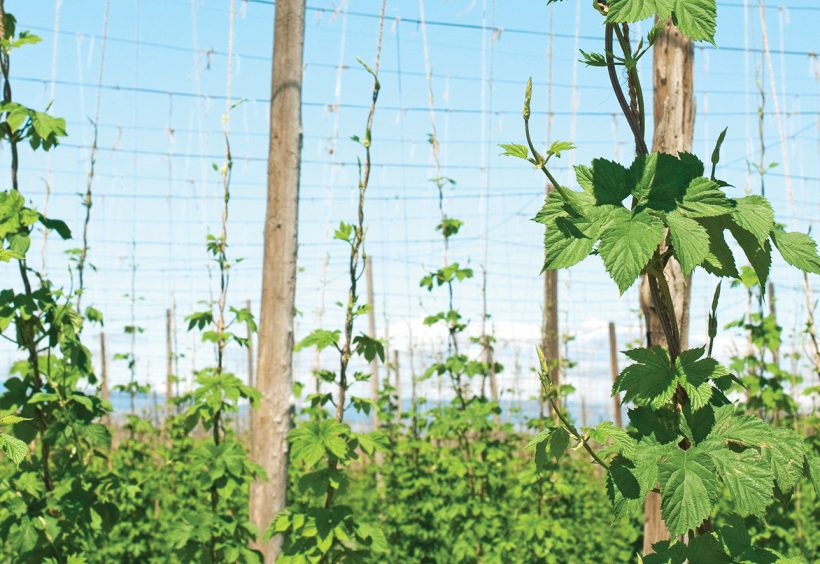
Shortages of Aromatic Hops Forecast for 2014
A recent Brewers Association survey estimates that some of the most popular aroma hop varietals—including Mosaic, Citra, Amarillo and Simcoe—could experience shortfalls of varying degrees in 2014.
A number of factors have converged to create the problem. For one, the number of permitted breweries is at an all-time high of 3,699, according to the most recent national brewery count statistics from the US Alcohol and Tobacco Tax and Trade Bureau (TTB). Data from the 2013 Brewers Association Member Hop Usage Survey shows that craft brewers consumed 52 percent of all US-produced hops in 2013, for use in 7.4 percent of domestic-sold beer. At the current growth rate of hops consumption among craft brewers—which is projected to be about 13 percent in 2014—hop farmers are on the cusp of falling short of demand. Aroma hops in particular are precarious because they are sensitive to heat.
While data from Hop Growers of America shows that 2013 production volume of Pacific Northwest aromatic hops rose by 13 percent (with aroma hop acreage also increasing by 21 percent), the organization’s administrator, Ann George, explains to BA that when a variety experiences a sudden boom in popularity, meeting demand isn’t quite as simple as putting a new plant in the ground. “Often a grower may need to start with a single virus-free ‘mother’ plant and have a greenhouse expand it to establish new acres,” says George. “It may take two years to expand enough plants to accomplish the desired acreage. Growers are reluctant to plant rootstock that is dug from an existing field, as it may have viruses and disease present. Preplanning is necessary to forecast future acreage needs and get necessary material to establish those acres.”
George urges brewers to contract for the hops they’ll need in order to prevent shortages. “Growers will plant what brewers wish to buy,” she says. “It’s difficult to guess what the ‘spot’ [uncontracted] market can support in terms of quantity and price. Bankers are reluctant to finance uncontracted production, and growers are reluctant to grow it.”
HopCat to Open Michigan’s Largest Beer Bar in Midtown Detroit
HopCat, one of Michigan’s most popular spots to grab a pint, is about to move into Detroit. Founder Mark Sellers has recently unveiled plans for a brand-new, third location, set in the city’s Midtown neighborhood.
The 11,000-square-foot space is projected to cost $3.3 million, and will employ 120 people. The new location will be the largest craft beer bar in the state. “HopCat Detroit will be the largest of our three locations thus far, boasting a 130-tap system and a live music venue on its second floor,” says Sellers. “By comparison, HopCat Grand Rapids has 48 taps and has less than half the usable square feet. HopCat East Lansing is larger, with 100 taps.” Sellers says the second floor will also offer an outdoor beer garden.
Local nonprofit development association Midtown Detroit helped Sellers to find the best possible spot, using a grant from the state to buy the property and lay the groundwork for development. “It certainly lines up with our desire to see more active nightlife uses here,” says Midtown Detroit president Susan Mosey. “The fact they’re incorporating a live music venue into the second floor makes it even more valuable to the neighborhood.”
Sellers adds that the city of Detroit and neighborhood businesses have been extremely welcoming. “We have worked hard to partner with neighborhood and city leaders, who have greeted us with open arms,” he says. “We look forward to getting to know more of our neighbors in the business community in the months ahead.”
 San Diego Leads Industry in Job Growth and Wages
Seeking a job in craft beer? A recent study says San Diego may be your best bet. The study, released by the National University System Institute for Policy Research (NUSIPR), looks at metrics like total annual sales, total number of breweries and brewpubs, and industry workforce size, says NUSIPR senior policy analyst Vince Vasquez, and compares those figures with between several “craft beer cities” across the US— Asheville, N.C., Portland, Ore., and Denver among them.
“It is important for local elected officials and policy makers to understand how the craft beer industry impacts the local economy,” Vasquez explains. “There are many important discussions about local workforce development and economic planning that brewers need to be invited to. Studies like this one help show the opportunities regions have to foster greater industry growth, as well as develop important partnerships with other sectors, such as the hospitality and visitor industry.”
According to the findings, annual craft beer sales in San Diego grew by $100 million between 2011 and 2013. The number of jobs at San Diego County breweries and brewpubs (which also accounted for ancillary positions including hospitality, food service, IT and administrative work) also grew considerably. In 2011, 1,630 employees worked in the industry, and that number grew by 40 percent to 2,279 employees across 82 different brewpubs and breweries.
San Diego ranked highest in average yearly wages, at $38,598, with other cities examined coming in between $22,000 and $36,000. The city also has a robust skilled workforce: 580 are Cicerone certificate holders—second in number only behind Chicago, where the program was launched in 2008.
“Updated local industry statistics can also help entrepreneurs develop accurate business plans, which are necessary for applying for investor funding and bank loans,” Vasquez says. “Local brewing industry studies can help unlock capital that brewers need to expand their operations.”
 Lakemaid’s Beer-Delivery Drone Program Grounded by FAA
After a video from Minnesota’s Lakemaid Beer showing their “beer-delivery drone” in operation went viral, the brewery received some stern words from the Federal Aviation Administration.
Lakemaid founder Jack Supple tells BA that he was inspired by a recent TV news interview with Amazon.com founder Jeff Bezos about plans to launch a “delivery-by-drone” service. Thinking about how the ice fishers sit in tiny houses dotted across massive frozen lakes in his state, Supple realized that “anglers locate their fish houses by GPS coordinates, so pinpointing their locations would be a piece of cake.”
Wasting no time, Supple rented a six-blade, remote-controlled drone and tested his concept. He filmed his test run—where the drone delivers a box of beer (although they had to keep removing bottles in order for the drone to get airborne) to a shack a quarter-mile out—then posted it online. “Our fans went crazy,” he says. “They love this idea.”
However, news travels fast. The regional branch of the FAA soon got wind and sent them a warning. FAA public affairs officer Elizabeth Cory explains to BA, “Our concern not only comes from the fact that this is an unapproved use of [a drone], it’s a commercial operation, too.” Cory notes that commercial drone operations must be approved on a case-by-case basis, and Lakemaid did not seek authorization before their test run. “Finally, there’s a risk of someone getting hurt from the potential of items falling from the [drone].”
Lakemaid isn’t the first to attempt beer delivery by drone; in December, FedEx’s chief executive told The Wall Street Journal that FedEx’s test drones can carry about four cans of Budweiser. Lakemaid wasn’t issued any fines or penalties, but was told they would be if they continued. Supple remains optimistic that his idea will (legally) get off the ground when the FAA publishes revised commercial drone guidelines in 2015. ■
 Previous: Beer Week Overload
