Wheatwine: Meet Barleywine’s Seductive Cousin
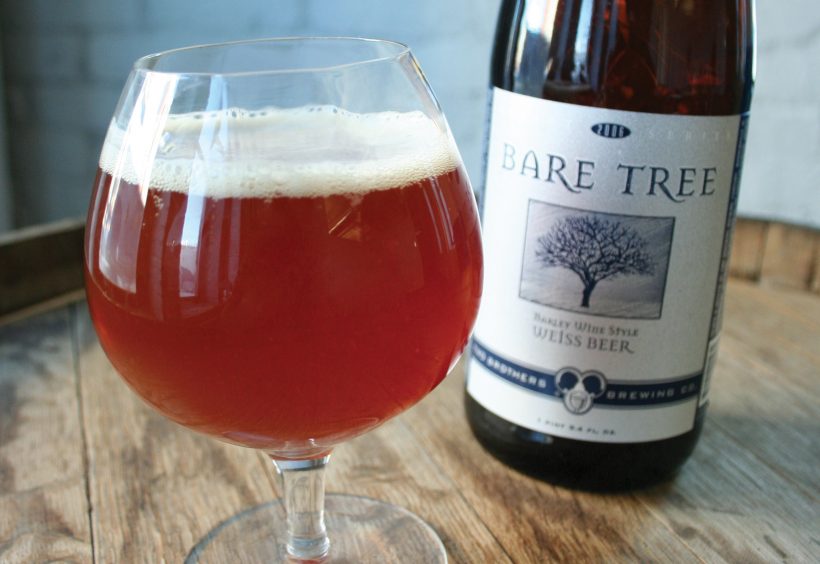
Barleywine was always a self-righteous beer. For the past 10 or 15 years, it watched smugly as all the other styles—India Pale Ale, Pilsner, even Hefeweizen—were adjusted, adulterated and amped up by American beer makers in their nonstop pursuit of innovation. Barleywine just sat there, arrogant and certain that it was unalterable. With its massive grain bill, heavy-handed hops and potent alcohol content, it was already an extreme beer.
It never saw Wheatwine coming. And who would? Wheat is a woman. She’s no threat. Soft, light, she mellows everything she touches. Watch it—she’s Mata Hari.
Put a glass of Wheatwine to your nose and you get that familiar malty Barleywine aroma. But hold on. Take a sip and she throttles your throat with silk gloves. Take another and breathe in; you fall into a dizzy swirl of vanilla and apricot and who knows what else. Wheat seduced Barleywine and then took it for all it had. Where was she hiding all this time?
In California, mainly. That’s where Phil Moeller of Sacramento’s Rubicon Brewing is generally credited with coming up with the Wheatwine style in the late ’80s. A few other West Coast breweries—Marin, Lagunitas, Steelhead—toyed with her over the years.
Wheatwine’s myth spread. Smuttynose Brewing Company’s David Yarrington got a taste at the 2004 Craft Brewers Conference in San Diego, brought her east and bottled his own version. Foolish man. When he tried to reveal her identity on the label, the feds stepped in. Wheatwine: Is she a beer or a wine? Or maybe a double agent? Putting her name on a bottle, the feds said, would “confuse and mislead the consumer.”
Alström Bros: Around the same time, we brewed a guest 100 Barrel Series batch with Harpoon Brewery named Triticus Ale—Latin for “wheat”—releasing a straight version and three wood-aged versions. As the beer wasn’t tagged as a “Wheatwine,” there were no problems with the feds. Return of Triticus? Perhaps…
Smuttynose eventually won, and then won again when its Wheatwine took a gold medal in the Great American Beer Festival’s catchall “Other Strong Ale and Lager” category. Last year, the GABF formally added a Wheatwine category. And that’s where she made her final, most seductive move.
Barleywine had always been sure of its manhood. Lots of malt, big alcohol and what beer judges call “assertive bitterness.” The assumption among many brewers had been that Wheatwine would be the same way. Scott Cramlet, the brewer at Rubicon where the style was invented, said, “It’s not really that big of a difference from Barleywine. Yeah, there’s some wheat character. But in our mind, it shouldn’t be all that different. It’s basically Barleywine that happens to be made with 65 percent wheat.”
But the temptress would have her way, revealed in the fine print in the GABF’s new Wheatwine guidelines. “Bitterness,” it declared, “is moderate to low.” Barleywine never knew what hit it. Wheatwine would be softer, mellower. It wouldn’t pull its alcohol punch, but this would be a smoother quaff.
The gold medal went to Marin’s Star Brew-Triple Wheat Ale, a beer that brewer Arne Johnson had recently tweaked by substituting milder East Kent Goldings for more assertive West Coast hops. The switch, said Johnson: “Let the wheat come through better.”
Famous last words. Wheat was last seen applying lipstick and eyeballing Imperial IPA.
WHEATWINE
Color: Gold to deep amber
Aroma: Bread-like, caramel
ABV: 8.4–12.0 percent
Examples: Bare Tree Weiss Beer, Marin Star Brew Triple Wheat, New Holland Pilgrim’s Dole, Smuttynose Wheat Wine, Portsmouth Wheat Wine ■