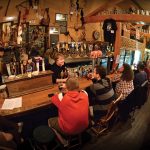
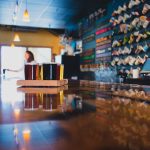
Watching his old brewhouse in Washington fall into disrepair made Bret Dodd wonder: What happens to the other failed breweries scattered around the country? So Dodd hit the road with his camera, investigating seven still-standing pre-Prohibition breweries.
Inspired by the successes of Bay Area breweries, Phil Bannatyne, a New Englander by birth, moved back to the East Coast in the late 1980s planning to get into the beer business. The space he could afford turned out to be in Kendall Square, a stone’s throw from the Massachusetts Institute of Technology.
Josh Bischoff, Indeed’s head brewer, is hustling to keep up with exploding demand because he starts from a baseline of challenging his customers. The brewery is built around two canned, hop-forward flagship ales, which Bischoff combines with a rotating set of specialty beers and one-offs.
After helping his friend Mike Stiglitz launch a restaurant, Ben Muse and Stiglitz decided they wanted their own business and opened the first Two Stones Pub in Newark, Del., in 2011. Locations have since sprung up in Wilmington, Del., and Kennett Square, Pa.
As the brewmaster at Wind River Brewing Co. in Pinedale, Wyo., Richard Strom was ushered into the industry by his father, David, who was the first independent craft beer distributor in Portland, Ore.
When The Heorot opened 20 years ago in Muncie, Ind., not a bar in the county even had Guinness on draft. Owner Stan Stephens was sick of campus bars with $5 covers and quarter drafts of domestic lagers.
As beer journalism blows up right alongside craft beer, Jay Brooks, who has been writing about beer since 1992, is calling on old media to put an end to “sudsy” puns, and for new writers to slow down and really learn the craft.
Founder and owner Chris Michner chose Grand Haven, Mich., for the site of Odd Side Ales, settling on a suite in a converted Story & Clark piano factory. The whole idea behind the brewery was to make “unusual ales” that feature offbeat ingredients and bold flavors to intrigue the palate.
Tim Clifford thinks of Sante Adairius Rustic Ales—the Capitola, Calif., brewery that he and his wife, Adair Paterno, founded two years ago—as a homebrewery that happens to be open to the public. Sante Adairius sells nearly all the beer it makes through its taproom.
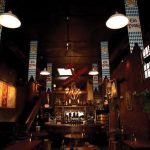
The Brick Store’s selection has evolved into what it is today: around 30 taps, 300 bottles, a 900-bottle upstairs cellar and thousands more aging in a bank vault beneath the pub. Its 1900s-era building seems like it was always meant to hold the old and authentic.
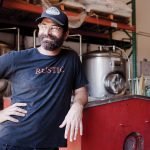
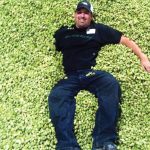
Jeremy Warren was pretty sure he’d be studying active ingredients for a living—he just didn’t think lupulin would be one of them. Brewing replaced his idea of becoming a pharmaceutical salesman, much to the joy of hopheads everywhere.
For craft brewery employees, passion often comes at a cost, as the industry strives to create competitive jobs. Enthusiastic homebrewers and beer connoisseurs trade pay, benefits, and comfort on the job for the chance to work in a fast-growing industry.
Karlos Knott, co-founder of Bayou Teche Brewing in Arnaudville, La., says his team doesn’t consider Bayou Teche a craft brewery, but a “cultural brewery.” Every time he, his co-founding brothers and head brewer Gar Hatcher design a beer recipe, it has to fit in with Cajun south Louisiana food, music and language.
When Jerry Gnagy was brewing for somebody else, he’d only brew the beers he really wanted to brew when those beers fit around an established production schedule. Gnagy flipped that equation upside-down when he opened Against the Grain, the Louisville, Ky., brewpub he co-founded two years ago.
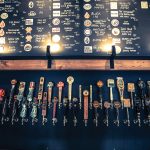
There are plenty of places to eat along the dirt-path-framed expanse of Austin’s Rainey Street, not to mention the streets just off of it. Tacos, sausages, Indian food, burgers, noodles … the list goes mouthwateringly on. Makes sense, then, that Craft Pride has such a singular focus: Beer.
Reporter Cecilia Rodriguez wrote in a Forbes.com article that in order to hold a Trappist label, a beer must be brewed under the supervision of monks. With the number of monks at Orval down to 12, she claims the abbey is jeopardizing its Trappist designation. Orval’s François de Harenne offers his response.
The craft beer industry might wring its hands over the bubble bursting, trademark wars and dilution of quality. But intrepid brewers are bringing craft beer culture to even the most remote pockets of the country. From medal-clad hombrewers to old-school pros looking to get back to basics, the folks behind these new operations are a diverse bunch.
In the parlance of committed tinkerers and unrepentant hoarders, the “boneyard” is where old flubbernuzzer tubes and double-lined samizdat tanks languish until pressed into service. Tony Lawrence has kept one for most of his adult life. In his younger years, it held car parts. Most recently, the garage his house in Bend, Ore., has held brewing equipment.
Chase and Colin Healey founded Prairie Artisan Ales a little more than a year ago with a single purpose: to brew complex farmhouse and barrel-aged beers. Chase brews small batches of beers he’s interested in. Colin hand-draws Prairie’s label art. This, they believe, is the future of craft brewing.
The Boston area’s first gastropub was born on July 11th, 2002. David Ciccolo was making beer for Tremont Brewing and bartending to help pay the bills. When he realized his bartending “partner in crime,” Ailish Gilligan, shared his interest in opening a spot, they got to work on The Publick House.
Doug Odell, co-founder of Colorado’s Odell Brewing Co., took time out of a brew day to let Katy Benson, a grad student in her second year of the Food Science Masters Program at UC Davis, pick his brain.
The brewer behind Sam Adams Black Lager, Angry Orchard and Utopias kept an eye on the beer scene in his home state of Texas, and in early 2012 he left Boston Beer Co. to help launch Revolver Brewing near Dallas.