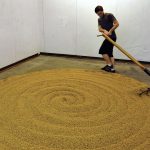
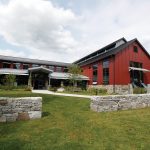
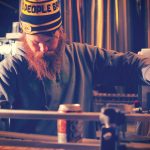
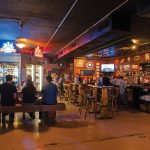
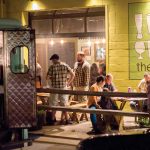
Set foot inside Riverbend Malt House in Asheville, N.C., and it’s clear that the maltster has a similar role to the brewer’s. While employees who work at large malt houses may see grain move at the push of a button, at Riverbend much is still human-powered.
Three years after Jenn Coyle co-founded The Can Van with three fellow MBA students, mobile canning has “almost become trendy,” she says. In July 2014 they canned more volume in the first half of the month than they did in their entire first year of business.
The focus on hops at Toppling Goliath has been there from the beginning. It wasn’t an obvious fit at first. Iowa wasn’t known for boundary-pushing brews. And tiny Decorah is nestled among the rolling hills of northeastern Iowa’s Driftless Region, a rural area of small farms and small towns.
Jim McCabe founded the Milwaukee Ale House in 1997, after getting hooked on brewpubs out West. He added a production brewery, the Milwaukee Brewing Company, a decade later. What unites them is a push to connect the craft movement with Milwaukee’s beermaking tradition.
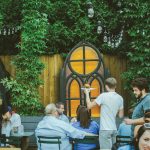
In 2010, Lori Beck and Tyler Trotter transformed a former house of worship into Holy Grale, a bar and restaurant inspired by their trips to Belgium, the Netherlands and Germany. The building’s prior use is still evident in its dark woods, hanging lanterns and arched windows.
A native Portlander, Christian Ettinger experienced how beer creates community at age 19 when he studied abroad in Cologne, Germany, and got a taste for the city’s hybrid lagers.
Bob Sandage, a longtime homebrewer, saw something in the once-grand mansion in Atlanta—a home for his dream, a brewpub. In 2012, The Wrecking Bar received an Atlanta Urban Design Commission Award and a similar honor from The Georgia Trust for Historic Preservation.
In December 2013, monks from six Belgian Trappist brewing abbeys gathered in Brussels to sample Spencer Brewery’s beer. A unanimous approval made Spencer the first American brewery to earn the “Authentic Trappist” title.
The 20-year-old, Hew Hampshire operation Smuttynose Brewing Company moved in 2014 from a cramped and thoroughly analog brewery to a new facility featuring state-of-the art equipment.
When Good People first launched in Birmingham, Ala., in 2008, the brewery was somewhat constrained—by Alabama’s legal restrictions on brewing, and by what they thought the market could handle. But things are changing.
In a dark, “old bar” setting, Papago’s taps include locals like Dragoon’s Infringement Pils, buzzy newbies like Destihl’s Sour Apple Lambic, and classics like Green Flash’s West Coast IPA.
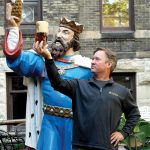
Before he built a brewery in Denver, Brian Dunn built a farm in Algeria. In June, Great Divide Brewing Company celebrated 20 years of Yetis, fresh hops and apparently, squirrel traps.
KBC’s location in central Lihue might seem problematic. Once bustling with activity as the hub of Kauai’s sugarcane industry, the area fell into decline, leaving behind a mix of used car lots alongside insurance, legal and government offices. In this landscape, KBC is a bright spot, helping revive downtown Lihue.
Green Man is one of Asheville, North Carolina’s old-line breweries—a legendary name in a legendary beer town. And under Stuart and his crew, it’s been growing faster than ever, delivering unique takes on English Ale standbys plus an array of sought-after American IPAs, Stouts and American Wild Ales.
At The Birch, the colorful chalkboard tap list incorporates Virginia breweries like Champion and Smartmouth alongside national mainstays like Allagash and Left Hand while its website advertises a specialization in “craft artisanal European crazy hard to say beer and cheese.”
While researching his latest book, Cooked: A Natural History of Transformation, food and agriculture journalist Michael Pollan connected the dots from plants to grains, to our favorite victual: beer.
Since starting in 2012, Scott Hedeen’s passion project—a nanobrewery tucked into a small industrial park in northern Georgia—has been invited to events like Chicago Beer Week and Hunahpu’s Day at Cigar City.
At The Rare Barrel, a tiny, sours-only brewery in Berkeley, Calif., American sours push the boundaries of what Brettanomyces, Lactobacillus, Pedioccocus, oak and time can do.
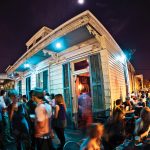
Before Avenue Pub was New Orleans’ beer bar du jour, it was just another neighborhood taproom. Twenty-seven years later, it boasts 42 taps and more than 100 bottles of the best craft beer from all over the country.
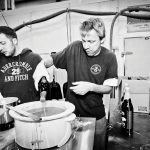
To run a brewery of any size it takes a wide range of tools, equipment, ingredients and paraphernalia. Sometimes having a furry companion around can help, too. Here are the five things that Crider and Brown can’t live without.
Since opening in 2012, Wicked Weed, the Dickinson brothers’ Asheville, N.C., brewery, has been at the forefront of the industry’s relative newcomers, most recently taking home a bronze at the 2014 World Beer Cup.
Brevnovský Pivovar has an annual production of about 2,500 barrels. Most of that is its Pale Lager, but it also makes an Imperial Stout, a Baltic Porter and an IPA, all rarities in lager-loving central Europe. For the moment, however, none of the brewery’s beers are regularly exported out of the Czech Republic.
The Oxbow brewery sits on 18 acres in mid-coast Maine and the brewhouse is housed in an old barn. Tim Adams, Oxbow’s co-founder and head brewer, brews for a living because he believes beer is an amazing culinary creative outlet.
Since opening in 2008, Fermentation Lounge, Tallahassee’s go-to beer bar has grown right along with the city’s beer scene. Pull up a fire-engine-red leather bar chair, and start exploring with two taps dedicated to Fermentation Lounge “house biers,” brewed on-site.