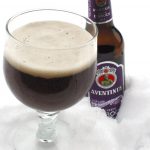
Do not confuse Eisbock with North American ice beer. The latter is an abomination, in which, after freezing, the lifeless lager is weakened with the addition of water. Eisbock, by contrast, is a marvel of science.
Resveratrol, a chemical found in red wine, has been proven to reduce heart disease and curb some cancers in lab animals, which makes red wine the darling of healthy-minded drinkers. But a group of students at Rice University might be knocking red wine off its lofty pedestal.
A pair of geneticists at the Stanford University School of Medicine believe that they have uncovered the answer to the classic “which came first” question—not about chickens and eggs, but about ales and lagers.
Ancient yeast that was found encased and preserved in a piece of amber was extracted by a team of scientists, cultivated and then used to ferment beer.
Adriana Bravo and her team of chemists at the Caracas-based food and beverage conglomerate Empresas Polar have discovered that controlling a chemical process called the Maillard reaction could do a lot more to protect that just-bottled freshness.