
Is Barrel-Aging Trite?
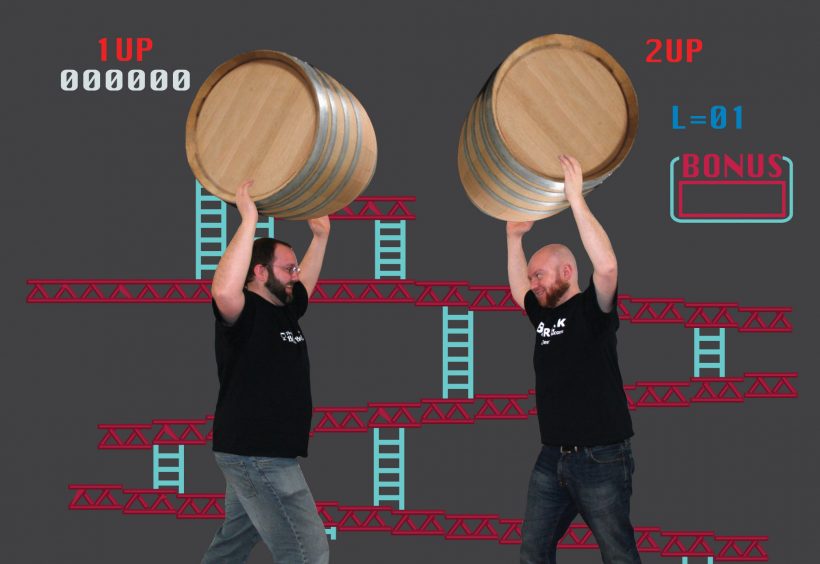
According to some brewers who attended our Extreme Beer Fest: Night of the Barrels, the answer is yes. Brewers involving Tomme Arthur from Port Brewing/The Lost Abbey and Jim Koch of the Boston Beer Company discussed during the festivities that barrel-aging beer has indeed become trite. Interesting comments coming from one brewer whose focus is on barrel-aging and another who essentially resurrected the art with his release of Triple Bock in 1994 to Utopias today.
Arthur elaborated and alluded to the fact that most brewers who barrel-age don’t quite know what they’re doing and suggested that it takes more than just throwing any old beer into a whiskey barrel for a short period of time. He stressed that brewers should be thinking about the proper maturation environments, entire life-cycle of the barrel versus its one-time use, and look at blending several batches. Koch suggested that all of this has been done before.
Interesting points, but why dump on an experimental part of the beer industry?
And, trite?
Nearly 1,000 attendees of Night of the Barrels would probably disagree with that—it was our most raved about specialty night ever. Furthermore, while the packing and aging of beer in wooden barrels isn’t a new concept, the past decade or so has witnessed a growing trend in brewers experimenting with oak-aging every beer style under the sun. Be it a used Bourbon, wine, brandy or a freshly-used Tabasco barrel, fresh oak, taking a shortcut with wood chips, funked, the art of barrel-aging has become popular among both brewers and consumers. Beers touched by wood are fetching higher retail prices too, with beer geeks going gaga over them and rating them highly.
It’s obvious that the demand is there.
On BeerAdvocate, there are hundreds of barrel-aged offerings listed and reviewed and we’re seeing an increase in versions from Scandinavia in particular, with new beers being listed every week. And if you’ve never had a Founders Kentucky Breakfast Stout (infused with coffee and vanilla and aged on Bourbon wood), Allagash Curieux (Jim Beam barrel-aged Tripel) or Russian River Supplication (Brown Ale aged in French Pinot Noir with three strains of friendly funk and sour cherries), you should. The complexities found in barrel-aged beers can be sublime.
This popularity is further reinforced by the Brewers Association, who recently expanded their range of beer styles to now include five sub-styles within their Wood- and Barrel-Aged Beer category. In our book, there is clear acknowledgement that the art is viable and growing within the craft beer industry.
All of that said, Arthur and Koch do raise some valid points. There are many subpar versions of barrel-aged beers being released; however, this isn’t exclusive to the category and could be applied to the entire craft beer segment. Remember, just because it’s craft doesn’t mean it’s auto-magically good. And yes, some of what’s being done isn’t overly creative and reactionary, but every day another brewer experiments and every day a consumer explores a barrel-aged beer for the first time. That’s important to remember.
Regardless, brewers looking to barrel-age need to start somewhere, just as Arthur and Koch once did, and I doubt they considered their initial efforts trite.
Respect Beer. ■
 Previous: Valuable Beer
 Next: Beer News