
Braggot: Where Beer Meets Mead
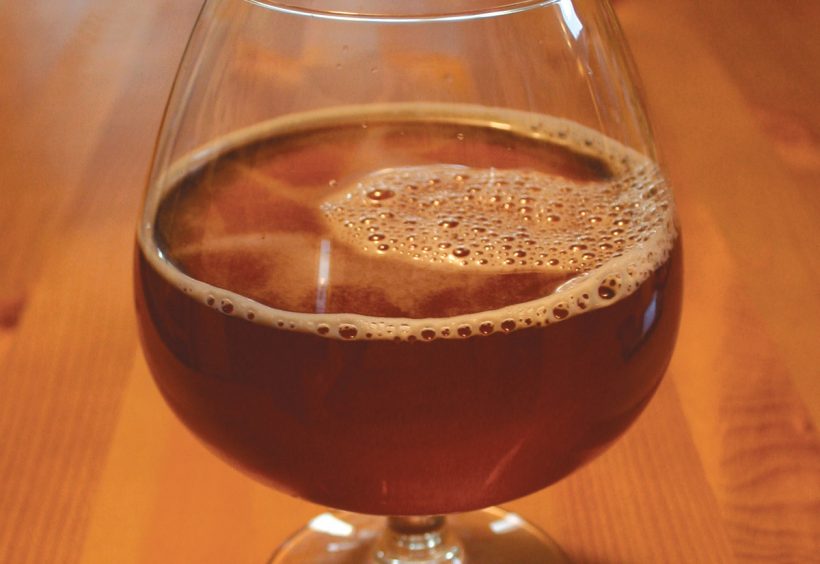
A few years ago, when Dogfish Head released its renowned Midas Touch Golden Elixir, I joked with brewer Sam Calagione that this unusual ale was all a terrible mistake.
His recipe was based on a high-tech analysis of residue found in 2,700-year-old goblets removed from the tomb of the historical King Midas. The testing, by molecular archeologist Patrick McGovern, showed traces of grape, honey and grain—a mixture of wine, mead and beer.
That was no special elixir they were drinking at the funeral of the ancient king, I told Calagione. Instead, surely Mrs. Midas—left to clean up the whole mess—had simply dumped everyone’s dregs into a single goblet; if the scientists had looked, they’d probably find cigar ashes, too.
In truth, of course, combining grain with grape or honey is no mistake. Man has toasted with this special drink for centuries. In the case of beer mixed with mead, the drink is called “Braggot” (or “bragget” or “bracket” or “braggat” or a seemingly endless variety of other spellings that have turned up through the ages). Like all matters involving the hazy history of alcohol, there is debate over its true origin.
The word seems Welsh (brag = malt; got = honeycomb, say some researchers) and, indeed, there are records of 13th-century laws that demanded freemen to pay the king of Wales enough braccat to fill a bathtub. Well before that, the Irish claim they were drinking something called “brogoit.” And no one knows how long the English celebrated Bragot Sunday, a day in which mugs of the sweet drink were raised in the midst of Lent.
What did it taste like? We can only salivate with desire when Chaucer writes in the “Miller’s Tale” of a voluptuous, adulterous young wife whose mouth was “sweete as bragot.”
At its finest, this drink would’ve been brewed with herbs and spices, to be served at celebrations and on holy days. Ian Spencer Hornsey’s A History of Beer and Brewing describes a medieval “up-market” version made with ginger, cinnamon, galingale and cloves. More commonly, a tavern keeper would’ve simply mixed ale and mead—perhaps as a specialty drink, or possibly to cheat a patron who had ordered a more expensive cup of pure mead.
I’ve actually tried this latter method on my own, and it’s not half bad—a bittersweet mingling of honey and hops. Mixing your own is certainly a lot easier than what James Taylor of Atlantic Brewing in Bar Harbor, Maine, has to go through to make his Brother Adam’s Bragget Ale.
Taylor makes four 15-barrel batches over two days—each requiring 35 gallons of honey. “You ought to see the size of the squeeze bottles we use,” he jokes. “I never knew they made them that big!” He spends the days cooking wort, then hoisting buckets of honey. “It’s physically a busy day with lots of lifting,” Taylor says. “It’s a sticky day—you get a hell of a sugar rush just licking your fingers.”
It takes more than six months of fermentation of a gentle mingling of honey and hops. Taylor describes the finished glass as somewhere between mead and Barleywine, between the kiss of honey and the bite of hops.
Even without the grapes (or cigar ashes), this Braggot is worthy of a toast to a king.
BRAGGOT
Aroma: Floral and honey-like
Flavor: Balance of honey and malt, often with spice
IBU: A wide range, depending on base-beer style
ABV: 5–13 percent
Examples: Rabbit’s Foot Bière de Miele, Magic Hat Odd Notion (Winter ’08), Brother Adam’s Bragget Ale, White Winter Traditional Brackett, Two Brothers Heliocentric Bragot ■
 Previous: Josh Davies
 Next: Three Threads