
Come Out From Behind Your Firewalls
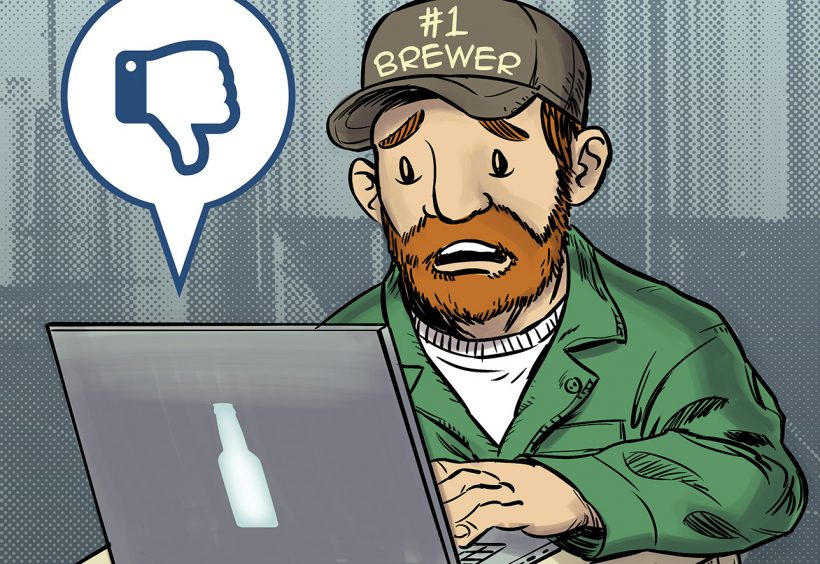 Illustration by Chi-Yun Lau
The craft beer industry’s particular aversion to criticism is often the fault of those offering it. Where criticism largely takes the form of anonymous internet sniping, whether a scathing Yelp review or a blasting on BeerAdvocate.com, the beer industry too often shies away from the less-than-positive thoughts. And that’s a problem. It’s important to be critical. The art is in how you do it.
Constructive criticism—the process of offering honest thoughts with a mind toward improvement—is important for anyone trying to provide a service or product to a consumer group. It allows for much-needed feedback and offers businesses an opportunity for targeted improvement. Whether you’re a brewer, bar owner or beer writer, it’s important to be open to the critiques of others.
It’s easy, however, to see why we live in a culture where constructive criticism has trouble flourishing. Brewers and bar owners in particular need to have a thick skin in their respective trades, and it’s understandable why they take bad and poorly considered reviews from anonymous sources personally. Bar owners largely hate Yelp despite its growing importance because of the way reviewers offer commentary about their not-always-great experiences. The same can be said for brewers reading reviews on beer websites.
To be of value, constructive criticism must be offered in an identifiable manner, whether in person or online, not through protected and anonymous channels. It must be offered thoughtfully and sympathetically, in the spirit of a joint effort toward an improved experience, not as a part of a callous or dickish reprimand. For consumers—to the extent that you consider craft beer to be a community—you have a responsibility not to shallowly carp that “this beer sucks,” or if you personally hate lagers, to shit on every lager you review online. None of that is constructive. Brewers and bar owners largely bust their asses trying to provide you with the best experience possible. When they miss the mark, you can at least respectfully let them know your thoughts without throwing rhetorical bombs from behind a cozy computer firewall.
If a beer tastes or looks off to you, tell your bartender or server. Don’t just leave it sitting on your table without giving the establishment a chance to investigate and perhaps remedy the situation. Enough people sending beers back may result in the bar increasing its line- or glass -cleaning regimen. As with public security, if you hate something, say something. Don’t just go home and bitch about it online.
Conversely, people shouldn’t be castigated or denigrated for offering their opinions, and businesses should create a welcome space for interacting with their consumers when they’re not entirely happy. Craft brewers and bar owners need to be proactive about engaging their customers and not just encourage a back-slapping consumer lovefest.
For bar, taproom and brewpub owners—where customers are physically present—the opportunity for interaction and feedback is immediate and incredibly valuable. When a consumer appears unsure about a particular beer or makes inquiry without asking for a pint, offer a sample, especially at the bar. Solicit feedback about the sample. Consumers almost uniformly end up impressed, tips follow, and this leads to an educated choice. In the right circumstances, it’s also an opportunity to educate the consumer about the product, which leads to a smarter patron and builds loyalty.
It’s also important to imbue a sense of welcomeness throughout the process. Have a manager stop by tables to inquire about service, the meal and drinks. While anonymous paper comment cards are never a favorite, they do connect with some clients and some establishments are now passing out small e-devices at tables to allow consumers a chance to voice their thoughts while in-house.
Constructive criticism is a collaborative process, one that should be encouraged, and should hopefully leave both sides happier in the end. ■

 Next: Younger's No. 3