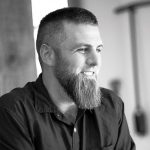
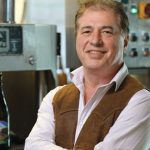
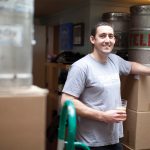
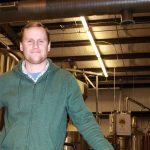
When Jerry Gnagy was brewing for somebody else, he’d only brew the beers he really wanted to brew when those beers fit around an established production schedule. Gnagy flipped that equation upside-down when he opened Against the Grain, the Louisville, Ky., brewpub he co-founded two years ago.
Chase and Colin Healey founded Prairie Artisan Ales a little more than a year ago with a single purpose: to brew complex farmhouse and barrel-aged beers. Chase brews small batches of beers he’s interested in. Colin hand-draws Prairie’s label art. This, they believe, is the future of craft brewing.
As head brewer at Hampton, New Hampshire’s Blue Lobster Brewing Co., David Sakolsky brews innovative beers that nevertheless remain rooted in classic styles.
Joe Pond is a chemical engineer who brews with a decidedly pre-industrial mindset. Olvalde Farm and Brewing Co., the southeastern Minnesota brewery he founded two and a half years ago, is a throwback to the rural, agriculturally focused brewhouses that existed before refrigeration and malt catalogues.
As the founding brewmaster of Full Sail Brewing, and the founder and longtime head of Wyeast Laboratories, David Logsdon carries a huge footprint in the craft industry, especially in the Pacific Northwest. But he made a conscious effort to keep his latest venture, Logsdon Farmhouse Ales, at a modest scale.
The Tree House Brewing Company started with four friends making homebrew in a rural Massachusetts barn. The tiny brewery has grown into the producers of one of New England’s most sought-after beers, Julius IPA.
Scott Vaccaro learned to brew like a pro at the biggest institutions in California brewing, but the Captain Lawrence Brewing Company, which he founded nearly eight years ago, is strongly rooted in his Westchester County, N.Y., hometown.
Ted Rice bounced from New York to California to Miami before finding himself as a brewer in New Mexico. Things clicked for him after he fell in with a robust community of pros and homebrewers. Together, they’re pushing what Rice calls “a Southwestern regional flavor.”
Steve Bradt came to the Free State Brewing Company looking for a side job. That was 25 years ago, and Bradt is still at Free State. He went from working behind the bar to running brewing operations at a company that has since added a production brewhouse to its original pub.
Scott Baer began his brewing career in the tasting room, pouring pints at Santa Barbara, California’s Telegraph Brewing Company. He hustled his way into Telegraph’s brewhouse, and then into the brewery’s top spot, by never being content with what he knew.
Linus Hall began brewing beer in college because he wanted to cut down on long-distance beer runs. He got hooked once he discovered that he could make beer that was as good, or better, than the stuff he’d been buying. Hall, a former engineer, founded Nashville’s Yazoo Brewing Company a decade ago.
Hardywood Park’s founders, a pair of Northeastern transplants, were blown away by Richmond’s thirst for experimentation, and set up shop there; they landed in an unproven market, opened a brewery focusing on Belgian ales, big Stouts and unique IPAs, and can’t push enough product out the door.
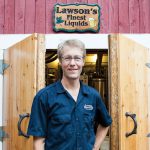
Sean Lawson can brew, at most, around 600 barrels of beer per year. He is his only employee. He distributes his beers to a handful of local bars, bottle shops and farmers markets. Despite all that, his brewery, Lawson’s Finest Liquids, has built a cult following of beer drinkers clamoring for all the IPA and Maple Stout he can produce.
When Hughes arrived at Flying Fish a decade ago, the brewery was producing 4,000 barrels in a year; now, it’s on track to top 18,000. Almost all of the brewery’s growth has been local.
Freetail Brewing in San Antonio, Texas, cuts a wide swath, serving tasty session ales alongside its geekier offerings, like wild ales and specialty bottle releases.
Gordon Schuck didn’t plan on jumping from brewing at home to running his own production facility. But when Schuck, a decorated homebrewer, got out of the Siebel Institute and returned to his native Colorado in 2009, he opened up Funkwerks with Siebel classmate Brad Lincoln, and brought Belgian farmhouse traditions to the high plains.
Out of brewing school and in need of a job, Caleb Staton cold-called Upland and parlayed a chimp joke into a job washing kegs and cleaning tanks. He worked his way up the ranks and is now head brewer at the Bloomington, Ind., brewery.
Ryan Michaels runs brewing operations at McKenzie Brew House, a small chain of brewpubs in suburban Philadelphia, but beer drinkers across the country seek out his work.
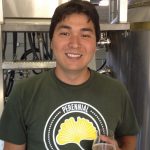
Phil Wymore has made the most of his experience, parlaying stints at Goose Island and Half Acre into his own St. Louis startup, Perennial Artisan Ales.
Good beer has flourished since South Carolina lifted its cap on beer alcohol content, and Edward Westbrook’s Mt. Pleasant brewery has been at the heart of it.
For Scott Smith, drinking good beer led to brewing it at home, and making 5-gallon batches in the kitchen ended in Smith quitting his job, emptying his savings account and opening East End Brewing, a production brewery in a dilapidated Pittsburgh warehouse.
When Doug Hurst and his wife, Tracy, founded the Metropolitan Brewing Company, they wanted to bring something different to Chicago. Metropolitan stands out in a crowded craft beer market because the brewery is married to its hometown’s brewing culture.
To Paul Graham, who began working at Central Waters out of college before buying it from his old bosses, the brewery has adopted the attitude of the rural Wisconsin town where it’s headquartered.