What he came up with was the stark-contrast, dramatic image of a prisoner illuminated by the headlights of a train careening through the prison walls, just feet from the cell cot where our character sits.
In Decorah, Iowa, Clark Lewey was disappointed with the local selection. So he started brewing his own “beers that make a statement.” Homebrewing quickly turned into a business plan, and Toppling Goliath launched on a nano-system.
Jeff O’Neil and the Berardi family are transforming a four-story stone building into an artisan brewer’s dream-workshop, complete with a gravity-fed system, a “gnarly” cellar, a “spider-filled, Old-World approach to barrel aging” and—wait for it—maybe even a coolship.
It’s October 1st, and the cavernous Colorado Convention Center is packed with throngs of grinning Great American Beer Festival attendees. But beyond the buzzed masses the dull roar of the public fades into hushed utterances. It’s about 10 minutes before the GABF’s 30th annual awards ceremony begins.
There’s something nostalgic about Keith Shore’s otherworldly images: the appearance of texture on a flat image, the high-contrast, super-blended colors, the minimalist rendering of one action-packed snapshot that challenges the viewer to fill in the details.
Andy Thomas spent 12 years at Heineken International, where he held the reins as president and CEO of Heineken USA from 2005–2007. Then he surprised everyone when he accepted the position of president of the Craft Brewers Alliance.
For many consumers, it was Sixpoint’s reputation for stellar beers that drew them in. Novelty probably also played a role. But neither would mean nearly as much if the wraps weren’t so elegantly designed.
In 1982, Charlie Papazian threw a festival. What he calls an “astounding” crowd for the time (800 people) showed up to a hotel in Boulder, Colo., to drink some craft beer. This fall’s Great American Beer Festival sold out in one week to 49,000 attendees, and Papazian is still at the helm.
The first competition, back in 1987, had 12 categories; this year, there are 83, and if you count subcategories, which don’t get awards but help further define style parameters, 135.
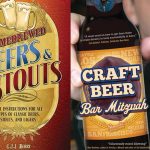
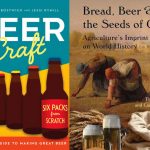
Why we’re reading The Craft of Stone Brewing Co.: Liquid Lore, Epic Recipes, and Unabashed Arrogance and Charleston Beer: A High-Gravity History of Lowcountry Beer.
With help from the its fan base, the “Surly Nation,” new Minnesota laws allow Surly Brewing Company to sell beer at its own location. Now, plans are in the works for a $20 million, 6 acre destination brewpub.
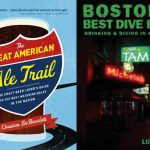
Why we’re reading The Great American Ale Trail: The Craft Beer Lover’s Guide to the Best Watering Holes in the Nation and Boston’s Best Dive Bars: Drinking & Diving in Beantown.
Six months after Baxter Brewing started brewing and canning their beers, demand is soaring, and Livingston has made Lewiston, Maine, a destination for craft beer fans.
He’s the face of Shmaltz Brewing out of San Francisco, but he travels tirelessly, pouring his own beers at festivals and bringing his signature brand of smart humor to the industry.
In the early ’90s, two things happened: the rise of microbreweries, which started releasing their own “breweriana” into the coaster-sphere… and the internet. That’s when the “tegestologist,” or coaster collector, community really blew up.