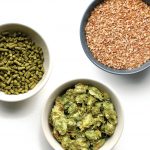
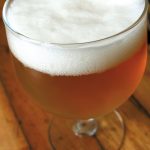
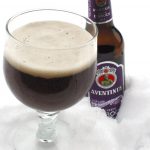
Added in the final stages of brewing to accentuate their aroma, the hops boldly announce their arrival by smothering the nose with a fresh wallop of citrus and freshly cut grass. Their grapefruit-like flavor rides proudly above the malt, biting the palate in an unapologetically bitter finish.
The good news is that, even without all that cloudy yeast and wheat sediment, crystal-clear Kristall Weiss still offers much of the signature aroma and flavor of a German wheat beer.
Also know as Flemish Brown Ale, the variety is marked by a distinct piquant tartness that is produced by Lactobacillus, an aggressive bacteria that infects the ale during fermentation.
Pre-Pro Lager is a glossy dream, a wistful look back to a style that largely never existed. The truth is that, by the time Prohibition was enacted, American brewers were already on the road to ruin.
When you boil it all down, beer is little more than four simple ingredients—malt, hops, water and yeast. Join us as we close our two-part series on taking it all back to basics.
Crisp, divinely flavored with coriander and orange peels, spicy and fruity. Typically made with unmalted wheat and perhaps oats, it is left unfiltered to produce a hazy, pale color with a billowing white cloud of foam.
When you boil it all down, beer is little more than four simple ingredients—malt, hops, water and yeast. Join us as we explore these humble components in a two-part series taking it all back to basics.
The story behind this style not only recalls the creation of one of the world’s great brewing capitals in Burton-on-Trent, but it harkens the triumph of the British empire, a living, breathing emblem of might and power.
Creamy and wholesome and chocolaty as that glass of Nesquik you used to dunk your Oreos into, Milk Stout—aka Cream Stout or Sweet Stout—seemingly comes straight from the dairy.
Tripel what? It’s not three times the alcoholic strength of a basic beer, nor the gravity, nor the malt, nor the hops. It has nothing to do with its process of fermentation or even its price.
The southeastern corner of Pennsylvania has emerged as a hotbed of craft-brewed Pilsners. Specifically, the crisp and bitter northern German-style Pils.
Mild needs an aggressive public relations campaign, an image consultant, maybe even a personal trainer. Otherwise, one of the world’s most misunderstood beer styles will never shed its reputation for mediocrity.
Do not confuse Eisbock with North American ice beer. The latter is an abomination, in which, after freezing, the lifeless lager is weakened with the addition of water. Eisbock, by contrast, is a marvel of science.
Altbier is not purely an ale, nor is it a lager. It is a hybrid. The result of its unusual brewing process is an entirely distinctive (and often under-appreciated) flavor.