Pre-Pro Lager is a glossy dream, a wistful look back to a style that largely never existed. The truth is that, by the time Prohibition was enacted, American brewers were already on the road to ruin.
Adding spice to beer is like applying perfume or aftershave to humans. The point is to use a dab to aid allure, not a vial to hide grime or lack of confidence.
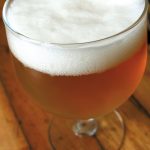
Crisp, divinely flavored with coriander and orange peels, spicy and fruity. Typically made with unmalted wheat and perhaps oats, it is left unfiltered to produce a hazy, pale color with a billowing white cloud of foam.
Creamy and wholesome and chocolaty as that glass of Nesquik you used to dunk your Oreos into, Milk Stout—aka Cream Stout or Sweet Stout—seemingly comes straight from the dairy.
Tripel what? It’s not three times the alcoholic strength of a basic beer, nor the gravity, nor the malt, nor the hops. It has nothing to do with its process of fermentation or even its price.
Tim Webb reminisces about his first taste of better beer in 1974 (a Batham’s Bitter at The Plough Inn) and wonders what the prize-winning GABF beers will be like 35 years from now.
Whether used as a sweet and earthy backbone in otherwise crisp, hoppy German Pilsners, or as the center of attention in rich bocks and robust Scotch Ales, malt brings more than sugar for alcohol conversion to the world’s best beers.
The southeastern corner of Pennsylvania has emerged as a hotbed of craft-brewed Pilsners. Specifically, the crisp and bitter northern German-style Pils.
A funny thing’s going on in craft beer—and it’s been gaining speed for quite some time. Something very American, yet at the same time, decidedly pre-modern. That is, simply, working together.
Mild needs an aggressive public relations campaign, an image consultant, maybe even a personal trainer. Otherwise, one of the world’s most misunderstood beer styles will never shed its reputation for mediocrity.
While lagers and German Pilsners reign supreme in most areas of the country, Altbier accounts for almost half the beer consumed in Düsseldorf, and local Altbier breweries and quaint brewpubs churn out surprising volumes of the antique style.
Do not confuse Eisbock with North American ice beer. The latter is an abomination, in which, after freezing, the lifeless lager is weakened with the addition of water. Eisbock, by contrast, is a marvel of science.
Sparking an interest in craft beer is all about the right beer at the right moment, the one sip that radically transforms the imbiber’s way of thinking about beer.
Altbier is not purely an ale, nor is it a lager. It is a hybrid. The result of its unusual brewing process is an entirely distinctive (and often under-appreciated) flavor.