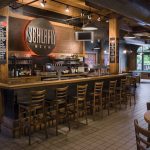
By making slight deviations in traditional cooking methods, The Shaved Duck has developed its own distinctive flavors that pair well with high-quality beer.
America’s brewing renaissance has developed alongside a renewed interest in cycling, with new breweries popping up along the nation’s bike trails to cater to two-wheeled clientele.
Piney River Brewing Company is located 5 miles outside of Bucyrus, Mo., an unincorporated community small enough that the brewery’s first distributor had never heard of it.
When Saffell and Walters had the idea for Foeder Crafters of America, they didn’t really know much about foeders, large oak tanks built for wineries but coveted by breweries such as Rodenbach in Belgium, New Belgium in Colorado, and now a growing number of smaller American breweries intent on making sour beers.
This fried cauliflower dish pops with the lemon, garlic and cumin in chermoula, a marinade found in Moroccan and Tunisian cooking. It’s balanced by the sweetness of golden raisins and pistachios, making it a complex dish with acidity and a little heat.
White Labs to open East Coast location; Carlsberg stops production of Draught Burton Ale; individual beer sales now legal in Missouri; and New York seeks federally backed crop insurance.
As smaller, independent breweries have steadily chipped away at the market share held by larger national or multinational competition, they’ve also found ways to move into spaces formerly controlled by Big Beer—like Major League stadiums.
To run a brewery of any size it takes a wide range of tools, equipment, ingredients and paraphernalia. Sometimes having a furry companion around can help, too. Here are the five things that Crider and Brown can’t live without.
The St. Louis Brewery has been trying since 2011 to register their brand name—Schlafly Beer—as a federal trademark, but it hasn’t been easy. Due to protest from Phyllis Schlafly, the St. Louis Brewery must now proceed to a trial in court.
When Tom Schlafly and Dan Kopman wanted to move the St. Louis Brewery into a former printing warehouse, folks in St. Louis questioned the founders’ business acumen, if not their sanity, especially in light of Anheuser-Busch’s dominance over the local beer scene.
James Westphal’s mini-empire of beer-centric establishments in Kansas City began with the opening of McCoy’s Public House in 1997. He launched the Beer Kitchen in 2001, and then in 2008 opened The Foundry in a connected space next door.
In a city that’s standing out from behind the shadow of a certain macrobrewing behemoth, places like Bailey’s Range are introducing locals and tourists alike to all their burgeoning craft-beer scene has to offer.
St. Louis has always been a beer city. In 1991, it started its transformation to a craft beer city. The metro area has added 10 new breweries since 2009; two dozen breweries now operate within a two-hour drive of downtown. Today, it’s one of the country’s top destinations for beer travelers.
Homebrewers banned from pouring at St. Louis’ Heritage Beer Festival; Kentucky Brewers found a nonprofit guild; buy a round for friends anywhere with the BuddyBeers app; Breckenridge mulls options after growth plans squashed; and AB-InBev purchases Grupo Modelo.
Phil Wymore has made the most of his experience, parlaying stints at Goose Island and Half Acre into his own St. Louis startup, Perennial Artisan Ales.
At Augusta Brewing Company in Labadie, Mo., husband-and-wife duo Terry and Jeri Heisler are keeping a family history alive by moving the brewery’s production operations from its current location to a facility in Washington, Mo., which has been in Jeri’s family for over a century.
Stephen Hale of the Schlafly Tap Room has been brewing for over 30 years, and he oversees a brewing portfolio that’s both strongly traditionalist, and freewheeling and experimental.
Taking garbage beer proves hazardous; Washington state approves increased beer tax; on-campus brewing proposed at Louisiana State University; Carlsberg warehouse workers strike over on-the-job pints.
To say that O’Fallon Brewery is a collection of homebrewers might be an oversimplification, but it is not that far from the truth. That is not say that the brewery is amateurish—it’s not. Rather, the brewers and the atmosphere of the brewery is one of innovation and, yes, passion for beer.
OK, so, yes, St. Louis is home to that really big scary beermaking corporation that shall not be named. But wait! St. Louis has much to redeem itself with, you judgmental beer snob. Give the city a shot. Here’s how.
Steven Pauwels left Belgium for Missouri nine years ago, bringing craftsmanship, tradition, and a relentless drive to experiment. Here’s how Boulevard became the Midwest’s largest independent brewer—and its most eclectic.