According to many beer histories, English Stouts—Milk ones excepted—disappeared in World War I, allowing Guinness to dominate. It’s another example of projecting the present backwards. As usual, the truth is much more complicated.
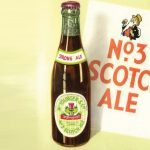
Like all beers that have been brewed for a long period, No. 3 has undergone many changes. No. 3 is also a beer that’s refused to die, no matter what history has thrown at it. If you’re ever in Scotland, you should give it a try.
While America’s ales had their roots in Britain, they slowly began to adapt and change in their new home. By the 1890s, there were significant differences in the way British and American ale breweries operated and the equipment they used.
No, Sommerbier and Winterbier are not seasonal specials. At least not in the sense you’re thinking. They’re two of the earliest lager styles, now almost completely forgotten, though traces of them remain.
Scottish Shilling Ales are beers designated by that peculiar Scottish system of naming based on price rather than type. But what is the history of these beers, and how do they fit into the constellation of British styles?
Who thought spontaneous fermentation was unique to Belgium? It wasn’t, and lasted well into the 19th century in other parts of Europe. I’m not talking about Gose or another sour wheat style, but about one of the strangest beers brewed in recent times: Danziger Joppenbier.
Guinness: It’s the classic Dry Irish Stout. Not that strong, and, well, dry. A beer characterized by the use of roasted barley for color and flavor. A beer that’s been unchanged since God wore short trousers. Or has it?
An incredible document has just come to light. It’s a typed manuscript, written in 1947 by A. Dörfel, the head brewer at Groterjan, a smallish brewery in Berlin specializing in top-fermenting beer. What makes the manuscript so fascinating is that Dörfel documents a lost world of German top-fermenting beers.
In the 18th century, there were three tax classes in England (in descending order of strength): Strong, Table and Small. The definition of these classes was very simple, as it was based on the wholesale price.
One of the oddities of 20th-century British brewing was that bottled beer was rarely called Mild; it was usually called Brown Ale or something vague, like Family Ale. Or Home Brewed.
Pale Stout sounds like a contradiction in terms. But if Black India Pale Ale can exist, why not Pale Stout? Going back to the original meaning of Stout, it’s not as daft as it first appears. Stout only acquired its definition as a specific type of dark, hoppy beer in the early 19th century.
What’s slightly surprising to see in old British newspapers is that the strongest Mild is called “Imperial.” Especially as I’ve been calling XXXX Ale “Imperial Mild” for a while now. I thought I was just making it up. Once again, history has proved that there’s almost nothing genuinely new.
The past isn’t a foreign country. It’s a whole foreign continent, where each country is weirder than the last. Recipe formulation is an area where this is particularly true.
The Matthew Vassar who brewed Vassar Ale later founded the college in Poughkeepsie that bears his name. That connection is almost certainly why Vassar’s papers have been preserved.
Britain was a latecomer to the lager party. Everyone knows that. But the story is more complicated—and goes back further—than you might imagine. Lager made two arrivals in Britain, each some 30 years apart.
Fuller’s brewed two Burtons in the 1930s, Burton Old and Old Burton Extra. OBE didn’t quite have the gravity of Barclay’s KKKK, but it was still a very potent 7.4 percent alcohol by volume. Burton’s popularity quickly dropped off after World War II, but OBE struggled on until 1969.
In 1852, Samuel Allsopp brewed a strong beer for Captain Belcher’s expedition to the Arctic. A beer that wouldn’t freeze easily was pretty handy. With all that alcohol, it must have warmed the sailors up, too. Who needs a fire when you’ve an 11-percent ABV beer?
The evolution and slow divergence of Irish Porter from the London original is a story that’s been repeated across the world. Displace a beer and, like a plant, it will adapt to its new environment.
There were many parallels between the circumstances in Britain and Holland in the early years of World War II. Raw materials were getting scarcer, and the strength of beer was falling. There were also limitations on the types of beer brewed. Drinkers couldn’t always get what they wanted.
The willful misrepresentation of the past by the German brewing industry is irritating. Giving the impression that German beer has been all malt since Moses was at school? Nothing could be further from the truth.