This year, nanobreweries proved they’re here to stay, while “gypsy” brewers continued to produce some of the best beer in the market. New breweries capitalized on the session beer movement. And in a saturated market, some plucky startups opened on the strength of a niche concept, like Bière de Champagne.
Rather than starting from scratch in a warehouse space on the edge of town, co-owners Jason Spaulding and his wife, Kris, repurposed the early-1900s funeral home chapel and livery stables to house their small, niche brewery in the East Hills neighborhood of Grand Rapids, Mich.
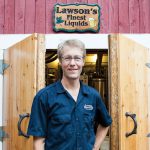
Sean Lawson can brew, at most, around 600 barrels of beer per year. He is his only employee. He distributes his beers to a handful of local bars, bottle shops and farmers markets. Despite all that, his brewery, Lawson’s Finest Liquids, has built a cult following of beer drinkers clamoring for all the IPA and Maple Stout he can produce.
In a city that’s standing out from behind the shadow of a certain macrobrewing behemoth, places like Bailey’s Range are introducing locals and tourists alike to all their burgeoning craft-beer scene has to offer.
Bob Archer was thrust into the beverage industry when he took over the family business after his father’s death, and today he’s the chairman of the National Beer Wholesalers Association.
Bend, Ore., is something of a beer drinker’s paradise. It is home to over a dozen breweries, and with one brewery for every 9,111 people, it’s also the city with the most breweries per capita. One of the staples of the Bend brewing scene is . The production brewery opened in 2006 under the name
When Hughes arrived at Flying Fish a decade ago, the brewery was producing 4,000 barrels in a year; now, it’s on track to top 18,000. Almost all of the brewery’s growth has been local.
Opened in 2006 in the Minnesota capital’s Cathedral Hill neighborhood, The Happy Gnome’s drink selection now includes 300 whiskeys and 100 bottled beer selections.
Sky Weekes was a wine geek with a culinary degree when he decided to launch his barrel-broker business out of a U-Haul garage three years ago. Today, he’s worked with nearly every brewery in Colorado.
With a few loans and the support of a community that was clamoring for a local brewery, the Port City team took over an old warehouse just outside the nation’s capital to build one of the DC area’s most successful breweries.
Freetail Brewing in San Antonio, Texas, cuts a wide swath, serving tasty session ales alongside its geekier offerings, like wild ales and specialty bottle releases.
Stepping into Closed for Business, you find yourself transported. The young beer bar and restaurant in Charleston feels more like a renovated rec room than the area’s premiere craft-beer destination.
In a 2008 Last Call column Tomme Arthur condemned eBay’s alcohol sales policy, which prohibits private sales of all alcohol—except beer. Efforts by Arthur have resulted in eBay removing several beers from auction, but not all of them.
In the small village of Amana, Iowa, tucked among historical sites and artisans’ shops, Millstream Brewing Company is quietly churning out some of the finest beer in the region. Millstream’s portfolio is heavy on the German beers, like the seasonal German Pilsner and widely popular Oktoberfest, but also drifts into the realm of experimental brewing.
Gordon Schuck didn’t plan on jumping from brewing at home to running his own production facility. But when Schuck, a decorated homebrewer, got out of the Siebel Institute and returned to his native Colorado in 2009, he opened up Funkwerks with Siebel classmate Brad Lincoln, and brought Belgian farmhouse traditions to the high plains.
Aside from the gargantuan outdoors space, which is perfect for Portland’s temperate climate and encourages barflies to bring in their own food, APEX has pinball machines, walls lined with beer labels, and relatively inexpensive, interesting drafts on impeccably clean lines.
Arthur Farley considered this relationship between water and beer while scouting a location for his Brasserie St. James brewpub in Reno, Nev. He decided on the old Crystal Springs Water building in Midtown. The kicker? The artesian well 300 feet below the building.
Between his job at the North Dakota historical society, being a father to his 7-year-old son and brewing Laughing Sun’s six regular beers, Mike Frohlich has his hands full.
Visitors to Vermont’s Drop-In Brewing Company may not notice anything different about the brewery. However, for two weeks a year, the beer is just a secondary product at Drop-In; the fully operational brewery doubles as the training grounds for the American Brewers Guild Brewing School in Salisbury.
Out of brewing school and in need of a job, Caleb Staton cold-called Upland and parlayed a chimp joke into a job washing kegs and cleaning tanks. He worked his way up the ranks and is now head brewer at the Bloomington, Ind., brewery.
Housed in a former high-end furniture shop, The Mayor of Old Town is a minimalist space, set off by high ceilings and lots of natural light and outfitted in mid-century modern décor. This clean design allows visitors to focus on the beer, which is plentiful—to the tune of 100 taps.
A manufacturing engineer by day, Permen applies the logic of inputs and outputs to homebrewing. As scientific as that sounds, Permen credits his Homebrewer of the Year win mostly to luck.
Ryan Michaels runs brewing operations at McKenzie Brew House, a small chain of brewpubs in suburban Philadelphia, but beer drinkers across the country seek out his work.