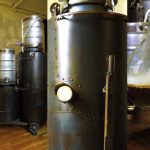
Eschewing the usual three-vessel deal, the BrewBot is a “Brew-In-A-Bag” system that only requires one pot and a big mesh container that holds and strains the grain. Think the world’s largest tea bag.
Of the country’s estimated 750,000 homebrewers, the vast majority are extract brewers. Many of them are brewing vets and produce an excellent tipple. Why does extract beer’s reputation suck so much? Two reasons—old extract and noob brewers.
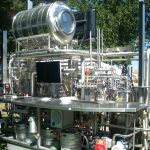
Brewpub4u is quite possibly the world’s first portable brewpub. On the beer-making side, it features a 100-percent food-grade stainless steel 3.5 barrel brewing system with a 60-gallon kettle.
So potent was Adam that upon arriving in Dortmund, the famously hard-drinking Frederick William IV, king of Prussia, downed a giant mug (or mugs) of beer and passed out for a full day.
Just how fine can you go with your crush? The internet’s general rule of thumb says, “Crush until you’re scared and then crush a little more.” In reality, you don’t have to shoot for the maximum efficiency from your crush. Most mills’ default settings work like a charm.
Many great breweries started on an extremely small scale, and there are many nanos that make quality beers. But as with many homebrews, there is no replacing professionally brewed beers.
Have brewpub, will travel; beer designed for zero-gravity consumption; deep-fried beer makes its sizzling debut; and world’s oldest (drinkable) beer found in Baltic Sea.
While we usually think of a batch in the number of glasses we can pour, not in terms decades, we can force our beer to the last payment, the proverbial mortgage finish line.
The one place we can’t skimp is our ingredients. No matter how much we’d like to use that cheap bag of feed barley to make beer—there’s a reason it’s feed barley and not malt.
The lucky winner of Stone’s March Madness Homebrew Competition and AHA Rally gets moved out of the dinky kitchen and into Stone’s gleaming steel system of steamy goodness. Topping it off, the brew becomes Stone’s official GABF ProAm entry.
With the summer’s blazing sun, you’re no doubt struggling with the burden of controlling the runaway temperatures of your ferments. Here are a couple of classic solutions to the temp problem.
Let’s hope that for JL, this return starts like Jordan’s baseball “career” and ends like his perfect championship fadeaway with the Bulls. (Let’s ignore the whole Wizards period.)
Philadelphia brewpubs raided by police; Moosehead, Boston Beer Company ink distribution deal; A-B InBev bid for distributor blocked by Illinois; and Iowa, Oklahoma become friendlier to craft brewing.
We now understand the evils and horrors of water softeners and the dangers of municipal water supplies (chlorine bad!). Now let’s get to work actually using this stuff.
Barleycorn’s isn’t exactly a brewery, but rather a brew-on-premise shop where customers can come to the store, buy their supplies and ingredients, and turn out a 15-gallon batch within a few hours.
Given that it’s one of the four “legal” beer ingredients and that it comprises 95 percent of our brew (or 90 to 85 percent, for some of us), ignoring water’s impact can relegate your brew to the drain.