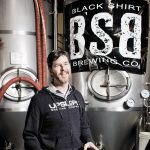
As many of the largest craft breweries open additional locations in new markets, they’re up against a difficult task: making sure their famed flagships taste the same everywhere.
What does the recent series of small brewery mergers mean for the companies involved? And more importantly, what does it say about the future of craft brewing?
America’s brewing renaissance has developed alongside a renewed interest in cycling, with new breweries popping up along the nation’s bike trails to cater to two-wheeled clientele.
From the University of Louisiana at Lafayette’s Ragin’ Cajuns Ale to University of Wisconsin’s S’Wheat Caroline, brewery-university partnerships are about more than making money.
Known for pioneering canned beer packaging, Oskar Blues was looking for a new way to push the aluminum container’s limits while solving some of the glass growler’s inherent downsides. They ended up with the Crowler.
Cans are now instinctively what I reach for when I’m buying beer in the store, much to my own surprise. In fact, I expect to keep passing over glass bottles, bombers and growlers for many years to come.
Longmont, Colo., canned-beer pioneer Oskar Blues Brewery has acquired Perrin Brewing Company in Comstock Park, Mich. While the exact terms of the deal were not specified, Perrin will remain locally owned and operated.
While it may have only been coincidence that Dale’s was the beer of choice at Vail, it’s no accident that other winter destinations in Colorado have beers synonymous with their slopes.
Flip through this coffee-table book to read the backstories behind your favorite canned beers, and answers to questions like, how many colors can you print on most cans? (Answer: six.)
New French beer tax elicits outcry from EU brewers; Oskar Blues partners with community college for hands-on brew course; German courts rule to allow two different Duff beers; study claims hop compound may help fight common cold; and Westvleteren XII finally released to much fanfare, some controversy.
For many breweries, a regional, cultural identity fosters the brand’s wider appeal. Paradoxically, that popularity might dilute the brand by requiring a large-scale production model that precludes ties to its regional roots—something expanding breweries keep in mind.
Goodwill among brewers doesn’t stop at the occasional tank or piece of advice. It’s an industry-wide culture that can be found at every stage—from conception of a brewery or beer to execution, to, yes, even consumption.
Switching from the once-ubiquitous brown bottles to cans may have been novel nine years ago, but today, it’s just one way craft brewers are reexamining their relationship with the container industry in hopes of shaving costs and putting better beer on the shelves.
Oskar Blues crafts one very tall boy; Portland to treat water, possibly at expense of beer taste; Starbucks considers serving beer and wine; and thieves pull off $70,000 beer heist.
While canned craft beer is an innovation in itself—at least here in the United States—another recent development in Japan might soon make canned beer popular within a group of individuals with special needs.
Both musicians and brewers express themselves as artists by putting a lot of themselves into their craft; be it a new Stout or a new song. It’s no huge surprise then, given these fundamental similarities, that many brewers are also musicians and many breweries have their own bands.
Ordering a can of beer has always been trouble. Call for one and you run the risk of being identified as an unsophisticated ignoramus and subjected to ridicule at the hands of even the most open-minded beer geeks.