Though not a new concept, “session beer” is one of the more recent beer trends in the US. It’s a sound concept, and has its place. But here in the US, it’s a flawed practice.
Jack Joyce, co-founder of Rogue Ales and Spirits, passed away on May 27 at the age of 71. Joyce worked as a litigation attorney and an executive at Nike before venturing out to co-found Rogue in 1988.
After years of petitions from the Brewers Association and brewing professionals, the TTB has revised its stance on certain ingredients that previously required formula approval.
Trader Joe’s house brand changes breweries, branding; Mikkeller and Three Floyds to open Copenhagen brewpub; researchers creating genetic family tree for brewing yeast; and The Bruery to open a facility for wild-fermented ales.
Flip through this coffee-table book to read the backstories behind your favorite canned beers, and answers to questions like, how many colors can you print on most cans? (Answer: six.)
NitroBrew is an on-site device that turns any style of beer—from Stouts to Pilsners—into a nitrogenated brew within moments, giving it the rich, creamy head and silky mouthfeel of a beer poured right off a nitro tap.
Adroit Theory’s aesthetic leans dark—think a little bit of goth, a little bit of motorcycle club and a whole lot of rock ‘n’ roll. You can see it in the label of its first beer, B/A/Y/S.
Craft breweries in Ecuador can’t keep up with consumer demand and are expanding as quickly as their bank accounts will allow. Only two years old, Andes Brewing Company epitomizes this growth with its expansion from a 1/2-barrel to a 3-barrel system, making it a mid-sized craft brewer for Quito.
To run a brewery of any size it takes a wide range of tools, equipment, ingredients and paraphernalia. Sometimes having a furry companion around can help, too. Here are the five things that Crider and Brown can’t live without.
Once seen as the ultimate expression of beer geekery, India Pale Ales have been at the vanguard of a communal palate shift, resulting in the wholesale embrace of all things hop.
Heineken is synonymous with the Pale Lager called Pilsener that still dominates the world. The vast majority of the beer they brew is in that style. But that wasn’t always the case.
Here’s something homebrewers can do that the pros typically can’t: fortify. Winemakers have categories of “fortified wines,” like Port, where the addition of a spirit stops fermentation short.
IPA adds a touch of bitterness and accentuates the gyro meat’s herb mix, while a Brown Ale increases the melanoidin malt complexity. A Stout gives the lamb flavor more depth.
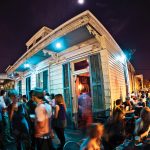
Before Avenue Pub was New Orleans’ beer bar du jour, it was just another neighborhood taproom. Twenty-seven years later, it boasts 42 taps and more than 100 bottles of the best craft beer from all over the country.
At The Rare Barrel, a tiny, sours-only brewery in Berkeley, Calif., American sours push the boundaries of what Brettanomyces, Lactobacillus, Pedioccocus, oak and time can do.
Since starting in 2012, Scott Hedeen’s passion project—a nanobrewery tucked into a small industrial park in northern Georgia—has been invited to events like Chicago Beer Week and Hunahpu’s Day at Cigar City.
As craft beer continues to gobble up Big Beer’s market share, small breweries are increasingly grappling with the question of whether to handle communications in-house or farm it out to an outside PR agency.
The shift to seeing a bottle of Lagunitas Pils in a John Mayer music video or Woody Allen movie (both of which have recently happened) is as organic a move as the industry’s growth itself.
While researching his latest book, Cooked: A Natural History of Transformation, food and agriculture journalist Michael Pollan connected the dots from plants to grains, to our favorite victual: beer.