Not long ago, a Pale Ale brewed with Colorado-grown Centennial hops would have raised eyebrows. But that’s exactly what the state’s brewers guild made for the 2014 Craft Brewer’s Conference in Denver.
Brooklyn Brewery’s Steve Hindy is one of just a few guys whose viewpoints are essential when it comes to understanding what went down in craft beer between the 1960s and today.
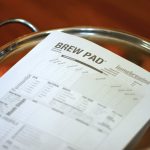
Keeping track of those last-minute homebrew recipe changes can be tricky. Often they are jotted down on a piece of scrap paper, at risk of being forgotten, misplaced or lost.
Drying hops is like curing a fine cut of meat. The softer you kiln, at lower temperatures for longer times, the more flavorful and aromatic the final batch will be.
With more than 3,000 American breweries now in operation, selecting world-class beers from the tens of thousands of available brands is an almost impossibly laughable task.
I was a little surprised to see that the Brewers Association had added Dutch Kuit to their style guidelines. It’s a pretty obscure style, even in Holland.
When the the Beer Judge Certification Program last updated their style guidelines in 2008, there were 23 beer categories. The newest draft guidelines have 11 more classes for a total of 34!
Four variations of the traditional Austrian dessert, the Linzer Torte, incorporate an Eisbock, a Doppelbock, a Weizenbock and a Bock with fruits like apricots, cherries, figs, and prunes.
In a dark, “old bar” setting, Papago’s taps include locals like Dragoon’s Infringement Pils, buzzy newbies like Destihl’s Sour Apple Lambic, and classics like Green Flash’s West Coast IPA.
When Good People first launched in Birmingham, Ala., in 2008, the brewery was somewhat constrained—by Alabama’s legal restrictions on brewing, and by what they thought the market could handle. But things are changing.
The 20-year-old, Hew Hampshire operation Smuttynose Brewing Company moved in 2014 from a cramped and thoroughly analog brewery to a new facility featuring state-of-the art equipment.
The Netherlands is now home to upwards of 225 breweries; in 2013 alone some 60 new microbreweries launched, many of which are contract brewers. Amsterdam is certainly at the forefront of this Dutch renaissance.
While connoisseurs have long traveled to countries like Belgium to try monastic brews and farmhouse ales, the phenomenon of beer tourism in the United States is still relatively new.
As smaller, independent breweries have steadily chipped away at the market share held by larger national or multinational competition, they’ve also found ways to move into spaces formerly controlled by Big Beer—like Major League stadiums.
In December 2013, monks from six Belgian Trappist brewing abbeys gathered in Brussels to sample Spencer Brewery’s beer. A unanimous approval made Spencer the first American brewery to earn the “Authentic Trappist” title.