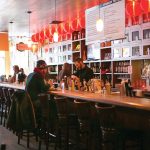
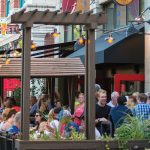
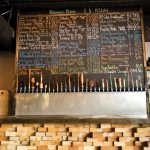
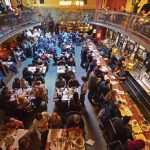
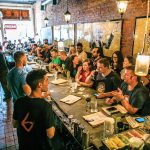
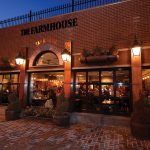
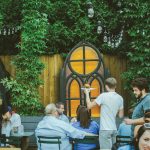
With reclaimed wood, vintage beer signs and photos from the Wisconsin Historical Society adorning the walls, The Old Fashioned is a cozy and inviting place. But what makes the spot special, is its steadfast dedication to local beer.
Made up of a cozy wooden bar area with some adjacent tables, a small back patio, a swanky retro lounge, and a ballroom area for the music, The Outer Space hosts acts most days of the week.
Iron Horse Tavern was opened by the owners of Mountain State Brewing. As West Virginia’s young craft beer scene continues to grow, Iron Horse grows right along with it.
If you drink a beer, and your friends aren’t instantly notified about it, did it really happen? How is technology changing the beer drinking experience for so many enthusiasts, and why are they frantically sharing their experiences anyway?
Cask & Vine is a popular spot for locals in Derry, N.H. They come for the ambiance (soft lighting, no televisions, an oldies and jazz soundtrack) and the refreshing take on seasonal small plates. Oh, and there’s also 12 constantly rotating draft lines with plenty of local and regional beers.
Of Newark-upon-Trent’s 35 pubs, only four served cask. All owned by Nottingham brewer Home Ales. Modern geeks wouldn’t have loved them. But they had a few things drinkers loved. They were cheap. And their cask beers were always in good condition.
Beginning in the mid-1980s, microbreweries started to think of tap handles as promotional tools. Now, numerous beer-focused bars have what amounts to rotating art exhibits thanks to companies such as Taphandles in Seattle.
To complement a list that mixes German imports (think Schwaben Bräu, Hacker-Pschorr and Hofbräu) with North Dakota staples like Fargo Brewing and Drekker Brewing, Würst serves up loads of hearty German fare.
Thanks to places like Bodega, Columbus, Ohio’s Short North is a revitalized district today. Outside, the 50-seat patio offers superb people watching on North High Street. Inside a long bank of windows, Bodega serves up 47 beers from sleek, stained wood tap handles at a rustic wooden bar.
With its basement-dark, modest interior, worn-wood furniture, a handful of televisions, and a charming, vine-covered porch, Bittercreek has seen some things in its 20 years.
In 1994, a new law allowed breweries to produce a minimum of 600 hectoliters per year. Microbrewing in Japan was born. Over 200 microbreweries sprang up in a few years. Today that number is half of what it was. Yet the beer culture in urban areas like Tokyo and Osaka is twice as strong.
A Providence, R.I., native, Julian Forgue started down a new career path when his father was diagnosed with cancer so he could stay close to home during his treatment. It was around this time that he opened Julian’s, a humble 20-tap eatery tucked away in the city’s Federal Hill neighborhood.
On Aril 29, the Massachusetts Alcoholic Beverage Control Commission (ABCC) charged Everett-based distributor Craft Beer Guild LLC with violating two rules preventing unfair practices that limit consumer choices, like offering inducements to favor some beer brands over others.
This 4,500-square-foot bottle shop and bar serves up a well curated mix of the best stuff available in The Volunteer State. Regulars pair their pints with wings from Thunderbird, a smoked chicken food truck, on the 50-seat front porch.
This pub, which has 64 beers on draft and more than 300 in bottles (not to mention over 60 varieties of Scotch), often devotes most of its taps to special events, like Bigwood, a celebration of barrel-aged beers from Stouts to sours, and Hardliver Barleywine Fest.
Tucked down a narrow, cobbled street in Birmingham, Ala., The J. Clyde’s diamond-paned windows, stone walls and beamed ceiling give it the vibe of an English pub.
Unselfconsciously warm and kitschy, Saraveza is the embodiment of Sarah Pederson’s distinctive vision. Funky green vintage coolers display sought-after bottles of de Garde Bu Weisse and Southern Tier’s Choklat, but there’s always Hamm’s on draft—served across a bar made from thousands of bottle caps.
And as Georgia’s beer scene continues to expand, The Porter Beer Bar in Atlanta will only become an increasingly important destination. In fact, Orpheus brewmaster Jason Pellett says it was integral to the creation of his brewery.
Assembling chaotic beer lists is not a sign of higher craft beer consciousness, it’s giving in to the basest instinct to constantly grasp for the new, the unknown, the next big thing.
The owners of this sometimes-noisy, always-busy beer bar and restaurant pride themselves on serving great food, but also their community. Expect a draft list that includes locals like Hill Farmstead’s Edward and Lost Nation’s Gose, plus regional standouts like Allagash White and Unibroue Terrible.
A lot of beer burnout these days stems from our near incessant need to seek out the new, the exciting, the fresh and undiscovered in beer. As with adult relationships, this pattern of promiscuity ultimately leads to an inability to forge a real, lasting connection with a single, satisfying brand.
Pay to play is basically the act of bribing a bar to put your beer on tap. Once thought to be solely a macro brewer tactic, all sizes of brewers and distributors now use it to bump competition and gain valuable exposure at bars, restaurants and other retail outlets. Yes, even your small, local, independent brewer.
In 2010, Lori Beck and Tyler Trotter transformed a former house of worship into Holy Grale, a bar and restaurant inspired by their trips to Belgium, the Netherlands and Germany. The building’s prior use is still evident in its dark woods, hanging lanterns and arched windows.