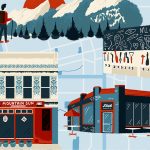
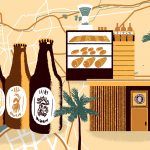
Roughly 15 breweries have opened in the past eight years within Boulder’s city limits. So, rent a bike, grab your GPS, and immerse yourself in some of the best beer that Colorado has to offer.
Local isn’t everything. Get to know the wider world of beer by creating (and completing) a list of achievable day trips and more involved foreign adventures.
The Pacific Northwest offers a multitude of options for thirsty beercationers, from Oregon’s mountain biking brew tours to brewery cruises through Washington’s San Juan Islands.
Tucson has culinary chops, so it’s not surprising to find a thriving dining scene where local breweries play their part, thanks in part to a wave of new brewery openings.
Over the last two years Rio has witnessed the appearance of more than a dozen craft brewery brands, most of them “gipsy” productions, along with new beer-focused bars.
Despite Iceland’s late entrance to the global brewing revolution, the country has hastily made up for lost time, and Reykjavík is the center of the action.
Los Angeles is emerging from the shadows of its better beer neighbors to tell its own story. And like the city itself, that story is diverse, progressive and undeniably cool.
Queens has developed a strong beer scene in recent years, a feat largely propelled by an impressive group of new breweries to open in New York City’s largest borough.
Despite cultivating one of the most dynamic culinary scenes in the Americas for the past decade, Lima has always lagged behind in terms of beer. Today, however, Peru’s brewing revolution is firmly underway in its capital city.
Although most corner bistros and supermarket aisles remain in the golden grip of Heineken and AB InBev, a new crop of small breweries is eking out an existence in a city where wine is still the go-to libation.
Many Birmingham residents would argue today that locally produced beer is what’s rescuing the city. Credit is due in part to the city’s four production breweries—Avondale, Good People, Cahaba, and Trim Tab.
Fort Collins, Colo., is more than just a Front Range college town—it’s also often referred to as the “Napa Valley of Beer.” And this city of just over 150,000 is part of the “Denver Beer Triangle.”
Named after a rock formation in the Arkansas River that flows through its downtown, Little Rock is a charming Southern town with a renowned foodie scene, and now, a growing beer culture.
Beer writer Mark Dredge kept getting asked, What’s the best beer in the world? Tired of stumbling through contrived answers, Dredge decided to figure it out for himself.
A casual visitor to Tallinn’s spectacular medieval Old Town might think there are only two breweries in Estonia, Saku and A. Le Coq. Luckily, you don’t have to go far to discover a brewpub or a local producer from the burgeoning beer scene.
In the decades following Prohibition, breweries came and went in California’s capital. More recently, the recession closed a few mainstays. But when the economy recovered, the beer scene exploded, reacquainting the city of saloons with its beer-soaked heritage.
As the Brewers Association’s new American craft beer ambassador in Europe, Sylvia Kopp, a beer sommelier from Germany, will travel the continent demystifying US craft beer for emerging markets abroad.
Singapore has a handful of young microbreweries, but it’s the tidal wave of high-quality imports—and the pioneering craft-focused bars serving them—that’s most responsible for the area’s recent drinking metamorphosis.
As the South American culinary scene continues to progress at an astounding rate, its craft brewing scene has begun to catch up. It started in countries like Chile and Brazil. Now Peru has joined the fray, too.
From the beach bodies on the boardwalk to the Art Deco architecture on Ocean Drive and the busy cafés in Little Havana, Miami is a colorful city. Until recently though, beer has been a wallflower at the culinary celebration.
DIY resourcefulness can be seen across Southeast Asia, as expats and locals open small breweries and try to create a new beer culture that runs deeper than light lager over ice.
If we overlook all the Americans who moved to Europe and started brewing American-inspired beers there, which already-existing American craft brewery will be the first to open its own European brewing facility?
Though it is one of the fastest growing cities in the country, Charlotte can’t rival Asheville when it comes to breweries per capita. But what it lacks in numbers, it makes up for with perhaps the most diverse group of breweries in the state.
In 1994, a new law allowed breweries to produce a minimum of 600 hectoliters per year. Microbrewing in Japan was born. Over 200 microbreweries sprang up in a few years. Today that number is half of what it was. Yet the beer culture in urban areas like Tokyo and Osaka is twice as strong.