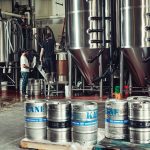
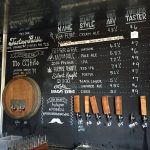
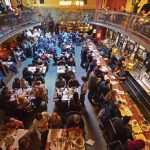
The warehouse where Idle Hands Craft Ales, Chris and Grace Tkach’s Belgian-focused brewery, has been housed since its opening in 2011 will be razed to make way for Wynn Casinos Everett. They plan to reopen bigger and better.
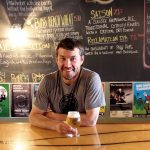
Ryan Witter-Merithew is a man of many faces. There’s the inventive, open-minded brewer whose talent earned him a job at Hill Farmstead; the loyal friend for whom others come first; and then there’s the eternally mischievous malcontent who likes nothing better than to wind people up on Twitter.
Michael Kane started making beer in college. The summer after his sophomore year, he traveled throughout Europe and became enamored with cask-conditioned ESBs, Lambics, Hefeweizens. Back in the US, weekend pilgrimages to newly opened breweries cemented his career aspirations.
Jonathan Buford launched Arizona Wilderness Brewing Company as a strictly local venture. He wanted to help advance Arizona’s beer-drinking culture, and give Phoenix-area craft enthusiasts something to call their own.
Brothers Mike and Ed Marszewski founded Marz in Chicago’s Bridgeport neighborhood with Ed’s brother-in-law in 2013. An intricate web of friends, designers, and brewers connects the rest of the Marz collective.
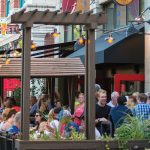
Thanks to places like Bodega, Columbus, Ohio’s Short North is a revitalized district today. Outside, the 50-seat patio offers superb people watching on North High Street. Inside a long bank of windows, Bodega serves up 47 beers from sleek, stained wood tap handles at a rustic wooden bar.
A collaboration between Good People Brewing Co. and Jones Valley Teaching Farm has managed a counterintuitive feat: spreading beer education to adults and food education to youth at the same time.
From its brewhouse in Hood River—a Silver LEED certified building with a roof covered in solar panels and a rainwater collection system for irrigation—pFriem is melding European tradition with American ingenuity using tools unfamiliar to most small craft breweries.
Nick VanCourt brews beer in Michigan, which means his peers are some of the best the US has to offer. He’s stood out by keeping his beers grounded in a sensibility that’s more European than brawling American.
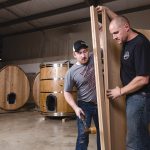
When Saffell and Walters had the idea for Foeder Crafters of America, they didn’t really know much about foeders, large oak tanks built for wineries but coveted by breweries such as Rodenbach in Belgium, New Belgium in Colorado, and now a growing number of smaller American breweries intent on making sour beers.
With its basement-dark, modest interior, worn-wood furniture, a handful of televisions, and a charming, vine-covered porch, Bittercreek has seen some things in its 20 years.
Dana Garves believes the future of craft beer lies in quality control. If she’s right, then her new Oregon-based business, BrewLab, is about to be wildly successful.
NOLA Brewing’s stewardship of the craft scene, focus on high-quality beer, and investment in the community has led to explosive growth in a city that had all but abandoned its historical designation as the Brewery Capital of the South.
As a homebrewer, Nathan Zeender made his bones propagating the dregs of wild and sour beers he enjoyed, aged batches in wine and spirit barrels, and blended the results. Right Proper, the DC brewpub Zeender helped launch, is also far outside the brewing mainstream.
A Providence, R.I., native, Julian Forgue started down a new career path when his father was diagnosed with cancer so he could stay close to home during his treatment. It was around this time that he opened Julian’s, a humble 20-tap eatery tucked away in the city’s Federal Hill neighborhood.
Peters has made sure we can experience authentic Belgian beer culture at his bar, Monk’s Café in Philadelphia. His employee education program, Monk’s-exclusive beers, and commitment to excellence have won him a semifinalist slot for a 2015 James Beard award.
Inspiration for Modus Operandi struck when Grant and Jaz Wearin embarked on a great American road trip that kicked off in Colorado, continued through the rolling mountains of Wyoming, Montana and Idaho, and then wound back down the West Coast.
Over the past eight years the setup of this column hasn’t changed much: Why beer? Why brewing? Why do you do what you do? But the common theme, from Oregon to Kansas to the Carolinas, is the way that a passion for beer builds and rolls forward on its own momentum.
This 4,500-square-foot bottle shop and bar serves up a well curated mix of the best stuff available in The Volunteer State. Regulars pair their pints with wings from Thunderbird, a smoked chicken food truck, on the 50-seat front porch.
Gary Fish founded Deschutes Brewery in Bend, Ore., in 1988. Twenty-five years later, the brewpub became the sixth-largest craft brewery by volume in the country.
The beers that have shocked and awed fans and made the Cascade Barrel House a destination for locals and tourists are the collaborative offspring of owner Art Larrance and brewmaster Ron Gansberg.
The distance between Peekskill’s old and new homes is only two-tenths of a mile, but their differences are dramatic. The latter features a 15-barrel brewhouse and a 16-draft taproom on the first floor, with a 65-seat restaurant and another 16 drafts pouring on the second floor.
The Rhinegeist Brewery was founded by Bob Bonder, the owner of a local coffee shop, and Bryant Goulding, a brewing industry sales and marketing veteran. To put recipes to their vision, they turned to Jim Matt, a longtime homebrewer who was brewing professionally only because his day job as a chemist had ended.
This pub, which has 64 beers on draft and more than 300 in bottles (not to mention over 60 varieties of Scotch), often devotes most of its taps to special events, like Bigwood, a celebration of barrel-aged beers from Stouts to sours, and Hardliver Barleywine Fest.