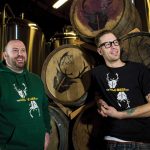
How Barrelworks, Firestone Walker’s sour and wild beer program, got its unlikely start from an under-the-radar side project by two brewing professionals who had previously dedicated their careers to eradicating beer-spoiling bacteria.
As Taylor Ziebarth relaunches Oddwood Ales, originally a side label of the Austin brewery Adelbert’s, as a standalone business with its own brewery and taproom, distinctive microorganisms remain front and center.
Increased demand for barrel-aged beers and the ability for breweries to dedicate resources to long-term projects has 2017 poised to be the year of the wood cellar.
Andrew and Lindsay Nations moved back to their hometown of Shreveport, La., to create and foster a beer culture in the state’s northwest corner, which is closer to Dallas, Texas, than New Orleans.
As sour beers proliferate in the market, the search for a quantitative yardstick to determine acidity has intensified. Could Titratable Acidity, or TA, a measurement borrowed from the wine industry, be the answer?
As Edmund Oast’s head brewer and beer buyer, Cameron Read scouts out the best beers in the world, while also concocting recipes that can stand alongside them.
To create more consistent wild beers and better understand fermentation, brewers are teaming up with scientists. The future of sour beer has never looked better.
Follow this souring schedule to mimic the natural order of critters in a traditional Belgian Lambic. In a year or three, you’ll have an amazing beer that you’ll be both proud and jealously protective of.
Wild Beer’s careful, considered way of doing things—harvesting native yeasts, implementing uncommon ingredients, blending, aging, experimenting—makes this remote operation one of the most forward-thinking craft breweries England has ever seen.
While terroir is certainly popular, one of the other trademarks of today’s Wild Ale makers is collaborating with distant brewers who float in and out of host breweries like microflora in the breeze.
In their quest to push the boundaries of brewing and redefine craft beer styles, American brewers are deep into experimenting with brewing’s most fickle ingredient: wild yeast. And as demand for Brett and other wild strains skyrockets, lab geeks like Dmitri Serjanov are stepping up to meet it.
Berliner Kindl Weisse is the only Berliner Weisse brewed in significant volume in Berlin, and while it’s on menus around the city, it’s rare to see anyone drinking it apart from tourists. But two small breweries have started brewing Berliner Weisse, and both use old recipes to resurrect the original taste.
Westvleteren Trappist Ales to make US debut in 2012; scientists decipher genetic code of Brettanomyces yeast; SABMiller purchases Foster’s Group; House Bill 4061 legalizes homebrew sharing at Michigan meetings; and Prohibition Pig to open in place of The Alchemist Brewpub.
When you boil it all down, beer is little more than four simple ingredients—malt, hops, water and yeast. Join us as we close our two-part series on taking it all back to basics.
A cheese board can create an inviting appetizer that can be paired with a variety of beers. This winter, take that same concept, but heat it up! Warm up a beer, add some cheese, and before you know it, you’ve created a whole new dimension of flavor, texture and application for those same ingredients.
Joining our trusted actors Saccharomyces Cerevisiae and S. Uvarum in the world of sour beers are a team of misfits that would make the Bad News Bears proud. Let us meet the bacteria swimming in your beer.
Koelschip? An Allagash Lambic? Allagash Brewing Company explores new American craft beer territory with their authentic, spontaneously fermented Lambic.
Is the time and worry worth it? Should you go traipsing about in the land of scary monsters? Ales of extraordinary and unique character are the reward for chasing the wild dragons.
Sourness—or more precisely, tartness—is the defining trait of American Wild Ale. Essentially, it’s beer gone bad, contaminated by the very stray microorganisms that Louis Pasteur discovered were mucking up perfectly good beer 130 years ago.