Figueroa Mountain’s CEO and founder, Jaime Dietenhofer, knew out of high school that he wanted to start a brewery. But his parents and eventual co-founders, Jim and Judie, said, “Go to college.”
To run a brewery of any size it takes a wide range of tools, equipment, ingredients and paraphernalia. Sometimes having a furry companion around can help, too. Here are the five things that Crider and Brown can’t live without.
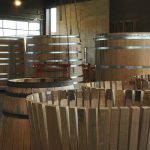
Increasingly, sour beers—and the foeders used to produce them—are becoming a less-surprising feature among American craft breweries. And while larger breweries with connections acquire as they go, the demand for foeders among smaller breweries is only growing.
When Jerry Gnagy was brewing for somebody else, he’d only brew the beers he really wanted to brew when those beers fit around an established production schedule. Gnagy flipped that equation upside-down when he opened Against the Grain, the Louisville, Ky., brewpub he co-founded two years ago.
Sky Weekes was a wine geek with a culinary degree when he decided to launch his barrel-broker business out of a U-Haul garage three years ago. Today, he’s worked with nearly every brewery in Colorado.
Jeff O’Neil and the Berardi family are transforming a four-story stone building into an artisan brewer’s dream-workshop, complete with a gravity-fed system, a “gnarly” cellar, a “spider-filled, Old-World approach to barrel aging” and—wait for it—maybe even a coolship.
Brad Clark has wanted to push the envelope since the first beer he ever brewed. At Clark’s Athens, Ohio, brewpub, Jackie O’s, he’s pushing boundaries in several directions.
Since 2006, Ashman, a barrel aging pioneer, has plied his trade at Truckee’s FiftyFifty Brewing Company. And for the brewer, the barrels are still the draw.
Shaun Hill runs his brewery with a profound sense of purpose. He brews his beers with well water from the farm that’s been in his family for generations.
While the packing and aging of beer in wooden barrels isn’t a new concept, the past decade or so has witnessed a growing trend in brewers experimenting with oak-aging every beer style under the sun.
Ten years ago, Vinnie Cilurzo and his wife, Natalie, brought aggressively hopped beer to the heart of California’s wine country. Since then, they’ve taken Russian River Brewing Company independent, won an unimaginable number of awards and launched a revolutionary line of barrel-aged sour Belgians.
If we see the value in a $5 cup of coffee, a $50 bottle of wine, or a $2 bottle of water, how can we not see value in a $10 barrel-aged beer or a $9 handcrafted six-pack from a small, local brewery?
Sourness—or more precisely, tartness—is the defining trait of American Wild Ale. Essentially, it’s beer gone bad, contaminated by the very stray microorganisms that Louis Pasteur discovered were mucking up perfectly good beer 130 years ago.
There are really only two ways to blow the mind of an experienced, worldly beer drinker: Make a classic style to absolute perfection or make a beer that is unlike anything brewed before.
How do you celebrate fifteen Great American Beer Festival medals and back-to-back GABF Small Brewery Brewer of the Year nods? You open up a new brewing and bottling plant, and start distribution of two new lines of beer.