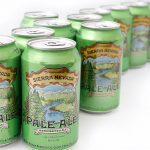
Once an industry staple, Pale Ale has ceded shelf space to the popular IPA and its Imperial and Session cousins. Has the former flagship style seen its last days, or can it be reborn with a renewed emphasis on hop and malt varieties?
Since 1992, Brian Hunt’s little Santa Rosa brewery Moonlight Brewing Company has been churning out small batches of ales and lagers that are uniquely rooted in Northern California.
Every winter in a quiet waterfront town in Norway, more than 500 members of the community brew a strong, smoked beer according to tradition. For centuries, this endangered style has remained virtually unknown to outsiders.
Although bursting with a sour punch and finishing with a pinch of salinity, the once arcane Gose is not a margarita in beer form. Today, some iterations boldly bring it into the 21st century.
There’s an unbroken history of Porter brewing in Germany going back around 200 years. Porter was the first style to be a huge international hit and was brewed all over the world.
The beer consuming public wants us to turn everything into an IPA. I love a good IPA, but we’ve hit a point where if a beer isn’t an IPA, regular folks just don’t buy it.
Long known for its use in Guinness Draught, nitrogen is showing up more often in a variety of beer styles, from Stouts and Porters to White Ales and IPAs.
Bitter is what overseas observers have in mind when they dismiss British beer as “warm and flat.” This is a shame not only because the subtleties of Bitter can be a delight, but also because craft brewing as we know it was built on its back.
Northern Germany was once home to dozens of top-fermenting beer styles. Most drowned under the tsunami of lager that flooded the region at the end of the 19th century. A few tenacious ones managed to cling on past WWII, fewer still until today.
It’s clear that Guinness, although popular, was far from dominant in the British Stout market. And there were many Stouts not just as dry as Guinness, but far drier.
As the South American culinary scene continues to progress at an astounding rate, its craft brewing scene has begun to catch up. It started in countries like Chile and Brazil. Now Peru has joined the fray, too.
It’s our collective responsibility to create a better beer culture by challenging ourselves, having those hard discussions about our community, naming names and remaining open to constructive criticism.
Carlsberg’s Carl Jacobsen had clearly been impressed by what he’d seen on his travels and brought back an enthusiasm for British ales. So much enthusiasm that he started brewing ales alongside the lagers you would expect.
Beer has long been associated as a gout trigger due to its relatively high levels of purine, an organic compound that, among other functions, helps form the base of human DNA. Beer gets the bulk of its purine content from brewer’s yeast, which has about three times the purines as baker’s yeast.
Devon, Cornwall’s nearest English neighbor, has its legend of White Ale. Was there a similarly exotic indigenous beer style in Cornwall. Naturally, mentions of a mysterious brew known as “swanky” among lists of Cornish recipes online, generated considerable excitement.
Berliner Weisse entered the twentieth century in robust health. New-fangled lager beers had dented its popularity a little, but it remained one of the city’s favorite styles. That was to change as the century progressed, and its popularity slowly declined.
In 2007, when BeerAdvocate became the country’s first monthly beer magazine, the combined output of 1,406 craft breweries represented less than four percent of the total market in the US.
Like all styles that have been around for more than five minutes, Berliner Weisse has undergone several transformations, adapting to technological, political and social change. It’s currently in a very sad state in Germany, hanging on by a thread. Only one version, Kindl, is made in any quantity.