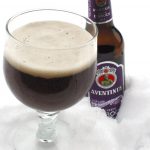
Although bursting with a sour punch and finishing with a pinch of salinity, the once arcane Gose is not a margarita in beer form. Today, some iterations boldly bring it into the 21st century.
There’s an unbroken history of Porter brewing in Germany going back around 200 years. Porter was the first style to be a huge international hit and was brewed all over the world.
Northern Germany was once home to dozens of top-fermenting beer styles. Most drowned under the tsunami of lager that flooded the region at the end of the 19th century. A few tenacious ones managed to cling on past WWII, fewer still until today.
Berliner Weisse entered the twentieth century in robust health. New-fangled lager beers had dented its popularity a little, but it remained one of the city’s favorite styles. That was to change as the century progressed, and its popularity slowly declined.
Like all styles that have been around for more than five minutes, Berliner Weisse has undergone several transformations, adapting to technological, political and social change. It’s currently in a very sad state in Germany, hanging on by a thread. Only one version, Kindl, is made in any quantity.
We’ve all heard of Berliner Weisse, but who now remembers her brunette sibling, Berliner Braunbier? She’s disappeared without a trace, despite, unlike many German top-fermenting styles, being brewed within living memory.
In the small village of Amana, Iowa, tucked among historical sites and artisans’ shops, Millstream Brewing Company is quietly churning out some of the finest beer in the region. Millstream’s portfolio is heavy on the German beers, like the seasonal German Pilsner and widely popular Oktoberfest, but also drifts into the realm of experimental brewing.
Once upon a time, in a distant land known as Northern Colorado, two homebrewers decided that 5-gallon batches weren’t enough. So, with a little knowledge and a lot of courage, the duo set out on an adventure destined to change their lives.
The willful misrepresentation of the past by the German brewing industry is irritating. Giving the impression that German beer has been all malt since Moses was at school? Nothing could be further from the truth.
It’s hard not to notice that Mexican beer styles originated from Germany. So this year, for Oktoberfest, I wondered what it would be like to try putting a Hispanic twist on traditional German cuisine. Here’s how to celebrate this year’s Oktoberfest with a Mexican flare.
A bartender, explaining the appeal of Bock, told one newspaper reporter simply, “It makes a feller feel good sooner.” It was enough to put a smile on your face, even in the midst of the Great Depression.
The good news is that, even without all that cloudy yeast and wheat sediment, crystal-clear Kristall Weiss still offers much of the signature aroma and flavor of a German wheat beer.
Though it’s the northernmost brewery in the contiguous 48 states, you’d think Alpine Brewing Company was 5 miles from Bavaria, not Canada. The German-owned, German-built brewery brews Bavarian-style beers exclusively. Owner Bart Traubeck prefers it that way.
The southeastern corner of Pennsylvania has emerged as a hotbed of craft-brewed Pilsners. Specifically, the crisp and bitter northern German-style Pils.
While lagers and German Pilsners reign supreme in most areas of the country, Altbier accounts for almost half the beer consumed in Düsseldorf, and local Altbier breweries and quaint brewpubs churn out surprising volumes of the antique style.
Do not confuse Eisbock with North American ice beer. The latter is an abomination, in which, after freezing, the lifeless lager is weakened with the addition of water. Eisbock, by contrast, is a marvel of science.
Altbier is not purely an ale, nor is it a lager. It is a hybrid. The result of its unusual brewing process is an entirely distinctive (and often under-appreciated) flavor.