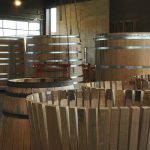
Troy Casey, the founder and brewer of Casey Brewing and Blending, operates out of a barrel room on the edge of the Colorado Rockies, from which he turns out limited quantities of Brettanomyces-spiked Saison and Belgian-inspired wild ale.
Northern Germany was once home to dozens of top-fermenting beer styles. Most drowned under the tsunami of lager that flooded the region at the end of the 19th century. A few tenacious ones managed to cling on past WWII, fewer still until today.
Mark Schoppe of the Viking-helmed Austin ZEALOTS just grabbed his second Ninkasi Award at this year’s American Homebrewers Association competition. This sour smoked German ale, a Lichtenhainer, was one of them.
In order to get the desired tartness and acidity in The Commons Brewery’s Biere Royale head brewer Sean Burke pitched tubs of Greek yogurt. To paraphrase the Bee Gees, Burke started a joke, which started the whole beer world souring.
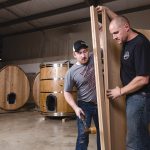
When Saffell and Walters had the idea for Foeder Crafters of America, they didn’t really know much about foeders, large oak tanks built for wineries but coveted by breweries such as Rodenbach in Belgium, New Belgium in Colorado, and now a growing number of smaller American breweries intent on making sour beers.
NOLA Brewing’s stewardship of the craft scene, focus on high-quality beer, and investment in the community has led to explosive growth in a city that had all but abandoned its historical designation as the Brewery Capital of the South.
In ye olden days, the drying process consistently contaminated yeast with Lactobacillus and Pediococcus. This was considered a very bad thing. With modern processing improvements, it’s not the case anymore, hence the explosion of dried yeast choices.
The beers that have shocked and awed fans and made the Cascade Barrel House a destination for locals and tourists are the collaborative offspring of owner Art Larrance and brewmaster Ron Gansberg.
Robert Wahl had a distinguished career as a brewing science educator. But one of his greatest legacies is a book that shines a light on American brewing in the immediate aftermath of Prohibition.
What is it about this family of beers that seems to be enchanting a generation? Could sours eclipse IPAs as the new face of American craft brewing? It’s a long shot, but people once asked similar questions about hoppy West Coast ales.
At The Rare Barrel, a tiny, sours-only brewery in Berkeley, Calif., American sours push the boundaries of what Brettanomyces, Lactobacillus, Pedioccocus, oak and time can do.
Trader Joe’s house brand changes breweries, branding; Mikkeller and Three Floyds to open Copenhagen brewpub; researchers creating genetic family tree for brewing yeast; and The Bruery to open a facility for wild-fermented ales.
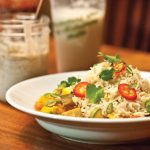
Indian dishes exude exotic aromas and complex savory elements that can range from sour, bitter and astringent, to chili heat, to sweet, sometimes all within one single bite. Discover some of them with recipes for a mixed vegetable curry and an Indian rice pilaf.
While terroir is certainly popular, one of the other trademarks of today’s Wild Ale makers is collaborating with distant brewers who float in and out of host breweries like microflora in the breeze.
Increasingly, sour beers—and the foeders used to produce them—are becoming a less-surprising feature among American craft breweries. And while larger breweries with connections acquire as they go, the demand for foeders among smaller breweries is only growing.
Sky Weekes was a wine geek with a culinary degree when he decided to launch his barrel-broker business out of a U-Haul garage three years ago. Today, he’s worked with nearly every brewery in Colorado.
To Paul Graham, who began working at Central Waters out of college before buying it from his old bosses, the brewery has adopted the attitude of the rural Wisconsin town where it’s headquartered.
The recipes that follow use the braising technique while showcasing global cuisines with different proteins. The chosen beers enhance the dish by bringing their own flavor profiles to the recipe, creating a wonderful sauce to be served over the final plate.
Also know as Flemish Brown Ale, the variety is marked by a distinct piquant tartness that is produced by Lactobacillus, an aggressive bacteria that infects the ale during fermentation.