Instead of embracing the beauty of public and outdoor drinking, Americans have largely relegated alcohol consumption to bars, implicitly marking them as dark dens of adult iniquity. Fortunately, small breweries are pushing for change.
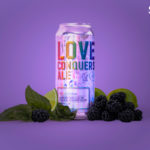
Increasingly, craft breweries are participating in Pride Month by sponsoring events, donating to charities and nonprofits, creating special release beers, or, sometimes, a combination of all three.
Given its explosive growth, it’s no wonder that the city of Covington has embraced Braxton Brewing in a big way. The better story, however, is how Braxton has embraced Covington.
For an industry veteran who wanted to run a smaller, neighborhood brewpub, the friendlier laws in North Carolina were a huge incentive for the Terrapin co-founder to launch UpCountry Brewery in Asheville.
In struggling towns and neighborhoods, breweries are partnering with Community Development Financial Institutions, which provide funding based on community impact.
From the high-capacity BrewHub to the high-tech experimental Labrewatory, brewery incubators across the country are helping new breweries share best practices and take advantage of communal buying power.
Located right at the base of Teton Pass, a popular backcountry skiing spot, Grand Teton Brewing Company has cultivated both a strong après-ski culture and a philanthropic culture in its 28-year legacy.
Since launching Victory in 1996, Bill Covaleski and Ron Barchet have remained true to their founding principles. When it came time to expand, they added a second production facility in Pennsylvania even as their distribution has grown.
NOLA Brewing’s stewardship of the craft scene, focus on high-quality beer, and investment in the community has led to explosive growth in a city that had all but abandoned its historical designation as the Brewery Capital of the South.
In 2007, when BeerAdvocate became the country’s first monthly beer magazine, the combined output of 1,406 craft breweries represented less than four percent of the total market in the US.
California’s Mraz Brewing Co. is putting its weight behind an initiative to expand the trails of El Dorado Hills, right in the brewery’s backyard. The partnership is just one example of a flurry of likeminded ventures between the beer world and nature trail enthusiasts.
If you purchase your meat, dairy or produce from a local market, you’re likely familiar with community-supported agriculture. While CSA projects in America’s food culture came about in the 1980s, the craft beer world’s version is only just starting to take shape.
A good brewery is aware of the atmosphere it’s creating. They don’t just want you to stop in and check it off your list; they want you to hang around, ask questions, bring friends. In essence, it’s all about community-building.
Breweries are starting to realize that it’s time to rethink the standard tour they’ve been offering unchanged for years. As breweries remain in a near constant state of expansion, designers are starting to integrate expanded taprooms, beer gardens and community meeting spaces.
In the small village of Amana, Iowa, tucked among historical sites and artisans’ shops, Millstream Brewing Company is quietly churning out some of the finest beer in the region. Millstream’s portfolio is heavy on the German beers, like the seasonal German Pilsner and widely popular Oktoberfest, but also drifts into the realm of experimental brewing.
In recent years, running and craft beer have buddied up. Running and drinking beer, one a presumed healthy activity and the other a presumed unhealthy one, have begun to coexist in some interesting ways.
But what’s driving us nuts lately are those who expect your support simply because they’re “craft” and “local.” But how many local brewers actually support their locale?
Community drinking experiences don’t always have to start with long-standing, brick-and-mortar operations. As with many ideas that shift from West to East in the United States, San Francisco is engaging in a remarkably simple yet creative civic experiment: making use of vacant spaces.
Garage breweries aren’t brewpubs in any traditional sense. You won’t find any food, beyond peanuts or popcorn, and the beer is usually sold off-site as well. And you’re always aware that the brewery hovers around you, not hidden away behind glass partitions.
While new brewers and beers appear with much splash and fanfare in places such as Scotland, Denmark and Japan, a small group of Bavarian brewers quietly carries on the nearly 600-year-old brewing tradition of zoiglbier.
In 17 years of operation, Mountain Sun has evolved into a spot where regulars and tourists alike congregate to see local bands play for free, where groups of friends can meet to catch up on the details of the week and where individuals can come burn off stress after a hard day’s work.
Many beer geeks can answer that they’ve purchased craft brews and attended events; however, it’s easy to get complacent. We can always do more, especially for our local beer scenes, which often get overlooked in our quests for the latest brews.